Ministry of Agriculture, Food and Rural Affairs Announces Legislative Notice for 'Amendment to Enforcement Decree and Enforcement Rules of the Farmland Act'
Farmland Adjacent to Roads Now Essentially Permitted
The government has decided to lift the time limit on the 'Rural Stay-Type Shelter,' which was introduced to legalize farm sheds where lodging is prohibited. This decision reflects concerns that limiting the retention period to 'a maximum of 12 years' could act as a barrier to entry for rural stay-type shelters.
The Ministry of Agriculture, Food and Rural Affairs announced on the 29th that it will give prior legislative notice of the 'Amendment to the Enforcement Decree and Enforcement Rules of the Farmland Act,' which includes these changes, until December 9.
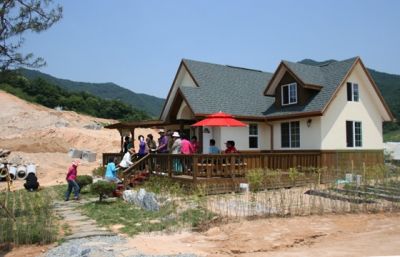
An official from the Ministry of Agriculture, Food and Rural Affairs explained, "Since the announcement of the plan to introduce rural stay-type shelters last August, some have argued that limiting the retention period to 12 years might actually raise the entry barrier for these shelters. Therefore, in this amendment, we included provisions allowing local governments to extend the retention period through building ordinances, as long as safety, functionality, aesthetics, and the environment are not compromised after the 12-year period stipulated by the Building Act Enforcement Decree."
Regarding roads that must adjoin farmland, they have been defined as "de facto roads accessible to fire trucks, ambulances, and other emergency vehicles." This clarifies the scope of roads to include not only legally designated roads but also 'current roads' that are used as roads, allowing shelters to be installed on farmland adjacent to such roads. Additionally, to alleviate and resolve inconveniences experienced by farm shed users, the amendment excludes the installation areas of decks and septic tanks from the total floor area (20㎡) of the farm sheds, permitting their installation.
Furthermore, the Ministry has eased regulations on the location of vertical farms on farmland. This follows ongoing demands to allow vertical farms to be installed on farmland without farmland conversion procedures to respond to climate change and improve agricultural productivity.
To address this, since July of this year, the Ministry expanded the temporary use period of farmland for vertical farms in the form of temporary structures from a maximum of 8 years to 16 years. In this amendment, all types of vertical farm facilities can be installed in an integrated and large-scale manner in rural specialized zones and smart agriculture promotion zones without separate farmland conversion procedures.
Yoon Won-seup, Director of Agricultural Policy at the Ministry of Agriculture, Food and Rural Affairs, said, "We will steadily implement this amendment so that farmland contributes not only to enhancing agricultural productivity but also to spreading the rural resident population. We also plan to promptly prepare comprehensive farmland system reform measures for rational farmland use by the end of the year."
© The Asia Business Daily(www.asiae.co.kr). All rights reserved.

















