WMO Publishes 'Greenhouse Gas Bulletin'
"Climate Change Reduces Carbon Absorption, Creating a Vicious Cycle"
Last year, the concentration of greenhouse gases in the atmosphere reached an all-time high.
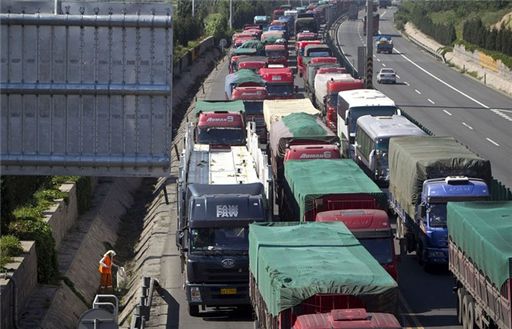
The World Meteorological Organization (WMO), a United Nations agency, announced the annual greenhouse gas bulletin containing this information on the 28th (local time), forecasting that temperatures will continue to rise over the coming years.
According to the bulletin, the atmospheric concentrations of the three major greenhouse gases?carbon dioxide, methane, and nitrous oxide?increased again last year.
Last year, the atmospheric concentration of carbon dioxide was 420.0 ppm, an increase of 2.3 ppm (parts per million) compared to the previous year. This level corresponds to 151% of the pre-industrial level (before 1750).
WMO reported that last year, methane and nitrous oxide concentrations were 1934 ppb (parts per billion) and 336 ppb respectively, representing 265% and 125% of pre-industrial levels.
Particularly serious is the concentration of carbon dioxide in the atmosphere.
This is because global emissions continue to increase relentlessly, and once emitted, carbon dioxide does not disappear quickly but remains in the atmosphere.
According to the bulletin, carbon dioxide concentration has increased by more than 2 ppm for 12 consecutive years.
When WMO first published the bulletin in 2004, the carbon dioxide concentration was 377.1 ppm. Over the past 20 years, carbon dioxide concentration has increased by 11.4%.
The period when carbon dioxide concentrations were in the 400 ppm range was 3 to 5 million years ago. At that time, global sea levels were 10 to 20 meters higher than now, and the average temperature was 2 to 3 degrees Celsius higher.
Carbon dioxide is a representative greenhouse gas produced by the combustion of fossil fuels. It accounts for about 64% of the impact on global warming.
The ocean and terrestrial ecosystems absorb about half of the atmospheric carbon dioxide, but WMO analyzed that this cycle is being disrupted due to the climate crisis.
Ko Barrett, Deputy Secretary-General of WMO, said, "We are facing a potential vicious cycle," adding, "Wildfires release more carbon into the atmosphere, and the warmer oceans absorb less carbon dioxide."
He continued, "As a result, more carbon dioxide remains in the atmosphere, accelerating global warming," warning, "This is a very serious issue for humanity."
The WMO Greenhouse Gas Bulletin will be used as a reference at the 29th Conference of the Parties (COP29) to the United Nations Framework Convention on Climate Change, held in Baku, Azerbaijan, on November 11-12.
Celeste Saulo, Secretary-General of WMO, said, "This data will serve as a wake-up call for decision-makers," adding, "We have clearly strayed from the trajectory to achieve the Paris Agreement goals."
© The Asia Business Daily(www.asiae.co.kr). All rights reserved.
![User Who Sold Erroneously Deposited Bitcoins to Repay Debt and Fund Entertainment... What Did the Supreme Court Decide in 2021? [Legal Issue Check]](https://cwcontent.asiae.co.kr/asiaresize/183/2026020910431234020_1770601391.png)
















