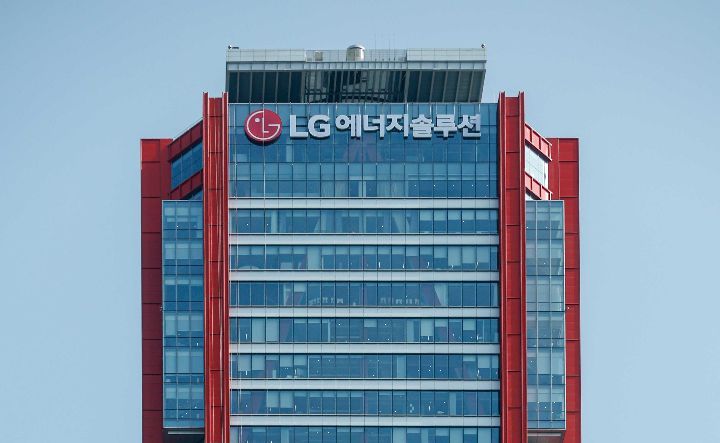
LG Energy Solution succeeded in reversing its third-quarter performance, supported by the full-scale mass production at its U.S. battery plants and growth in the ESS (Energy Storage System) business.
On the 28th, LG Energy Solution held an investor briefing and announced that it achieved sales of KRW 6.8778 trillion and an operating profit of KRW 448.3 billion in the third quarter of this year. Although sales and operating profit decreased by 16.4% and 38.7%, respectively, compared to the same period last year, indicating that the market remains subdued, there is an assessment that future growth is visible compared to the previous quarter. Sales increased by 11.6% and operating profit rose by 129.5% compared to the second quarter.
The rebound in third-quarter performance compared to the previous quarter is largely due to the stabilization of production. In particular, the full-scale operation of the Ultium Cells plant, a joint venture with GM in North America, and the joint plant with Stellantis had a significant impact on the results.
Lee Chang-sil, Vice President and CFO (Chief Financial Officer) of LG Energy Solution, stated, "Third-quarter sales increased by about 12% compared to the previous quarter due to sales from the North American joint venture plants, expanded shipments to major European customers, reflected results from the Indonesian joint venture (JV), and growth in ESS sales centered on power grids." He added, "Regarding profitability, improved operating rates due to increased shipments of EV (electric vehicle) and ESS batteries, along with stabilized downward metal prices, reduced unit cost burdens."
This is also confirmed by the amount of tax credits from the U.S. IRA (Inflation Reduction Act) reflected in operating profit. The tax credit LG Energy Solution received in the third quarter was KRW 466 billion, about KRW 20 billion more than the KRW 447.8 billion in the second quarter. This indicates that tax credits increased due to expanded production volume. Excluding this, the operating loss significantly decreased from KRW 252.5 billion in the second quarter to KRW 17.7 billion in the third quarter.
Recently, LG Energy Solution has diversified its product and customer portfolio by signing large-scale supply contracts totaling approximately 160 GWh with global automakers based on new form factors. A representative example is the large-scale supply contract for a new cylindrical form factor with a leading global automaker.
LG Energy Solution plans to respond to standard demand through a high-voltage Mid-Ni (Mid-Nickel) composition and supply LFP (Lithium Iron Phosphate) products applying CTP (Cell to Pack) technology in the mid-to-low price market. It also plans to accelerate mass production of new form factors such as the 46-series.
On this day, LG Energy Solution also announced mid-to-long-term strategic tasks to establish a resilient business structure amid various external variables, including ▲ proactive operational efficiency ▲ strengthened R&D investment ▲ diversification of business portfolio. To achieve proactive operational efficiency, it will adjust the pace of investment in North America through customer consultations and maximize operational efficiency by converting idle lines in existing facilities for other uses.
R&D (Research and Development) investment for technological leadership will also continue. The company will focus its capabilities on differentiating core materials and developing new processes such as dry electrodes, and will steadily advance next-generation battery development, including semi-solid development applying bipolar technology and commercialization of sulfide-based all-solid-state batteries by 2030.
Kim Dong-myung, CEO of LG Energy Solution, stated, "We will become a company that leads the global battery market by responding agilely to changes and enhancing customer value based on a diverse product portfolio."
© The Asia Business Daily(www.asiae.co.kr). All rights reserved.
![Clutching a Stolen Dior Bag, Saying "I Hate Being Poor but Real"... The Grotesque Con of a "Human Knockoff" [Slate]](https://cwcontent.asiae.co.kr/asiaresize/183/2026021902243444107_1771435474.jpg)










