The Supreme Court has made its first ruling that participants in the execution of search and seizure warrants under the Criminal Procedure Act must possess the ability to understand the meaning of the search and seizure procedure, i.e., 'participation ability,' and that a search and seizure carried out with only participants lacking this ability is illegal.
Even if formal participants such as the head of the residence (jugoju) were present, if they lacked participation ability, it would contradict the purpose of the Criminal Procedure Act, which aims to protect the parties subject to coercive measures by investigative agencies or courts by ensuring the propriety of the warrant execution procedure, and ultimately to protect the fundamental rights of the people.
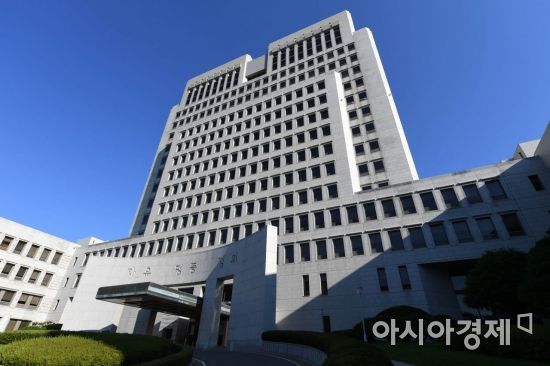
According to the legal community on the 28th, the Supreme Court's Second Division (Presiding Justice Oh Kyung-mi) overturned the guilty verdict of A, who was indicted for violating the Narcotics Control Act (psychotropic substances and marijuana), by recognizing A's marijuana possession charge as guilty, sentencing him to 10 months in prison, and remanded the case to the Incheon District Court.
The court stated, "The Criminal Procedure Act requires that when executing a search and seizure warrant at a residence, the head of the residence or neighbors be allowed to participate because these places require special protection of fundamental rights such as freedom of residence and privacy. By involving persons with a close interest in the place, the propriety of the warrant execution procedure is ensured, thereby protecting the parties subject to coercive measures by investigative agencies or courts and ultimately protecting the fundamental rights of the people."
It continued, "In light of this, the head of the residence or neighbors participating in the execution of the search and seizure warrant as stipulated by the Criminal Procedure Act must at least have the ability to understand the meaning of the search and seizure procedure (participation ability). If the head of the residence or neighbors participating in the execution of the warrant lack this participation ability, it would be difficult to effectively achieve the legislative intent of the Criminal Procedure Act to protect the parties from illegal or unjust acts or measures that may occur during the execution process, and to ensure the propriety of the warrant execution procedure, as well as constitutional requirements such as protection of fundamental rights, due process, and the warrant principle."
The court also stated, "This legal principle applies equally when the suspect is simultaneously the head of the residence in a search and seizure of a residence," adding, "'The right of the party to participate' and 'participation of the responsible person' differ in their purpose, intent, and protected interests."
It further stated, "Therefore, when executing a search and seizure warrant at a residence where the suspect is the head of the residence, if the suspect lacks participation ability, it is insufficient for only that suspect to participate. If only a suspect without participation ability participates, the search and seizure is, in principle, illegal as it violates the Criminal Procedure Act."
Regarding this case, the court pointed out, "There is room to consider that A's daughter lacked the participation ability to take part in the search and seizure procedure, and the investigative agency could have sufficiently recognized this from her psychiatric treatment history. Nevertheless, the search and seizure conducted with only A's daughter participating was illegal."
It added, "Therefore, the evidence obtained through this search and seizure is likely to be considered illegally collected evidence by the investigative agency and difficult to admit as evidence. Nevertheless, the lower court upheld the first trial judgment that found the defendant guilty of the marijuana possession charge based on evidence collected through this illegal search and seizure, including the marijuana in question. This ruling misinterpreted the legal principles regarding the participation ability of participants as stipulated in Article 123 of the Criminal Procedure Act and failed to conduct necessary hearings, which affected the judgment, constituting a legal error," explaining the reason for the remand.
A was indicted for possessing approximately 0.62g of marijuana stored in a safe in the master bedroom of his residence in Guro-gu, Seoul, on May 28, 2019, and for using the psychotropic substance methamphetamine between March and June 2019 in unspecified locations in China, Seoul, and Gyeonggi Province.
The investigative agency obtained a search warrant for the residence related to drug use allegations against A's 20-year-old daughter, B, and discovered marijuana in the safe during the search, leading to A's indictment. Only A's daughter participated in the search and seizure.
The legality of this search and seizure became a key issue in the trial.
Initially, the investigative agency confirmed from B's attending physician at the hospital she attended in March 2019 that B had used methamphetamine and obtained an arrest warrant and a search warrant for B's residence from the court on May 9 of the same year.
However, on May 28, B caused a disturbance at a sauna and damaged property, and was arrested on the spot by police officers who responded to the scene.
The police who arrested B executed the previously obtained arrest warrant and then moved to B's residence to execute the previously obtained search warrant on the same day. During this process, they discovered and seized marijuana weighing approximately 0.62g, a dropper, a funnel, and other drug-related evidence stored in the safe in the master bedroom.
A, B's father, argued during the investigation that since the safe was a drawer-type safe accessible to anyone, including cohabitants or third parties such as detectives, it was possible that someone else had placed the marijuana in the safe.
However, the prosecution indicted A on the charge of marijuana possession based on the evidence obtained.
The first trial court dismissed the drug use charges against A, ruling that the indictment was invalid because the prosecution vaguely stated the place of drug use based on the period estimated from positive drug test results from A's hair and phone location records, without specifying the crime scene or method.
On the other hand, the court found A guilty of marijuana possession and sentenced him to 10 months in prison.
A appealed, but the second trial court upheld the same judgment.
However, the Supreme Court's judgment differed.
The Supreme Court ruled that since the investigative agency's search and seizure process was illegal, the evidence supporting A's marijuana possession charge could not be used in court.
Considering that B had been hospitalized and treated for psychiatric symptoms about 13 times from December 2016 to May 2019, ranging from a week to over a month each time, and that a 2017 psychological evaluation assessed her overall intelligence at 57 and social maturity at the level of an 11-year-old, the court found that she lacked the participation ability to understand the meaning of the search and seizure procedure.
Article 123, Paragraph 2 of the Criminal Procedure Act (Execution of Warrants and Participation of Responsible Persons) states, "When executing a search and seizure warrant inside another person's residence, a guarded house, a building, an aircraft, a ship, or a vehicle, the head of the residence, the guard, or a person equivalent thereto must participate."
Paragraph 3 of the same article states, "If it is not possible to have the person referred to in Paragraph 2 participate, a neighbor or an employee of a local government must participate."
These search and seizure-related provisions are applied mutatis mutandis to seizure, search, and inspection by prosecutors or judicial police officers under Article 219 (Application Provisions) of the Criminal Procedure Act.
A Supreme Court official said, "There was no precedent on whether the head of the residence or others participating in the execution of a search and seizure warrant need the ability to understand the meaning of the search and seizure, so it was an area open to differing opinions. The Supreme Court declared for the first time through this case that participation ability is necessary," highlighting the significance of the ruling.
He added, "Simply having the head of the residence participate formally does not guarantee substantial procedural protection, so participation ability to understand the meaning of the search and seizure procedure is necessary."
The part of A's psychotropic substance charge was not appealed by the prosecutor, so the second trial's dismissal of the indictment was separately finalized.
© The Asia Business Daily(www.asiae.co.kr). All rights reserved.
![Clutching a Stolen Dior Bag, Saying "I Hate Being Poor but Real"... The Grotesque Con of a "Human Knockoff" [Slate]](https://cwcontent.asiae.co.kr/asiaresize/183/2026021902243444107_1771435474.jpg)











