Subarachnoid Hemorrhage After Second Vaccine Dose in 30s
Seoul Administrative Court Rules Against Bereaved Family
A court ruling has determined that the government's refusal to compensate the bereaved family in a case where death occurred from cerebral hemorrhage one month after COVID-19 vaccination was lawful.
The Seoul Administrative Court, Administrative Division 6 (Presiding Judge Na Jin-yi) recently ruled against the plaintiff in a lawsuit filed by Mr. B, the father of Mr. A, who died from cerebral hemorrhage in his 30s, seeking to cancel the decision by the Korea Disease Control and Prevention Agency (KDCA) to deny a lump-sum compensation and funeral expenses, according to a report by Yonhap News on the 27th.
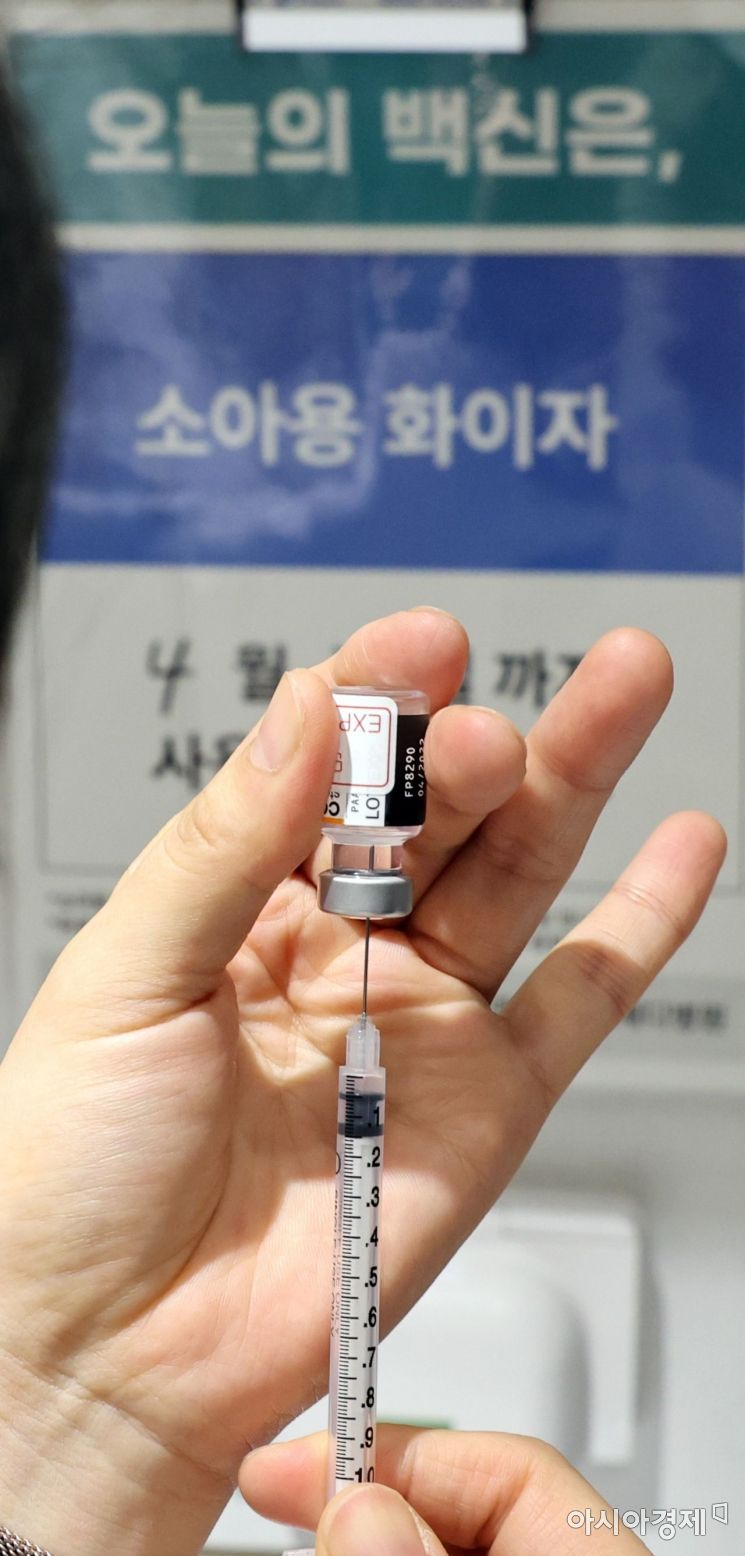 The photo is not related to the specific content of the article. Medical staff are preparing the COVID-19 vaccine at a hospital in Seoul. Photo by Joint Press Corps.
Mr. A (aged 39 at the time of death) received his second dose of the Pfizer-BioNTech COVID-19 vaccine on October 12, 2021. About a month later, on November 18, he was hospitalized with symptoms of subarachnoid hemorrhage, a type of cerebral hemorrhage, and passed away on December 21 of the same year. Mr. B applied for vaccination injury compensation from the KDCA, claiming that his son, who had no underlying conditions, died due to the vaccine.
However, the KDCA rejected the claim in June of last year. The KDCA stated that the temporal association between the onset of headache and dizziness and the vaccination was low, and that subarachnoid hemorrhage is not considered an adverse reaction to the vaccine, thus compensation was not warranted. Unable to accept this outcome, Mr. B filed an administrative lawsuit seeking to overturn the KDCA's decision.
Nevertheless, the court's judgment aligned with the KDCA's position. The court stated, "There is no medical theory or empirical evidence to infer that the subarachnoid hemorrhage was caused by the vaccination, making it difficult to presume causality."
The court further explained, "Although Mr. A appeared to have experienced a headache the day after vaccination, he did not receive any significant medical treatment. The date he reported worsening headaches, November 11, was nearly one month after vaccination. Considering his blood pressure and cholesterol levels, the deceased may have had risk factors for subarachnoid hemorrhage."
Additionally, the court noted, "Mr. B did not submit any health examination results or other evidence to refute this, nor did he provide evidence of a causal relationship between the vaccination and subarachnoid hemorrhage, nor did he request an expert appraisal. There is also no data to suggest that the incidence of cerebral hemorrhage increased nationally following the recommendation of COVID-19 vaccination."
© The Asia Business Daily(www.asiae.co.kr). All rights reserved.

















