HIRA Evaluates Appropriateness of Care for Asthma and Chronic Obstructive Pulmonary Disease Patients
Consistent treatment and management of chronic respiratory diseases such as asthma and chronic obstructive pulmonary disease (COPD) can prevent disease exacerbation and hospitalization; however, the proportion of patients continuously visiting outpatient clinics has rather decreased, according to a recent investigation.
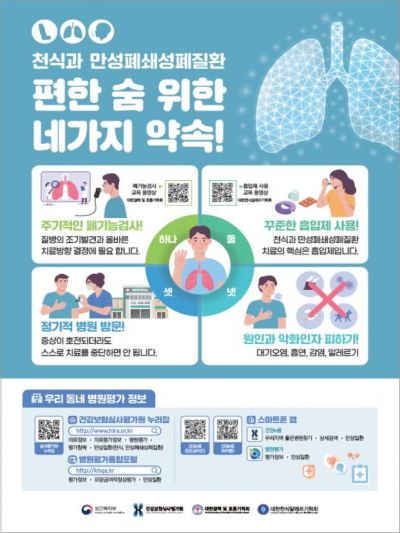
On the 25th, the Health Insurance Review and Assessment Service (HIRA) disclosed the results of an adequacy evaluation conducted last year based on outpatient visit indicators of patients with asthma and COPD to medical institutions.
Since 2013, HIRA has been analyzing and evaluating indicators such as the rate of pulmonary function tests performed, the proportion of patients with continuous visits, and the prescription status of inhalation therapies to assist in the treatment of patients with chronic respiratory diseases.
In the latest evaluation results for asthma (10th cycle) and COPD (9th cycle), the rate of pulmonary function tests performed at clinic-level institutions increased, but the proportion of patients continuously receiving outpatient care decreased. The proportion of patients prescribed inhalation medications increased only in COPD cases.
For early diagnosis and management of chronic respiratory diseases, pulmonary function tests should be conducted at least once a year. The test implementation rate at clinics was 41.5% for asthma, up 1.4 percentage points from 40.1% in the previous cycle. For COPD, the test rate was 80.3%, an increase of 6.1 percentage points from 74.2% in the previous evaluation.
Due to the nature of chronic respiratory diseases, continuous outpatient management is necessary to prevent exacerbations and complications; however, the proportion of patients with continuous visits decreased in both diseases. For asthma, it was 74.4%, and for COPD, 80.2%, down 2.8 and 2.4 percentage points respectively compared to the previous evaluation.
HIRA stated, "Patients sometimes selectively visit hospitals depending on the severity of their symptoms, overlooking the need for continuous disease management," and emphasized, "A shift in patient awareness and proactive patient management efforts by hospitals and medical staff are necessary."
The proportion of asthma patients prescribed inhaled corticosteroids was 51.8%, while the proportion of COPD patients prescribed inhaled bronchodilators was 91.5%. For asthma, this was a decrease of 2.4 percentage points from 54.2% in the previous evaluation, whereas for COPD, it increased by 1.9 percentage points from 89.6%.
HIRA explained, "Chronic respiratory diseases show good improvement in lung function when appropriate inhalation medications are used from the early stages of diagnosis, and symptoms may worsen if treatment is discontinued, so continuous use is necessary," adding, "Given the decrease in the prescription rate of inhalation medications for asthma, more attention is required."
© The Asia Business Daily(www.asiae.co.kr). All rights reserved.
![Clutching a Stolen Dior Bag, Saying "I Hate Being Poor but Real"... The Grotesque Con of a "Human Knockoff" [Slate]](https://cwcontent.asiae.co.kr/asiaresize/183/2026021902243444107_1771435474.jpg)











