North Korea May Acquire Technology to Breach US-ROK Air Defense Network
With North Korea's troop deployment further strengthening the North Korea-Russia military alliance, concerns are rising that even the last remaining negotiation table between Western powers and Russia over North Korea's nuclear deterrence could disappear.
The New York Times (NYT) reported on the 24th (local time) that "Russian President Vladimir Putin is abandoning the cautious stance he had maintained toward North Korea for victory in the Ukraine war," adding, "As the North Korea-Russia military alliance escalates to the highest level, there is an atmosphere of discarding even the cooperation with the West over the North Korean nuclear issue."
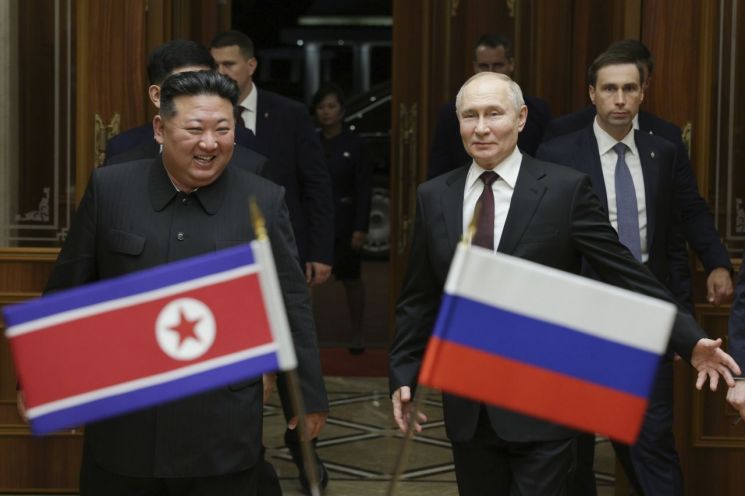
Earlier, intelligence agencies from South Korea's National Intelligence Service, the United States, Ukraine, Japan, and others have successively confirmed that North Korea is deploying a large-scale military force to support Russia's war in Ukraine. President Putin also did not deny the troop deployment reports, stating, "What and how we do with North Korea is our business." Currently, the Ukrainian military claims that the first North Korean troops trained in Russia have been deployed to battlefields including Kursk on Russian soil.
The NYT described the North Korean troop deployment as "the most dramatic scene showing the change in Russia's geopolitical landscape," evaluating that "the era when Russia cooperated with the United States, China, and others to restrain North Korea's nuclear ambitions ended as Putin joined hands with North Korea, which is virtually isolated."
Alexander Gabuev, a Russia-Asia relations expert at the Carnegie Moscow Center, also said, "This indicates a significant change in Russian policy," and analyzed that the rift between alliances led by Russia and the United States will continue even after the Ukraine war, potentially leading to an expansion of geopolitical conflicts intertwined with the US-China rivalry.
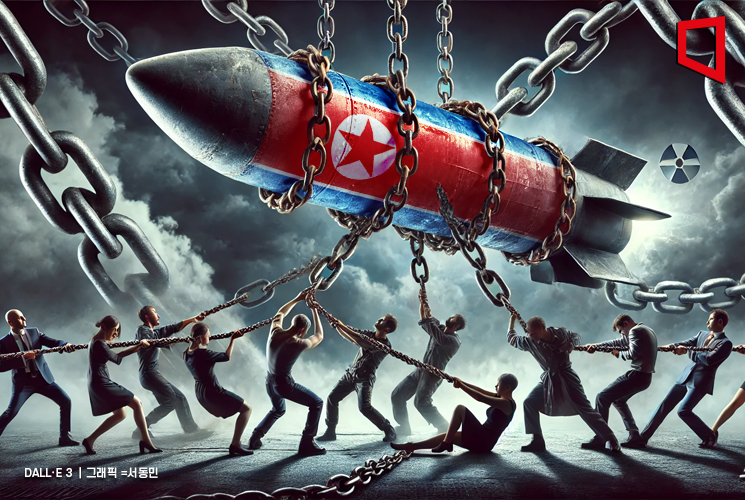
Among experts, there have been ongoing concerns about the possibility of changes in the international landscape as Russia increasingly tightens relations with rogue states including North Korea. It is also evaluated that Russia's severe shortage of troops and supplies due to the prolonged Ukraine war has accelerated this movement. In particular, concerns are growing over the possibility that North Korea could gain core missile and satellite technology or real combat experience in exchange for its troop deployment, raising alarms for security on the Korean Peninsula.
Victor Cha, Korea Chair at the US think tank Center for Strategic and International Studies (CSIS), described North Korea's troop deployment as "crossing the Rubicon," noting that North Korean leader Kim Jong-un could demand advanced military technologies from Russia, including intercontinental ballistic missiles (ICBMs) and nuclear submarines capable of evading US air defense systems, as well as food and fuel.
Robert Peters, a researcher at the Heritage Foundation, also diagnosed that "Russia could provide key momentum for North Korea's nuclear and missile development," identifying this as a core concern for South Korea and the United States. Peters warned that if Russia supplies North Korea with large quantities of missile launch technology capable of penetrating US-South Korea missile defense systems or enhances the precision of North Korean missile strikes through nuclear warhead miniaturization, it could pose a substantial threat.
© The Asia Business Daily(www.asiae.co.kr). All rights reserved.
![From Hostess to Organ Seller to High Society... The Grotesque Scam of a "Human Counterfeit" Shaking the Korean Psyche [Slate]](https://cwcontent.asiae.co.kr/asiaresize/183/2026021902243444107_1771435474.jpg)

















