The Russian State Duma ratified the "Comprehensive Strategic Partnership Treaty" (the North Korea-Russia Treaty) signed with North Korea last June by unanimous vote, according to major foreign media including TASS on the 24th (local time). As the issue of North Korean troops being dispatched to Russia arose, Russia hurried the ratification of the North Korea-Russia Treaty, which is interpreted as a move to engage in full-scale military cooperation with North Korea.
According to reports, the Russian State Duma reviewed the ratification bill of the North Korea-Russia Treaty as the first agenda item at the plenary session that day and passed it unanimously. All 397 deputies present voted in favor, and there were no opposing votes.
The North Korea-Russia Treaty is a military agreement signed on June 19 when Russian President Vladimir Putin visited Pyongyang and met with North Korean State Affairs Commission Chairman Kim Jong-un. The core content is that if one party is subjected to armed aggression and enters a state of war, the other party will provide military support. President Putin submitted the ratification bill of the treaty to the State Duma on the 14th.
Leonid Slutsky, Chairman of the Russian State Duma Committee on International Affairs, evaluated the treaty the day before, saying, "This treaty perfectly considers the current geopolitical situation and will elevate the relationship between Russia and North Korea to an alliance level."
Andrey Rudenko, Deputy Foreign Minister and the Russian government representative for the ratification of the North Korea-Russia Treaty, also requested ratification at the Duma on the same day, emphasizing the necessity of the treaty for stability on the Korean Peninsula and in Northeast Asia. He argued, "(This treaty) positively contributes to maintaining the balance of power in the region based on the principle of inseparable security and reducing the risk of a new war on the Korean Peninsula, including the use of nuclear weapons."
He added, "This treaty aims to counter the growing threat from the West," explaining that the treaty was concluded to provide a new approach to security guarantees in line with the increasingly precarious international political and military situation. However, he emphasized, "The treaty between Russia and North Korea is clearly defensive in nature and is not aimed at any third country."
The ratified treaty consists of 23 articles that expand cooperation not only in the military field but also in space, peaceful nuclear energy, trade, economy, investment, science, and technology. Deputy Minister Rudenko dismissed the existence of any "secret clauses" in the treaty, but AFP reported that it is unclear whether the ratified treaty includes provisions for Russia to provide a nuclear umbrella to North Korea.
The treaty, having passed ratification by both the State Duma and the Federation Council, will be finalized with President Putin's signature. After North Korea and Russia exchange their instruments of ratification, the treaty will come into effect indefinitely.
The ratification of the North Korea-Russia Treaty was processed earlier than initially expected, as it was previously anticipated that the Russian State Duma would handle the ratification bill by mid-next month. The background for Russia's expedited ratification is interpreted to be related to the recent issue of North Korean troop deployment.
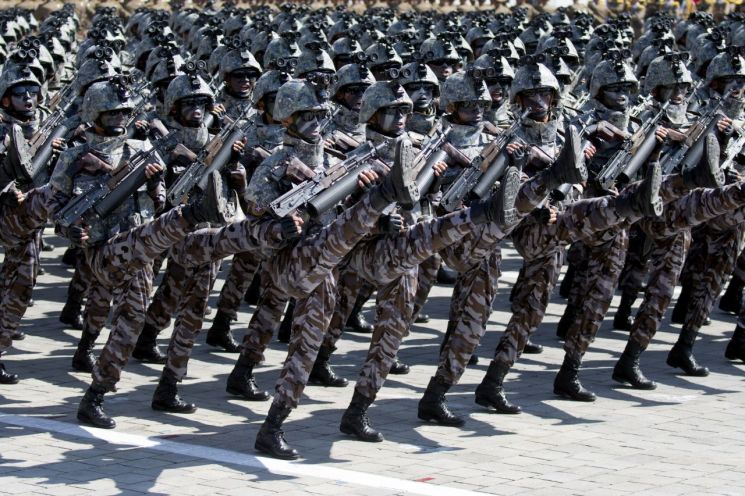
U.S. Secretary of Defense Lloyd Austin, during a visit to Rome, Italy, on the 23rd, told reporters, "There is evidence that DPRK (Democratic People's Republic of Korea) forces are in Russia," officially confirming the North Korean troop deployment to Russia, which had been first raised earlier this month by local Ukrainian media. About two hours after Austin's remarks, NATO (North Atlantic Treaty Organization) also announced, "Allies have confirmed evidence of North Korean troop deployment to Russian forces."
North Korea's troop deployment raises the possibility of escalation, as it could increase tensions on the Korean Peninsula as well as represent a counter-deployment to Western support for Ukraine. Therefore, for Russia, the need to promptly finalize the North Korea-Russia Treaty, which guarantees close military ties with North Korea, has increased. However, Russia has denied the allegations through a Foreign Ministry briefing, stating that "reports of North Korean troop deployment are false and exaggerated information."
© The Asia Business Daily(www.asiae.co.kr). All rights reserved.