KCCI Analyzes Convenience Store Sales of 4 Major Chains in First Half of This Year
Sales Among 50s-60s Age Group Increased by About 20% Compared to Two Years Ago
"Increasing Number of 1-2 Person Households in 50s-60s Age Group
Spreading Pattern of Small-Quantity Purchases at Convenience Stores"
A recent survey revealed that convenience store sales among consumers in their 50s and 60s have significantly increased over the past two years of high inflation.
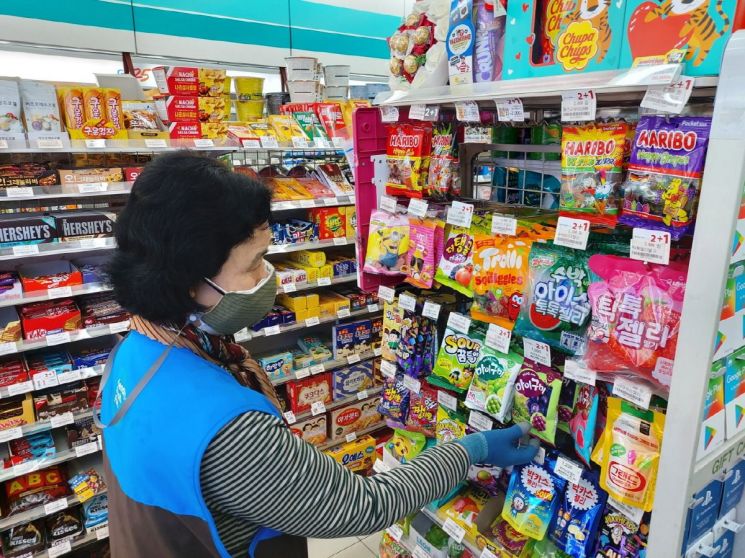
On the 23rd, an analysis of the '2024 First Half Convenience Store Sales Trends' targeting 1,500 nationwide stores of four major convenience store chains by Market Link, a product data analysis agency of the Korea Chamber of Commerce and Industry, showed these results.
Looking at convenience store users by age group, sales in the first half of this year increased by 18.3% and 21.4% in their 50s and 60s respectively compared to the first half of 2022. In contrast, sales among those in their 30s and 40s rose by 4.9% and 4.8% respectively during the same period, while sales in their 20s decreased by 11.5%, highlighting the remarkable growth rate in the 50s and 60s age groups. Professor Ok Kyung-young of the Department of Consumer Economics at Sookmyung Women’s University analyzed, "As the number of one- to two-person households in their 50s and 60s gradually increases, the pattern of purchasing only small quantities as needed at convenience stores is spreading." She added, "Recently, convenience store companies have introduced specialized stores that strengthen the selection of fresh foods such as fruits, vegetables, and meat, thereby absorbing the demand of one- to two-person households in their 50s and 60s who prioritize convenience and accessibility."
In particular, as the burden of dining-out expenses has increased due to high inflation, more people have been resolving their meals at convenience stores where they can conveniently eat at a low cost. Sales of meal replacements at convenience stores in the first half of this year increased by 17.6% compared to two years ago, far surpassing the overall convenience store sales growth rate of 3.6%. By type of meal replacement, sales growth rates were high for ramen (24.7%), soups/stews (23.4%), and lunch boxes/instant rice (21.6%).
Accordingly, convenience store companies are targeting the dining-out demand segment by launching jumbo lunch boxes and large-sized cup noodles at affordable prices. In the first half of this year, alcoholic beverages accounted for 19.3% of total convenience store sales (excluding tobacco), with sales of whiskey and other liquors as well as traditional liquors increasing by 18.4% and 13.6% respectively compared to two years ago. Meanwhile, during the same period, beer and soju sales only increased by 3.9% and 1.8% respectively, and wine sales decreased by 33.0%, indicating a change in alcohol consumption trends.
Meanwhile, the Korea Chamber of Commerce and Industry suggested that since the domestic convenience store market has reached saturation, companies should seek breakthroughs through overseas expansion.
Lee Eun-cheol, team leader of the Distribution and Logistics Promotion Institute at the Korea Chamber of Commerce and Industry, said, "Domestic convenience store companies are playing a leading role in promoting not only K-food but also K-culture and K-retail in overseas markets through the expansion of their overseas store networks," adding, "As convenience store companies in need of new growth engines seek opportunities in overseas markets, active government support appears necessary."
© The Asia Business Daily(www.asiae.co.kr). All rights reserved.
![User Who Sold Erroneously Deposited Bitcoins to Repay Debt and Fund Entertainment... What Did the Supreme Court Decide in 2021? [Legal Issue Check]](https://cwcontent.asiae.co.kr/asiaresize/183/2026020910431234020_1770601391.png)
















