10x Difference in Japan: 500 Yen and 500 Won Used Together
Similar Size, Weight, and Shape Led to Frequent Scams in the Past
Received 500 Yen Coin but Found It Was 500 Won
New Coin Released in 2021, but Scams Still Occur
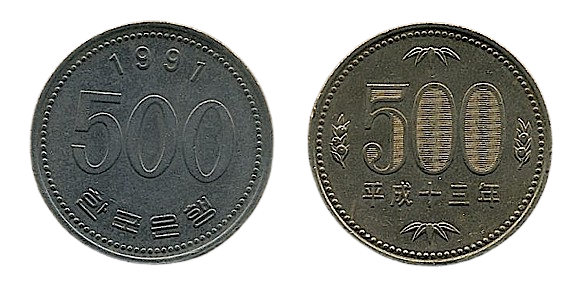
In Japan, incidents are occurring where South Korean 500-won coins are being confused with Japanese 500-yen coins. Japan has ambitiously introduced a new 500-yen coin, but the old coins are still in circulation, and the new coins are also easily mistaken for the Korean 500-won. The value difference between the Japanese 500-yen (approximately 4600 won) and the Korean 500-won is tenfold in Japan.
On the 22nd, Japan's TV Asahi reported that issues with mixed currency have arisen, requiring caution. According to the report, recently at a bathhouse in Tokyo, among the 500-yen coins received from customers, some were South Korean 500-won coins. The bathhouse owner said, "I was counting the 500-yen coins and was surprised to find unfamiliar coins," adding, "I didn't know these coins were Korean money. The 500 won is worth one-tenth of the Japanese yen, about 50 yen." He also said, "Even if customers bring 500-won coins, it would be hard to notice easily."
Similar cases have frequently occurred in Japan in the past. In 1997, Japanese police seized 14,000 illegally circulated 500-won coins. Similar incidents have happened in various stores across Japan. Especially elderly people often mistake 500-won coins for 500-yen coins. The owner of a fruit shop in Kyushu said, "This has happened several times before, and it feels disappointing as if it was done intentionally."
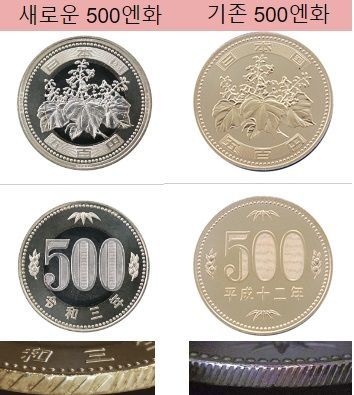
The 500-yen coin and the 500-won coin are similar in design, size, and weight. Comparing the old coins, both have a diameter of 26.5 mm, with the 500-yen weighing 7.0 g and the 500-won weighing 7.7 g. In the past, to use 500-won coins in vending machines instead of 500-yen coins, people drilled holes or scraped the surface of the 500-won coins to adjust the weight. Consequently, the Japanese Ministry of Finance began issuing new 500-yen coins in 2021.
The new coin maintains the same diameter but increased the weight slightly to 7.1 g, 0.1 g heavier than before. The edge, which previously had uniform diagonal grooves, now features variations on the top, bottom, left, and right sides. The edges also bear the inscriptions ‘JAPAN’ on the top and bottom and ‘500 YEN’ on the left and right. The zero in ‘500’ is designed so that depending on the tilt, ‘JAPAN’ or ‘500YEN’ can be seen. However, since the old coins are still in use and the new coins are also confused with the 500-won, even the most advanced new technology has become ineffective against fraud.
© The Asia Business Daily(www.asiae.co.kr). All rights reserved.


















