KCCI SGI Report
High Trade Interdependence Among Semiconductor Powerhouses
"Supply Chain Restructuring Should Be Seen as an Opportunity to Strengthen the Ecosystem"
Despite the trade conflict between the United States and China, China still plays a role as a hub in the semiconductor manufacturing supply chain, leading to projections that the global semiconductor supply chain restructuring will take a considerable amount of time.
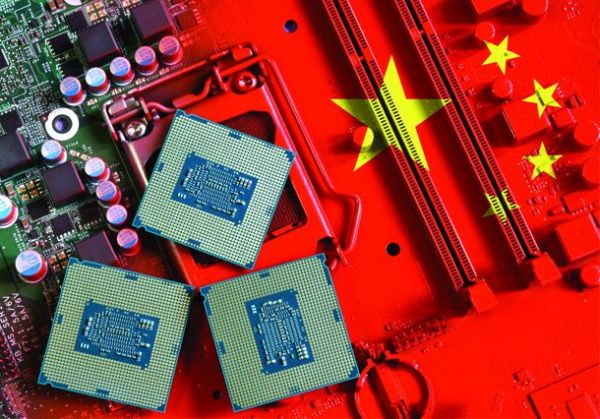
On the 22nd, the Korea Chamber of Commerce and Industry's Sustainability Growth Initiative (SGI) released a report titled "Analysis and Implications of Export-Import Linkage among the Five Major Semiconductor Powers," stating, "The trade interdependence among semiconductor powers, excluding the United States, remains high, making it difficult for the U.S.-led supply chain restructuring centered on its allies to be realized in the near future."
The report analyzed the degree of complementarity among the five major semiconductor powers?South Korea, the United States, China, Taiwan, and Japan?through China's export-import linkage. Export-import linkage is an indicator representing trade connectivity between two countries. A value greater than 1 indicates a complementary trade relationship, while a value less than 1 suggests low trade complementarity.
Based on 2022 data, China showed a high export linkage in memory semiconductors with South Korea at 2.94, and also a high export linkage with Taiwan in memory semiconductors at 1.52. Regarding imports, China was found to have complementary relationships in both memory and system semiconductors with South Korea (memory 2.28, system 2.12), Taiwan (memory 1.50, system 1.29), and Japan (memory 1.44, system 2.05).
In contrast, the export linkage of memory semiconductors between the United States and China was 0.62, and the import linkage was 0.09, indicating low complementarity in trade between the U.S. and China.
In response, SGI interpreted that "China still functions as a global semiconductor manufacturing supply chain hub, maintaining a close production system with South Korea in memory semiconductors and with Taiwan in system semiconductors."
According to the report, 40% of South Korea's exports of electronic and optical devices to China in 2022 were intermediate goods, and 28% were re-exported overseas from China. This suggests that South Korea's semiconductor industry exports have not yet escaped the global supply chain centered on China.
Jung Hyung-gon, Senior Research Fellow at the Korea Institute for International Economic Policy, stated, "China continues to increase its market share in the general-purpose semiconductor market, and its status as a semiconductor demand market is expected to be maintained for the time being, so it is necessary to manage a cooperative relationship with China well."
He emphasized that while cooperating in building a U.S.-ally-centered supply chain in advanced semiconductor technology sectors such as artificial intelligence (AI), the relationship with China should be maintained in the general-purpose semiconductor sector, approaching decoupling carefully.
The report suggested that the restructuring of the semiconductor supply chain after the U.S.-China trade conflict should be turned into an opportunity to strengthen the domestic ecosystem. It recommended that the government expand infrastructure such as semiconductor cluster development and power supply. Additionally, since the semiconductor chip design sector does not require large-scale production facilities, startups and venture companies can be competitive, so it is necessary to significantly strengthen accelerator support programs to nurture domestic companies.
Park Yang-su, Director of SGI, said, "Regardless of who wins the U.S. presidential election, the establishment of an ally-centered supply chain will be further strengthened, and pressure for decoupling may increase even in general-purpose semiconductors." He added, "It is necessary to actively pursue financial support measures such as subsidies or direct reimbursements for advanced industry investments so that our companies can create new opportunities."
© The Asia Business Daily(www.asiae.co.kr). All rights reserved.

















