Number and Amount of Subrogation Cases Expected to Reach Record High in 9 Months This Year
Assemblyman Heo Jong-sik "Incheon City Must Prepare Drastic Measures"
The guarantee default rate for substitute payments by small business owners in the Incheon area has been the highest in the country for three consecutive years.
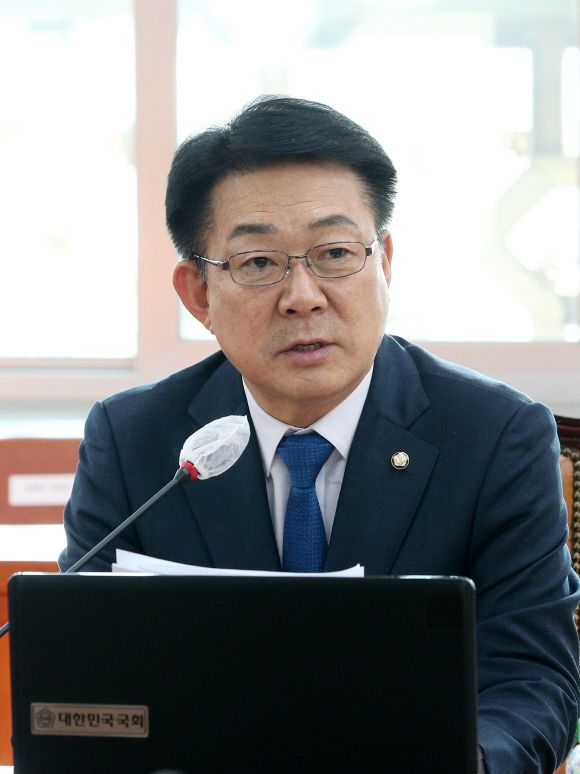
According to the 'National Guarantee Default Rate and Substitute Payment Rate Status' data received by Democratic Party lawmaker Heo Jong-sik (Incheon Dong-gu Michuhol-gu Gap) from the Korea Credit Guarantee Fund Central Association, as of the end of last month, Incheon's default rate and substitute payment rate were 8.2% and 7.9%, respectively, ranking first among the 17 metropolitan cities and provinces. Substitute payment refers to the regional credit guarantee fund guaranteeing small business owners to obtain loans from banks and repaying the loans on their behalf when they fail to repay.
In particular, the default rate in Incheon was recorded as the highest among local governments for three consecutive years: 2.7% in 2022, 6.5% in 2023, and 8.2% this year. The substitute payment rate was behind Gyeongbuk (1.5%) and Daegu (5.5%), which had the highest rates in 2022 and 2023 at 1.4% and 4.9%, respectively, but this year it surpassed Gyeongbuk (6.6%) and Daegu (4.9%) to take first place at 7.9%.
Looking at the number and amount of substitute payments, it is expected to exceed last year's scale within nine months this year, reaching an all-time high. Substitute payments surged from 1,888 cases in 2022 to 7,260 cases in 2023, and as of the end of last month, this year has already exceeded last year's figure with 8,435 cases. The amount also jumped from 30.9 billion KRW in 2022 to 106.6 billion KRW in 2023, and this year it surpassed last year's scale with 118.7 billion KRW.
It has been pointed out that Incheon’s nationwide first place in substitute payments was already anticipated. Last year, the closure rate in the Incheon area (60,010 closures) was 10.5%, exceeding the national average of 9.5%, ranking first nationwide. Summarizing this, Heo’s office analyzed that Incheon had the highest proportion of small business owners closing their businesses last year, and this year, small business owners unable to repay loans have followed like dominoes.
By district, Bupyeong-gu had the highest closure rate at 12.2%, followed by Gyeyang-gu at 11.1%, Namdong-gu at 10.8%, Michuhol-gu at 10.6%, and Seo-gu at 10.5%. By industry, retail had the highest rate at 31.4% (18,854 closures), followed by service industry at 20.3%, real estate rental at 15.1%, and food service at 13.8%.
Lawmaker Heo emphasized, "The management conditions of small business owners and self-employed people in the Incheon area have deteriorated to the lowest level nationwide, negatively impacting the local economy," adding, "Bold government support policies are necessary, and Incheon City should also prepare separate measures."
© The Asia Business Daily(www.asiae.co.kr). All rights reserved.