Letter to the Embassy of Japan in the United States
The U.S. Congress has pressured the Japanese government to actively participate in export control measures on semiconductor equipment to China. As Japanese companies have responded passively, waiting to see the situation after the U.S. presidential election, the U.S. warned that it would impose its own sanctions on any company violating U.S. export regulations or deny semiconductor subsidies from the U.S. government.
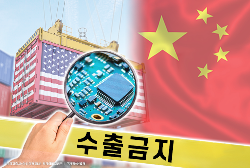
According to Bloomberg on the 20th (local time), the U.S. House China Task Force sent a letter containing these demands to the Japanese Embassy in the U.S. on the 15th. The China Task Force is a bipartisan committee established through cooperation between Republicans and Democrats, viewing China as the U.S.'s greatest competitor and developing policies toward China.
In the letter, the China Task Force dismissed claims that U.S. export controls negatively affected Japanese semiconductor equipment companies such as Tokyo Electron. It explained that the stock prices of global semiconductor equipment companies, including Tokyo Electron, have risen, and their customers like Intel and Samsung Electronics have received subsidies from the U.S. government, allowing semiconductor equipment companies to benefit as well. The letter repeatedly emphasized that cooperation among the home countries of the world's top five equipment manufacturers?the U.S., Japan, and the Netherlands?is crucial to curbing China's semiconductor ambitions.
Earlier, the Biden administration implemented export control measures on semiconductor equipment to China in October 2022. Since then, it has urged allied countries and semiconductor equipment powerhouses like Japan and the Netherlands to join in. While the governments of both countries have cooperated with the U.S. in export controls to China, they have continued to provide maintenance and repair services for semiconductor equipment already imported into China. The Biden administration aims to block not only China's advanced semiconductor development but also general-purpose semiconductor development, demanding that Japanese and Dutch companies cease providing maintenance and repair services for semiconductor equipment to China.
However, companies in both countries have expressed reluctance and are waiting to observe the regulatory situation after the November U.S. presidential election. As a result, concerns have arisen within the U.S. that the effectiveness of export control measures on semiconductors to China is declining and that only U.S. companies are being unfairly disadvantaged. In response, the China Task Force has taken the lead in pressuring its ally Japan. From the perspective of Japanese companies, the restriction on access to China, a major market, is itself a significant loss, and there is considerable concern due to the high likelihood of retaliatory measures by the Chinese government, such as banning exports of critical minerals.
© The Asia Business Daily(www.asiae.co.kr). All rights reserved.

![Clutching a Stolen Dior Bag, Saying "I Hate Being Poor but Real"... The Grotesque Con of a "Human Knockoff" [Slate]](https://cwcontent.asiae.co.kr/asiaresize/183/2026021902243444107_1771435474.jpg)













