Household Loan Demand Blocked from Moving to Secondary Financial Sector
Follow-up Meeting on the 15th by Working-Level Staff, Inspection Meeting Led by Secretary General Kwon Daeyoung
Discussion Expected on Measures Such as 'Restriction on Handling Installment Products' Proposed by Secondary Financial Sector
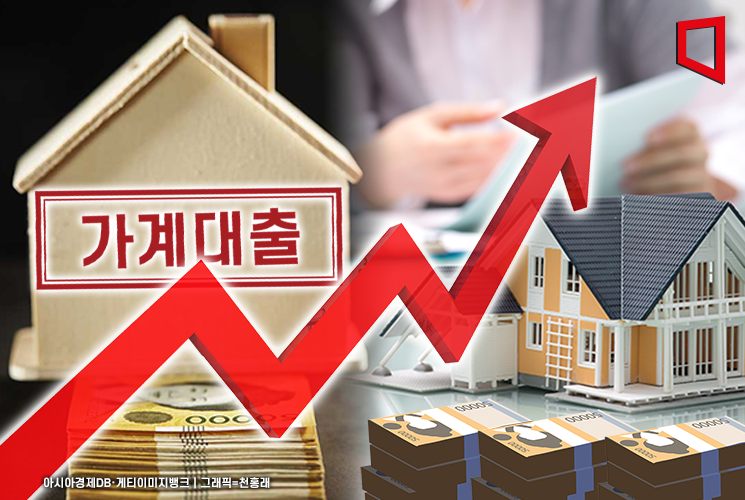
Financial authorities are holding consecutive inspection meetings to block the so-called "balloon effect," where loan demand shifts to the secondary financial sector due to the banking sector's active suppression of household loans. In particular, as the loan balance of mutual finance sectors increases, there is a growing need for proactive management.
According to financial authorities on the 21st, the Financial Services Commission plans to convene mutual finance, insurance, credit specialized, and savings banks again on the 23rd under the chairmanship of Secretary-General Kwon Dae-young to hold a household debt inspection meeting and reiterate the management of household debt.
Earlier, on the 15th, the Financial Services Commission also gathered secondary financial sector officials to discuss measures to curb the increasing loan demand. The core measures proposed by the secondary financial sector to suppress the balloon effect include restricting the handling of interest-only products with principal grace periods and banning mortgage loans for multi-homeowners. Additionally, it includes stopping the subscription to mortgage insurance (MCI·MCG) for mortgage loans to prevent multi-homeowners from obtaining additional loans.
Since the implementation of the second phase of the stress total debt service ratio (DSR) measures in September, the increase in household loans recorded 5.2 trillion won, down by more than 4.5 trillion won compared to August. However, considering the Chuseok holiday and other factors, it is still too early to be reassured. Although the increase in household loans in the secondary financial sector shifted from a 500 billion won increase to a 500 billion won decrease during the same period, a clear upward trend in loans was observed mainly in large insurance companies and Saemaeul Geumgo.
Above all, there is also an observation that the effect of loan write-offs contributed significantly to the decrease in secondary financial sector loans last month. As part of the financial authorities' soundness management requirements, the secondary financial sector is actively processing loan receivables as losses. Although it appears on the surface that the loan increase has slowed, the reality may be different.
Household loans at Saemaeul Geumgo, which financial authorities are closely monitoring, reportedly exceeded the level of September in October as demand for group loans and mortgage loans surged. In September, Saemaeul Geumgo's household loan balance increased by 200 billion won, reversing from a 20 billion won decrease in August to a significant increase.
In the case of group loans used by new apartment buyers to pay interim or final payments, banks have traditionally handled these loans, but recently, as banks have raised lending thresholds, demand seems to have started shifting to the secondary financial sector. Seoul Gangdong Nonghyup was selected as the final payment loan institution for the Dunchon Jugong reconstruction complex "Olympic Park Foreon."
The household loan balance in the insurance sector is increasing. The household loan balance of insurance companies increased by 300 billion won in August and by 400 billion won in September. Loans secured by insurance payouts are classified as recession-type loans along with card loans.
A financial sector official explained, "We will analyze the demand shifting to the secondary financial sector as bank loans are blocked and share frontline situations," adding, "There will likely be discussions on the measures proposed by the sectors on the 15th."
© The Asia Business Daily(www.asiae.co.kr). All rights reserved.
![Clutching a Stolen Dior Bag, Saying "I Hate Being Poor but Real"... The Grotesque Con of a "Human Knockoff" [Slate]](https://cwcontent.asiae.co.kr/asiaresize/183/2026021902243444107_1771435474.jpg)
















