Practical Benefits Through Foreign Currency Earnings, Real-World Experience, and Relations with Russia
Young Soldiers May Encounter External Cultures and Potentially Desert
North Korea is being evaluated as having taken a gamble by sending troops to Russia and Ukraine. While there is an advantage in that North Korean soldiers can gain real combat experience, young soldiers who have been controlled and isolated from the outside world may encounter new cultures, which could lead to incidents such as desertion.
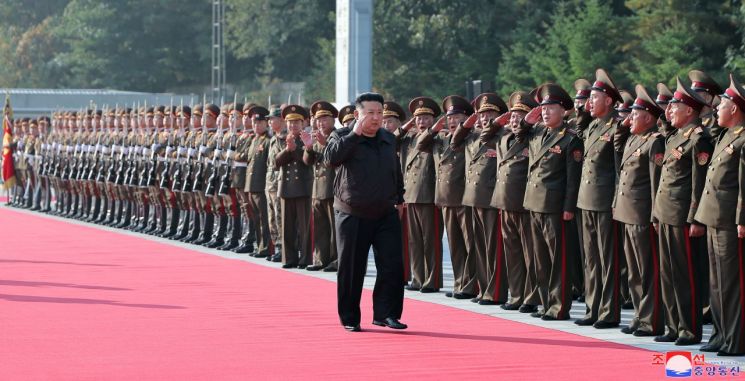
Ukrainian media, citing intelligence sources, reported, "It appears that North Korea has sent as many as 10,000 soldiers and personnel to Russia," adding, "Among them, about 3,000 are undergoing integrated training in the ‘Buryat’ battalion of the Russian 11th Air Assault Brigade, which is currently being reorganized."
If the deployment is true, North Korea would become the first country to send combat troops to the Russia-Ukraine war despite not being a party to the conflict. Defense Minister Kim Yong-hyun stated at the National Assembly’s National Defense Committee inspection on the 8th that regarding reports of North Korean military casualties on the Ukrainian battlefield, "It is highly likely to be true."
Deployment of Combat Troops More Likely than Support Personnel
The exact number of troops North Korea has sent is unclear, but the emphasis is on combat troops rather than support personnel. After Chairman Kim Jong-un and President Vladimir Putin signed a treaty restoring the ‘mutual military assistance’ clause during their summit in Pyongyang in June, it is possible that the deployment of North Korean soldiers and weapons to Russia has intensified.
The benefits North Korea gains by sending combat troops are significant. First, it is a source of foreign currency. North Korea has earned foreign currency by sending workers abroad. According to a March report by the UN Security Council’s North Korea Sanctions Committee, North Korea has earned between $750 million and $1.1 billion annually (approximately 1.0382 trillion to 1.5227 trillion KRW) through this method until recently. This deployment could be another opportunity to earn foreign currency. Additionally, North Korea can gain real combat experience with short-range ballistic missiles ‘KN-23’ (North Korean version of Iskander) exported to Russia and drone operations.
Yang Wook, a research fellow at the Asan Institute for Policy Studies, analyzed, "North Korea will likely receive weapons or money as compensation for the deployment," adding, "Since this is the first major battle in decades, they do not want to miss the opportunity to gain war experience."
Possible Integration with Russian Forces or Independent Operations
The deployment of combat troops remains uncertain. They may be integrated with Russian forces and deployed to the front lines or assigned to specific areas. If integrated with Russian forces, they could disguise themselves as Koryo-saram (ethnic Koreans in the former Soviet Union) to avoid exposure to the international community. If deployed to specific areas, independent operations under Russian command control are also possible. However, it would be difficult to conceal their participation in the war. The likely area is Russia’s Kursk Oblast, where Ukrainian forces have been advancing and launching attacks since August.
However, the risks are as significant as the benefits. Even if soldiers are selected through background and ideological screening in North Korea, once abroad, they inevitably come into contact with external information. The main force of the North Korean military consists of generations born in the 1990s and 2000s, who are market-friendly. If the foreign currency they earn flows into the North Korean regime, the possibility of desertion is high. In fact, local Ukrainian media reported that 18 North Korean soldiers deserted near the border between Kursk Oblast and Bryansk Oblast. The problem continues afterward. If the young soldiers deployed abroad return and spread foreign culture, it could increase the risk of cracks in the North Korean system. In the long term, this could shake the Kim Jong-un regime.
© The Asia Business Daily(www.asiae.co.kr). All rights reserved.

















