[Suspicious New Villa King: The Second Jeonse Fraud Horror]③
Landlords and Real Estate Said "No Problem with the House"
But It Turns Out to Be a 'Dangerous House' with Unresolved Jeonse Fraud Issues
Landlord Is the 'Villa King' Who Won Dozens of Jeonse Fraud Houses
Listed 20 Million Won Below Market Price to Deceive Tenants
Growing Anxiety Over Risks of Not Getting Deposits Back or Being Evicted

It looked fine on the surface. It was the house they had set their sights on as their newlywed home. The landlord insisted until the moment the contract was signed, "All issues with the house have been resolved." The licensed real estate agent also supported this by presenting all kinds of documents. Although several seizure stickers were plastered on the front door, they did not raise much suspicion. On the day of moving in, Mr. A personally removed each red sticker and moved in his belongings. It was only about eight months after moving in that he understood the rights and situation of the house. Mr. A realized that the house was at risk of a 'second rental fraud.' There was still more than a year left until the contract ended. The anxiety kept growing.
Mr. A explained the background of moving into a rental fraud-affected house like this. Asia Economy identified rental fraud-affected villas with unresolved rights over four months starting last May and met tenants like Mr. A.
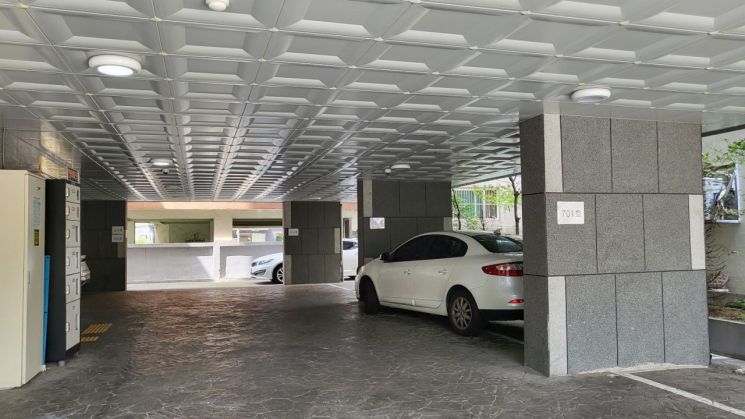 Asia Economy conducted interviews in July and August with multiple tenants who newly moved into a villa in Simgok-dong, Wonmi-gu, Bucheon-si, Gyeonggi Province, which was a victim of a jeonse fraud. Photo by Kwon Hyunji
Last summer, Mr. A, in his 30s, was looking for a house to live with his husband in Wonmi-gu, Bucheon, Gyeonggi Province. He happened to see a decent listing on a well-known real estate platform and went on a site visit. He visited a real estate agency in Chunui-dong, Wonmi-gu, which was mediating the contract. However, the actual house was different from the photos. The agent took the disappointed Mr. A to another house.
It was a neat five-story villa completed five years ago. After passing a spacious parking lot and taking a golden-shining elevator up, there were only two units per floor. It was quiet and clean, earning a passing grade. Inside, it had three rooms, two bathrooms, and a veranda, measuring 34 pyeong (approximately 112.4 square meters). It seemed suitable for starting a new household. Since it was a temporary place, the burden was lighter.
On the day of the contract, the person who came claiming to be the landlord introduced himself as the representative of a corporation. He said he had won the house at a court auction. About six years before Mr. A signed the contract, a man in his 40s named Jin had purchased it for 229 million KRW and rented it out. However, he failed to return the deposit to the tenant, and the house went to auction in October 2020. After 11 failed auctions, it was acquired by the current owner, Corporation S, in August last year. It was won at about 2% (4.82 million KRW) of the appraised value (233 million KRW).
This corporation asserted that the previous tenant issues had been cleanly resolved and no rights remained, so there was no problem. The agent also said there was nothing to worry about. Since they spoke honestly without hiding anything, Mr. A felt reassured. He even thought that since the landlord was a corporation rather than an individual, there was no risk of losing the deposit. Thus, Mr. A signed a two-year monthly rent contract with Corporation S in September last year.
However, Corporation S was a 'villa king' who had won dozens of villas affected by rental fraud besides this one. They increased assets by acquiring villas at bargain prices, moving in new tenants with deposits, and using those deposits to win other villas at auction. This was an asset growth method based on the 'zero-capital gap investment' that caused the 2022 rental fraud crisis. If tenants simultaneously demand the return of their deposits, it could escalate into a second rental fraud incident. Especially, if the house still has a tenant registration right (a system where tenants can apply to the court to be repaid their rental deposit first), the rights of new tenants are pushed to a lower priority, risking non-repayment of deposits.
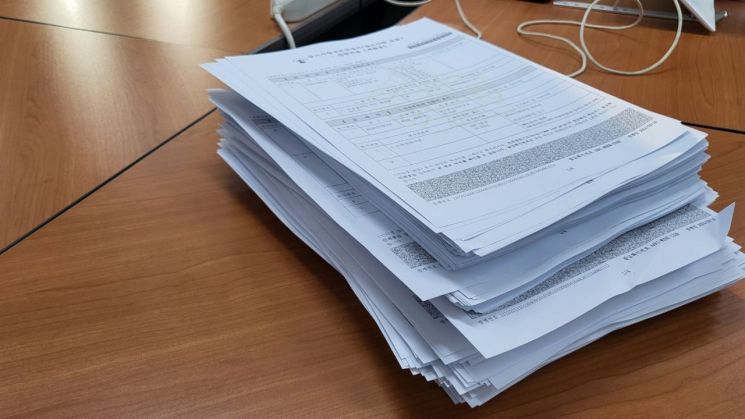 Asia Economy has compared and analyzed real estate auction specialist site Gigi Auction, court registry documents, and others over four months since last May to identify new tenants who moved into villas affected by jeonse fraud where the rights relationships have not been extinguished. Photo by Kwon Hyunji
Mr. A was not the only one exposed to the risk of rental fraud. Kim, a late-20s office worker met in Wonmi-gu, Bucheon, also moved into a house in January this year where the tenant registration right remained intact. The house, completed in 2018, had three rooms, two bathrooms, and a veranda. Originally owned by a man in his 40s, it went to forced auction in April 2022 because the deposit was not returned to the tenant. After nine failed auctions, ownership transferred to Corporation S in November last year. Corporation S signed a two-year lease contract with Mr. Kim without repaying the outstanding deposit.
Mr. A and Mr. Kim were attracted by the rent being cheaper than the market despite the risks. Nearby newly built three-room villas usually charged deposits of 20 to 30 million KRW and monthly rents of 800,000 to 1.2 million KRW. In contrast, Corporation S significantly lowered these to attract tenants. Mr. A's house was initially listed with a 10 million KRW deposit and 650,000 KRW monthly rent, but after Mr. A requested a further discount, the contract was made with a 15 million KRW deposit and 600,000 KRW monthly rent. Mr. Kim paid a 10 million KRW deposit and 700,000 KRW monthly rent. Mr. Kim said, "I signed the contract because the monthly rent was about 400,000 to 500,000 KRW lower than other nearby newly built villas," and "Several acquaintances also live in such houses, so I didn't think it was particularly risky."
Some critics point out that these corporations deceived tenants by hiding their identities on documents. When selling auctioned properties to third parties or re-auctioning, registration is required, but lease contracts do not require registration. Jeong Kyung-guk, a judicial scrivener and head of the Public Interest Legal Support Team for Rental Fraud Victims at the Korean Association of Judicial Scriveners, explained, "Since ownership transfer registration clearly reveals remaining rights, it appears they deliberately avoided registration to lie to tenants."
© The Asia Business Daily(www.asiae.co.kr). All rights reserved.



















