Yonsei University Professor Kim Geunsu's Research Team Lays Groundwork for Solving Physics Challenges
A study expected to provide important clues to unravel the secrets of high-temperature superconductors and superfluid phenomena, long-standing challenges in modern physics, has been conducted by a domestic research team.
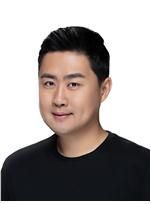 Professor Geunsu Kim, Yonsei University
On the 17th, the Ministry of Science and ICT announced that Professor Geunsu Kim's research team at Yonsei University has discovered for the first time in the world a fragment of an ‘electron crystal’ in solid materials, where electrons exhibit both liquid-like and solid-like characteristics.
In solid materials, atoms are arranged in a regular pattern and cannot move, whereas electrons can move freely like a gas. When a voltage is applied to create a flow of electrons, an electric current is generated.
The electron crystal state, in which electrons form a regular arrangement and cannot move due to their mutual repulsive forces, was proposed by Eugene Wigner, a Nobel Prize winner in Physics in 1963.
If electrons can be made to form a crystal state, it could be the key to solving difficult problems such as high-temperature superconductors and superfluids. This has been a major topic in physics for decades, attracting numerous researchers worldwide. High-temperature superconductors are materials in which resistance disappears at relatively high temperatures above minus 240 degrees Celsius, and superfluids are materials in which viscosity disappears at extremely low temperatures.
In 2021, the research team discovered an electronic state with liquid properties in a material doped with alkali metals, and the research results were also published in the journal Nature. The team continued follow-up studies and eventually discovered fragments of electron crystals that simultaneously exhibit both liquid and solid properties at specific doping concentrations.
To verify the discovered electron crystals, the research team precisely measured the energy and momentum of electrons using synchrotron radiation accelerators and angle-resolved photoemission spectroscopy devices, successfully observing unique irregularities that appear when tiny electron crystal fragments exist.
This study is the world’s first to discover electron crystal fragments similar to a liquid crystal (liquid crystal display) state, and the observed irregularities are also similar to the characteristics of superfluids, where the viscosity of the material disappears.
Professor Geunsu Kim stated, “Until now, academia has recognized the presence or absence of regular electron arrangements dichotomously,” adding, “The significance of this study lies in recognizing a third electron crystal state where only short-range order exists.”
Supported by the Ministry of Science and ICT’s Basic Research Program (Global Leader Research), this research achievement was published in the international journal Nature. The 2021 research results, which formed the foundation for Professor Kim’s recent achievement, were also accomplished with support from the Ministry’s Basic Research Program (Mid-career Research). A Ministry of Science and ICT official stated, “The results of prior research were deepened and developed through follow-up studies, enabling research that approaches the origins of natural phenomena more closely.”
© The Asia Business Daily(www.asiae.co.kr). All rights reserved.

![Clutching a Stolen Dior Bag, Saying "I Hate Being Poor but Real"... The Grotesque Con of a "Human Knockoff" [Slate]](https://cwcontent.asiae.co.kr/asiaresize/183/2026021902243444107_1771435474.jpg)














