From an Industry Perspective, Focus on Healthcare
From a Style Perspective, Emphasize Growth Stocks and Quality
Amid ongoing uncertainty over the unwinding of the yen carry trade continuing to exert downward pressure on the stock market, advice has emerged to increase bond allocations to manage volatility.
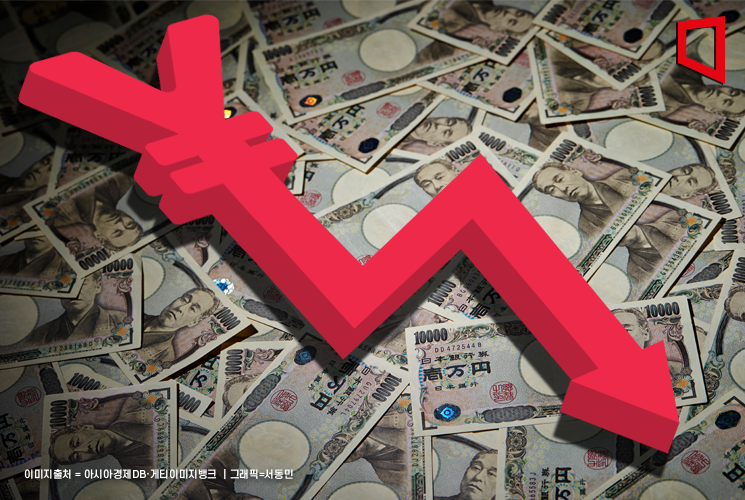
On the 16th, Kim Dae-jun, a researcher at Korea Investment & Securities, warned in a report, "In the past, whenever the yen carry trade was unwound in the Korean stock market, overseas capital frequently withdrew. This year is no different," adding, "If liquidity flows out, the stock market will be exposed to high volatility again, and looking back at previous yen carry trade unwinding processes, the KOSPI has consistently underperformed."
Researcher Kim selected six periods of yen carry trade unwinding since 1995 to examine macroeconomic changes during those times and used this analysis to forecast the current unwinding phase.
As a result, he predicted that the yen carry trade unwinding phase, which began in the second quarter of this year, will continue at least until early 2026. He stated, "Financial conditions have already started to ease since the beginning of the year, and signs of yen carry trade unwinding have appeared, such as the narrowing US-Japan interest rate differential and increased exchange rate volatility. Since July, short-term yen funds have begun to be unwound, and with the dollar-yen continuing a trend of strength, the signs of unwinding have become more pronounced. The unwinding phase is expected to persist until early 2026 when the US-Japan interest rate differential narrows."
In fact, as Japan initiated interest rate hikes this year, the unwinding of yen carry trade funds?where yen is borrowed to invest in global assets?accelerated sharply. According to Bloomberg, Japanese investors have net purchased 28 trillion yen (approximately 257.27 trillion KRW) in Japanese government bonds over the past eight months this year.
During the same period, the scale of overseas bond purchases decreased to 7.7 trillion yen, roughly half of the amount at the beginning of the year. This is interpreted as Japanese investors shifting their interest from overseas bonds to domestic government bonds.
He advised that in relation to the yen carry trade unwinding, response strategies should be established by considering supply and demand trends, performance analysis, and economic changes.
Researcher Kim recommended, "From an industry perspective, focus should be placed on healthcare; from a style perspective, emphasis should be on growth stocks and quality. From an asset allocation standpoint, it is advisable to increase bond allocations as much as possible to respond to a highly volatile market."
© The Asia Business Daily(www.asiae.co.kr). All rights reserved.

















