Data on approximately 280 barrier-free stores built through field surveys for convenient use by transportation-vulnerable groups such as disabled persons, pregnant women, and the elderly... Store information including entrance thresholds, accessible restrooms and parking, elevator availability to be provided in October via Public Data Portal, Seongdong Smart Roadview, and 'Wilchair' app
Seongdong-gu, Seoul (Mayor Jeong Won-oh) announced that it has completed the establishment of a barrier-free store database that anyone, including people with disabilities, pregnant women, and the elderly, can conveniently use.
According to a survey by the Ministry of Land, Infrastructure and Transport, as of the end of 2021, the number of transportation-vulnerable people in South Korea was about 15.51 million, accounting for approximately 30% of the total population (about 51.64 million).
Transportation-vulnerable people refer to those who experience difficulties in mobility in daily life, such as people with disabilities, the elderly, people accompanied by infants and young children, and children, as defined by the Transportation Vulnerable Act. Although 3 out of 10 people are transportation-vulnerable, many of them face significant inconveniences due to facilities such as stairs and ramps even during routine outings.
Accordingly, the district established a barrier-free store database to provide sufficient prior information about store convenience facilities to residents, including transportation-vulnerable people, to enhance usability and accessibility.
The purpose is to create an environment where all residents can use various facilities without inconvenience by providing advance information about stores equipped with facilities considerate of transportation-vulnerable people.
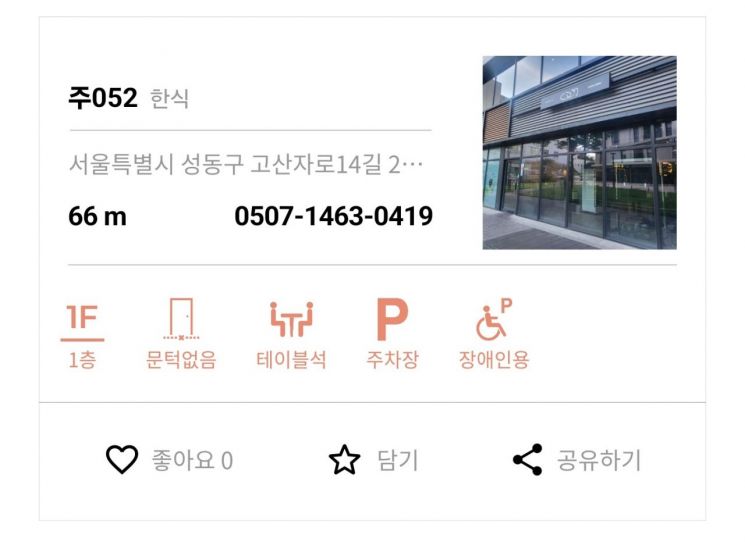
The district conducted a thorough field survey targeting all stores in the area and secured data focusing on stores that are easily accessible using wheelchairs, strollers, and the like.
The collected data includes various useful items for transportation-vulnerable people, such as the presence of thresholds at entrances, accessible restrooms for people with disabilities, parking spaces for people with disabilities, and the availability of elevators.
Based on the survey results, the district plans to provide information on approximately 280 barrier-free stores through the Public Data Portal, Seongdong Smart Road View, and the wheelchair user-customized information platform app ‘Wheelchair’ in October.
By allowing residents, including people with disabilities, the elderly, and families with infants, to check the facilities of stores they plan to visit in advance, convenience of use is expected to greatly improve, and accessibility will also be enhanced, which is anticipated to have a positive impact on revitalizing the local economy.
The district plans to regularly update the barrier-free store data and continue to discover additional stores that create barrier-free environments.
To improve accessibility for mobility-vulnerable people, the district is making various efforts to ensure that the right to mobility is equally guaranteed to everyone, such as promoting the ‘Everyone’s First Floor’ Seongdong-type ramp installation support project.
Jeong Won-oh, Mayor of Seongdong-gu, stated, “We expect that the establishment of the barrier-free store database will greatly improve the daily inconveniences of residents, including transportation-vulnerable people,” and added, “We will continue to make meticulous efforts to create a barrier-free environment that enhances residents’ convenience.”
© The Asia Business Daily(www.asiae.co.kr). All rights reserved.
![Clutching a Stolen Dior Bag, Saying "I Hate Being Poor but Real"... The Grotesque Con of a "Human Knockoff" [Slate]](https://cwcontent.asiae.co.kr/asiaresize/183/2026021902243444107_1771435474.jpg)
















