Wegovy, Novo Nordisk's obesity treatment drug that sparked a 'miracle obesity drug' craze by demonstrating about 15% weight loss effects, has finally landed in South Korea.
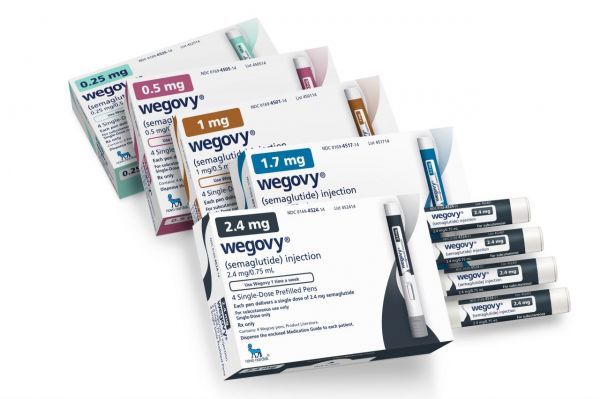 Novo Nordisk's GLP-1 class treatment 'Wegovy (active ingredient Semaglutide)'
 [Photo by Novo Nordisk]
According to industry sources on the 15th, Zulik Pharma Korea, which distributes Wegovy domestically, began accepting orders for Wegovy from hospitals, clinics, and pharmacies starting today. Although it was approved by the Ministry of Food and Drug Safety in April last year as an adjunct for "weight loss and weight management in patients with obesity or overweight with comorbidities," actual prescriptions have only become imminent about a year and a half later due to difficulties in securing supply.
Wegovy is a drug containing semaglutide, a glucagon-like peptide-1 (GLP-1) receptor agonist. Initially developed as Ozempic, a diabetes treatment, based on the fact that GLP-1 is secreted from the pancreas along with insulin to regulate blood sugar, it was later found that this ingredient also acts on the stomach and brain to suppress appetite and induce weight loss, leading to its introduction as the obesity treatment Wegovy. Wegovy is a prescription drug manufactured as a pen-shaped injection to be administered once a week for one month. It comes in five dosages ranging from 0.25 mg to 2.4 mg, starting at 0.25 mg once a week with gradual dose escalation, and after the 16th week, the 2.4 mg pen is maintained as the maintenance dose.
Wegovy has shown explosive popularity and rapidly increasing sales in eight overseas countries including the United States, the United Kingdom, Germany, and Japan, where it has already been launched. Last year alone, it recorded sales of $4.5 billion (approximately 6 trillion KRW), showing a 407% growth compared to the previous year. Furthermore, clinical trials have additionally confirmed that it can improve cardiovascular diseases and non-alcoholic fatty liver disease, which are major causes of obesity-related illnesses, thereby expanding its therapeutic scope day by day. In addition, global Phase 3 clinical trials to prove its efficacy in treating dementia are also underway in countries including South Korea.
Wegovy not only promotes simple weight loss but also demonstrates effects such as reducing the risk of cardiovascular disease occurrence, and in countries like the United States, it is covered by public health insurance. However, in South Korea, since reimbursement applications have not yet been made, it is expected to be launched as a non-reimbursed drug. In the U.S., Wegovy was sold at about $1,350 (approximately 1.8 million KRW) per month of treatment, while in South Korea, it will be supplied at 372,025 KRW per month. This is the supply price to hospitals, clinics, and pharmacies, and considering it is a non-reimbursed drug, the actual price is expected to be set differently by each medical institution, likely higher than this. Actual supply is expected to begin around the 16th or 17th.
The Ministry of Food and Drug Safety stated regarding Wegovy, "It is a drug that must be used following a doctor's prescription and pharmacist's dispensing and medication guidance," and urged, "Users should not sell, distribute, or purchase it personally online or through other means." Wegovy can only be prescribed to adult obese patients with a body mass index (BMI) of 30 kg/m² or higher, or adult obese patients with a BMI of 27?30 kg/m² who have one or more weight-related comorbidities such as hypertension. Clinical trials have shown that side effects such as headache, vomiting, diarrhea, constipation, gallstones, hair loss, and acute pancreatitis may occur during use. There are also concerns about worsening kidney function due to dehydration, acute pancreatitis, hypoglycemia, and retinopathy in patients with type 2 diabetes, so caution is advised when administering to patients with related conditions.
© The Asia Business Daily(www.asiae.co.kr). All rights reserved.

















