Suggestions at the Korean International Economic Association Fall Seminar
Ham Junho "Legislate F4 Meetings to Prevent Financial Imbalance"
Joo Sangyoung "Lower Interest Rates Gradually and Cautiously"
Professor Ham Jun-ho of Yonsei University Graduate School of International Studies, a former member of the Monetary Policy Committee of the Bank of Korea, and Professor Joo Sang-young of Konkuk University Department of Economics offered suggestions on the future direction of monetary policy. Professor Ham argued that macroeconomic financial meetings (F4 meetings) should be legalized to prevent the worsening of financial imbalances, while Professor Joo said the Bank of Korea should lower interest rates gradually and cautiously.
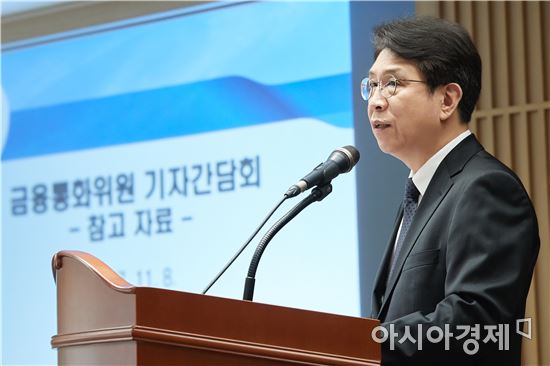 Ham Jun-ho, Member of the Monetary Policy Committee
Professor Ham (former Monetary Policy Committee member) attended the fall seminar of the Korean International Economic Association held on the 14th at the Bankers’ Hall in Myeong-dong, Jung-gu, Seoul, where he delivered a keynote speech titled "Global Monetary Policy Transition and Korea’s Policy Response." He pointed out, "In Korea, despite domestic and external monetary stances, debt has continuously increased centered on private credit, with macro leverage reaching 251.3% as of the end of last year, indicating heightened structural vulnerabilities. Amid this, entering a global interest rate cut cycle poses a risk of further aggravating financial imbalance issues."
He continued, "Although policy coordination is pursued through the F4 meetings, which are unofficial consultative bodies, with practical operations handled by the Financial Services Commission and the Financial Supervisory Service, the roles of participating policy institutions are not properly defined, and it is unclear who should be held accountable. Therefore, it is necessary to legalize a macroprudential consultative body composed of heads of related institutions and strengthen the central bank’s participation and role in establishing macroprudential policies."
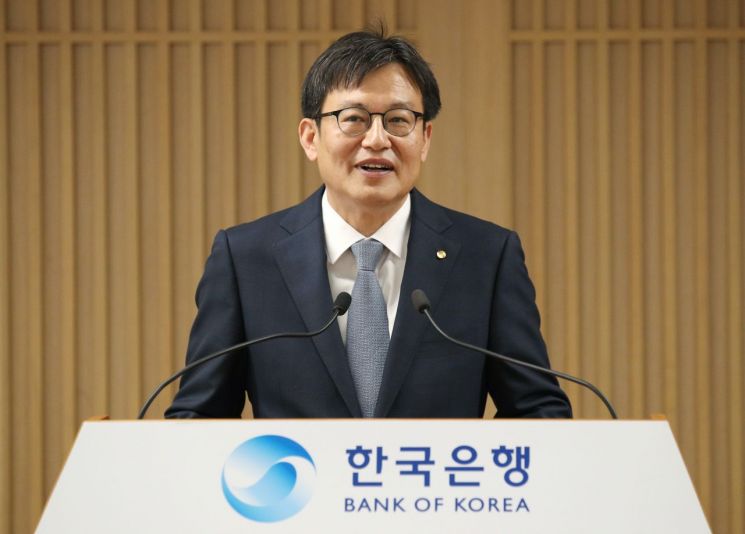
Professor Joo (former Monetary Policy Committee member) attended the comprehensive discussion of Session 2 and summarized the presentations from Session 1, commenting on the future direction of monetary policy. He said, "Since the U.S. economy appears to have achieved a soft landing rather than falling into a recession, future interest rate cuts in the U.S. are likely to be quite gradual. Considering the stronger synchronization of interest rates between Korea and the U.S., if the U.S. gradually lowers rates, Korea will inevitably have to do so gradually as well."
In the third presentation of Session 1, Senior Research Fellow Jang Min of the Korea Institute of Finance warned that it is not a situation to be reassured by inflation falling to the 1% range. Senior Research Fellow Jang explained, "The impact of interest rate cuts on inflation may have changed compared to the past, so monetary policy needs to be more carefully reviewed and cautiously operated than before."
In response, Professor Joo said, "Due to structural changes in Korea’s inflation dynamics, sensitivity to demand pressures seems to have increased recently. Considering this, it appears that the Bank of Korea will have no choice but to lower interest rates gradually and cautiously, and this is a significant implication."
Professor Joo expressed concerns about the widening neutral interest rate gap between Korea and the U.S. in future monetary policy. He evaluated, "While synchronization of market interest rates between Korea and the U.S. has strengthened, I think a slight gap in neutral interest rates between the two countries may emerge. Korea’s neutral interest rate is likely to remain at the current level or decrease, whereas in the U.S., due to the AI investment boom and ongoing fiscal expansion amid hegemonic competition, the neutral interest rate may rise."
He added, "If Korea operates monetary policy focusing only on domestic conditions, the won may continue to depreciate."
He also raised the possibility of a tightening bias in monetary policy. He expressed concern, "Although Korea should actually lower rates significantly based on domestic economic conditions, if the U.S. neutral interest rate rises, the U.S. will have to lower rates gradually. If the U.S. lowers rates slowly, Korea may not be able to lower rates quickly or significantly, which could lead to a tightening bias in Korea’s monetary policy."
© The Asia Business Daily(www.asiae.co.kr). All rights reserved.

















