Hana Financial Research Institute Opinion "Exclusive Focus on Subtle Monetary Policy is a 'Luxury'"
"Central Banks are Products of History... They Will Continue to Evolve"
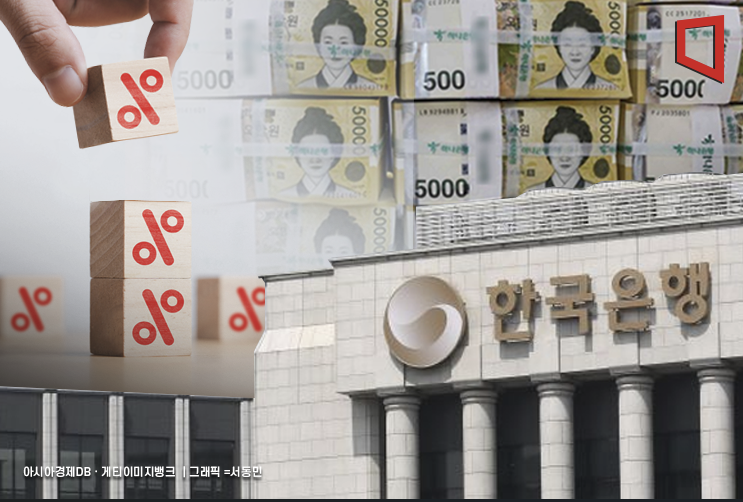
There is a claim that the expansion of central banks' roles beyond traditional monetary policy measures such as adjusting benchmark interest rates is a global trend. Central banks around the world have started holding assets they previously did not purchase during the COVID-19 pandemic, with a growing focus on long-term risks. In the case of climate crisis, the most representative mid- to long-term risk, it has been suggested that direct responses may be necessary beyond just analysis by central banks. The recent actions of the Bank of Korea, continuing structural reform reports and remarks on topics such as differentiated minimum wage application for foreign workers in the care sector and regional quotas for universities, are interpreted as a natural flow in this context.
Professor Jin-Il Kim of Korea University’s Department of Economics recently pointed out in a Hana Financial Research Institute forum titled "Changes in Central Banks after COVID-19" that it is a "luxury" for central banks to focus solely on adjusting benchmark interest rates nowadays. He explained, "Until the 1990s and early 2000s, during the 'Great Moderation' period of the economy, central banks could concentrate only on fine-tuning monetary policy through benchmark interest rate adjustments, but after experiencing the global financial crisis and the COVID-19 pandemic, such 'luxury' became impossible."
The COVID-19 pandemic gradually broke down existing principles. Central banks of various countries, including the U.S. Federal Reserve (Fed) and the Bank of Japan, began purchasing new types of assets that they had not done before. They started putting various kinds of assets, including ETFs, on their balance sheets. Professor Kim said, "This was a measure far exceeding the response level during the global financial crisis," adding, "The existing principle that central banks mainly trade short-term government bonds and conduct monetary policy indirectly has collapsed." The Bank of Korea was no exception to this global trend and expanded the scope of its monetary policy.
This change is not limited to the realm of monetary policy alone. Since the 2008 global financial crisis, the financial stability role of central banks has been strengthened, which led to the addition of a clause in the Bank of Korea Act stating that it should "pay attention to financial stability." Professor Kim said, "Like most financial phenomena, central banks themselves are products of history," and predicted, "Central banks have changed and will continue to change."
The COVID-19 crisis accelerated this trend further. The argument that central banks should focus solely on traditional monetary policy in a situation where humanity is threatened has lost ground. In fact, in the spring of 2020, the International Monetary Fund (IMF) predicted that the global economy’s growth rate that year would fall below -5%, but bold monetary policies by central banks, expansive fiscal policies by governments worldwide, and advancements in healthcare combined to result in an actual growth rate of about -3%. This was an unprecedented economic recovery in history, but the large-scale stimulus measures eventually triggered a new challenge of inflation from the latter half of 2021, which has significantly shaken the global economy over the past few years.
Professor Kim said, "(Central banks) have increased actions not only pursuing monetary policy but also financial stability, and there is a growing tendency to approach topics previously not handled by central banks, such as the climate crisis." For example, the Fed took action to respond to the climate crisis by establishing the Financial Stability Climate Committee after the outbreak of COVID-19. He added, "I think the extent to which the Bank of Korea’s role should cover social issues can also be discussed within this framework."
© The Asia Business Daily(www.asiae.co.kr). All rights reserved.
![Clutching a Stolen Dior Bag, Saying "I Hate Being Poor but Real"... The Grotesque Con of a "Human Knockoff" [Slate]](https://cwcontent.asiae.co.kr/asiaresize/183/2026021902243444107_1771435474.jpg)
















