Seo Samsuk "Must Resolve Through Expanding R&D Budget"
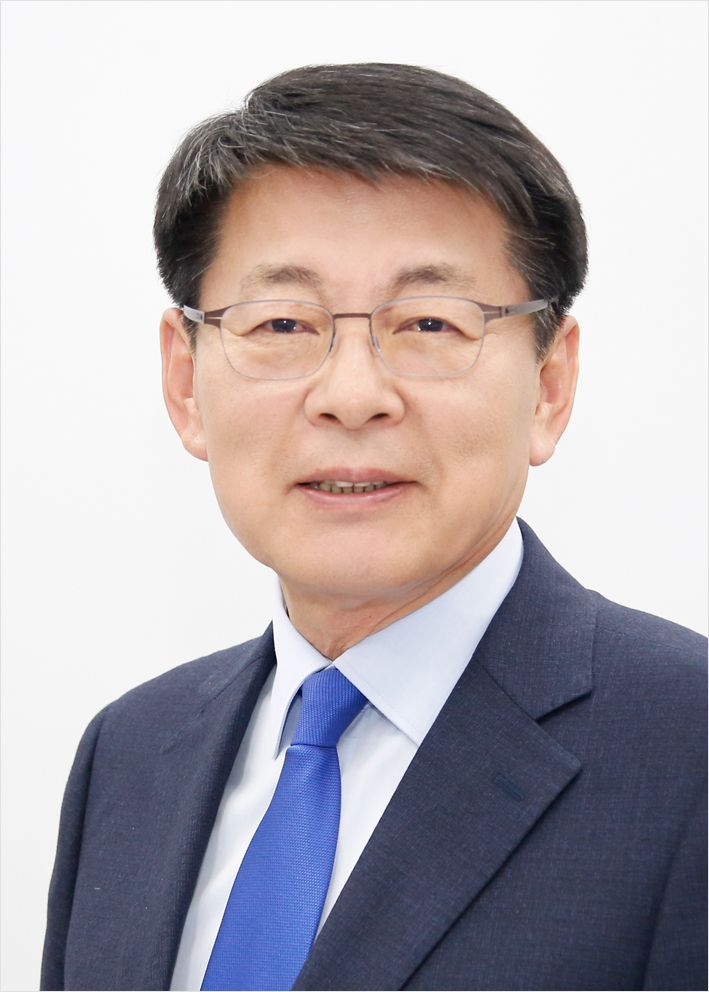
As the technological gap in the marine and fisheries sectors between South Korea, the EU, and the United States widens each year, concerns are rising that the budget for related areas has been reduced under the Yoon Suk-yeol administration, making urgent countermeasures necessary.
According to data submitted to the National Assembly audit by Seo Sam-seok, a member of the Democratic Party of Korea (Yeongam-Muan-Shinan), from the Korea Institute of S&T Evaluation and Planning on the 14th, South Korea's "sustainable marine spatial development technology" lagged behind the United States by 4.5 years in 2020, which increased to 5 years in 2022, showing a 0.5-year widening gap. Additionally, the technological gap in extreme environment infrastructure widened from 4.8 years to 5 years during the same period, and the gap in agriculture, forestry, fisheries, and food technology compared to the EU increased from 3.2 years to 3.4 years.
Despite the domestic technology falling behind, the marine and fisheries R&D budget has been gradually decreasing. The Yoon Suk-yeol administration cut the marine and fisheries R&D budget by KRW 132.6 billion (26%), from KRW 511.1 billion last year to KRW 378.5 billion this year. Although next year's R&D budget is expected to recover by about 16% to approximately KRW 438.1 billion compared to this year, it is still KRW 73 billion less than last year.
Discontinued marine and fisheries R&D projects are also a concern. Between 2020 and 2024, six marine and fisheries R&D projects, including the "Development of Integrated Reduction Technology for Ship Emission Fine Dust," were terminated. Although KRW 6 billion was invested, the projects were ended due to abandonment of tasks and inadequate evaluations. No technologies were introduced from these projects, and in four cases, there were no patent applications or published papers, resulting in a waste of budget.
Lawmaker Seo criticized, "Despite science and technology being crucial for enhancing national innovation capabilities and improving citizens' quality of life, the government is showing little interest. The gap in core national technologies such as sustainable marine spatial development and agriculture, forestry, fisheries, and food sectors is widening, yet the related budget is even less than two years ago."
He added, "To improve the quality of papers published through marine and fisheries R&D, government-level citation management like that of the Ministry of Science and ICT is necessary. The Ministry of Oceans and Fisheries must close the technological gap with the United States and the EU by expanding the marine and fisheries R&D budget."
Meanwhile, the Korea Institute of S&T Evaluation and Planning evaluates and announces the technological levels of South Korea, the United States, the EU, Japan, and China biennially for nationally important core technologies in accordance with the Framework Act on Science and Technology.
© The Asia Business Daily(www.asiae.co.kr). All rights reserved.












