Not Just a Welcome Rain After a Drought, but a Blessing Like a Bolt of Lightning
Hope for Children, Teenagers, and Young People Who Dream of Writing
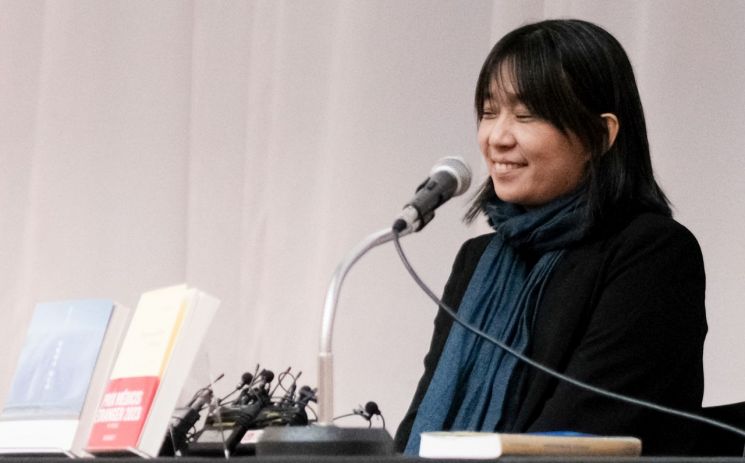
Following Han Kang's Nobel Prize in Literature win, a "Han Kang Reading" phenomenon is sweeping the nation, with most of her works sold out at major Korean bookstores such as Kyobo Bookstore, Aladin, and Yes24. Literary critic and author Jung Yeo-ul described this phenomenon as "not just a welcome rain after a drought, but a blessing like a bolt of lightning."
On October 14, during an appearance on CBS Radio's "Kim Hyun-jung's News Show," Jung stated, "The publishing industry has been facing its greatest crisis since the beginning of Korean history in recent years, but the Nobel Prize win by a single author has revitalized the industry." According to major bookstores such as Kyobo Bookstore and Yes24, approximately 530,000 copies of Han Kang's major works were sold between the Nobel Prize announcement and 2 p.m. on October 13. Major overseas bookstores are also experiencing sellouts. On social media, posting photos with Han Kang's books has become a widespread trend.
Jung noted that Han Kang's Nobel Prize win came sooner than the literary and publishing industries expected, but was timely nonetheless. Until now, the Nobel Prize in Literature has typically been awarded to veteran authors in recognition of their lifetime achievements, and there was a desperate need for innovation from the Nobel committee-Han Kang's win met that need. Jung described this as "Nobel's innovation," adding, "Han Kang's Nobel Prize win has given hope to children, teenagers, and young people who dream of writing."
Han Kang is the first Asian woman to win the Nobel Prize in Literature. Jung emphasized, "Han Kang overcame the disadvantages of being Asian, a woman, and young." She also stressed the importance of revisiting Han Kang's literary world.
Han Kang's novels "Human Acts" and "We Do Not Part" are based on the May 18 Gwangju Democratization Movement and the Jeju 4·3 Incident, respectively-events that are essential parts of Korean history. Jung noted that while many works address Korean history, Han Kang's novels are meaningful because they begin with the individual. Regarding the characters in Han Kang's works, Jung said, "They are not merely victims, survivors, or the bereaved; each individual endures trauma and forges solidarity with others who are wounded." This enables those directly affected by trauma to empathize and feel compassion, and it also moves people around the world.
Jung described the appeal of Han Kang's works by saying, "As you read, you may feel sadness and gloom, but you ultimately realize that there is a beautiful light within the darkness and sorrow. It is a sense of hope or courage that can only be felt by those who confront their wounds to the very end." She referenced a scene in the epilogue of "Human Acts," where Han Kang meets the older brother of the boy in the story. When Han Kang asks if she can write his story, the brother replies, "Please write it so that no one ever insults my younger brother again." Jung concluded, "Han Kang truly wrote as the brother asked. That's why the title is 'Human Acts'-the boy comes, not goes."
© The Asia Business Daily(www.asiae.co.kr). All rights reserved.

















