Red Light for Addressing Tax Revenue Shortfall Due to National Tax Income Deficit
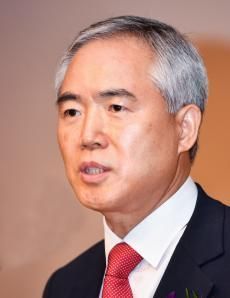 Yang Bu-nam 의원
Amid projections that local allocation tax revenues received by local governments will decrease by 4.2 trillion won this year due to a shortfall in national tax revenues, it has been revealed that 13 local governments have '0 won' in reserve funds to respond to this situation.
On the 13th, Yang Bu-nam, a member of the Democratic Party of Korea (Gwangju Seo-gu Eul), analyzed the 'Status of Integrated Fiscal Stabilization Fund Formation by Local Governments Nationwide' submitted by each local government, finding that as of the end of last year, the total amount of the fund was 30.7769 trillion won.
The Integrated Fiscal Stabilization Fund is an emergency fund that local governments manage and accumulate surplus resources in an integrated manner to respond when fiscal revenues such as local taxes or local allocation taxes decrease or when large-scale disasters occur, causing financial difficulties.
In its first year of introduction in 2020, the fund was established in only 154 out of 243 local governments nationwide, amounting to just 12.1345 trillion won. However, it significantly increased to 20.1472 trillion won (210 local governments) in 2021, 31.564 trillion won (219 local governments) in 2022, and 30.7769 trillion won (230 local governments) in 2023.
As of the end of last year, by the 17 metropolitan local governments, Seoul had the largest fund amounting to 5.9389 trillion won, followed by Incheon (977.6 billion won), Gyeonggi (973 billion won), Jeju (799.1 billion won), Daegu (793.7 billion won), and Sejong (412.7 billion won).
The local governments that have not established the fund are 13 in total: Jongno-gu and Jung-gu in Seoul; Michuhol-gu, Yeonsu-gu, and Gyeyang-gu in Incheon; Dong-gu and Buk-gu in Ulsan; Jeonju-si in Jeonbuk; Yeongam-gun in Jeonnam; Cheongsong-gun, Goryeong-gun, and Chilgok-gun in Gyeongbuk; and Hadong-gun in Gyeongnam.
The problem is that with the expected decrease in local allocation tax this year, a 'red light' has been turned on for these local governments' ability to respond to tax revenue shortfalls. The Ministry of Economy and Finance announced last month the '2024 National Tax Revenue Re-estimation Results,' estimating that national tax revenues this year (337.7 trillion won) will be 29.6 trillion won less than the original budget (367.3 trillion won).
Representative Yang said, "With a shortage in national tax revenues this year making a decrease in local allocation tax inevitable, some local governments may face worsening financial difficulties," and emphasized, "The central government must establish effective and prompt measures through close communication with local governments."
© The Asia Business Daily(www.asiae.co.kr). All rights reserved.
















