Jung Yura "Right-wing positivity feels uneasy"
Writer Kim Gyuri "Should have accepted Chinese writers"
Heo Eun-ah "South Korean conservatives only invite isolation by belittling May 18"
"Those who put Han Kang on the blacklist, will they feel ashamed?"
There have been continuous attacks regarding novelist Han Kang (54) becoming the first Korean to win the Nobel Prize in Literature. The criticism is based on the argument that Han Kang's works, including the Nobel-winning novel "The Boy Who Escaped" and "I Do Not Part," distort historical events such as the May 18 Democratic Uprising and the Jeju 4.3 Incident. Within the progressive camp, Han's past inclusion on the 'cultural blacklist' during the conservative government has been highlighted to confront the conservative side.
According to political circles on the 12th, Jung Yura, daughter of Choi Seo-won, who is imprisoned for involvement in former President Park Geun-hye's state affairs manipulation scandal, posted on her social media the day before, "I don't know if the award received for a novel written with historical distortion holds any meaning," adding, "Regarding the Jeju 4.3 Incident and the May 18 Gwangju Democratic Uprising, although the right wing seems to view it positively with a sense of gratitude since there had been no Nobel Prize winners from Korea until now, it feels uncomfortable to justify these events simply because they are novels."
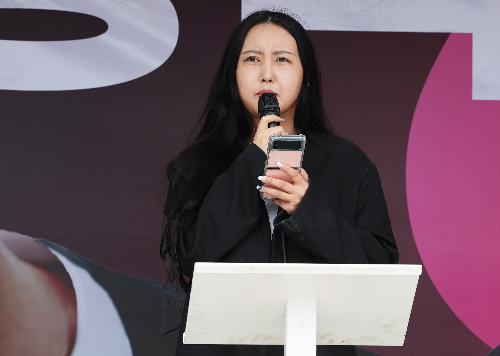
Jung wrote, "Originally, the left is emotional and not rational. I think that is the biggest difference between the right and the left, but no matter what award is received, distortion is distortion."
She continued, "Is it normal for a country where those who demand the disclosure of the list of merit recipients, which still cannot be revealed, are threatened with death? The Nobel Prize is not above history. It is illogical to criticize former President Kim Dae-jung's Nobel Peace Prize while defending Han's Nobel Literature Prize."
Writer Kim Gyuna strongly criticized Han Kang's Nobel Prize win by referring to the May 18 Democratic Uprising as 'Oswitpal.' On the 10th, he wrote on Facebook, "The meaning of winning the Nobel Prize in Literature is the decline of Nobel values, proof of literary hypocrisy, and justification of historical distortion," adding, "Although she is clearly a victor of the era, it is not an award to be proudly remembered in history."
He added, "If the prize had to be given to someone in the East Asian region, it should have gone to China's Yan Lianke," and argued, "The literature of this year's winner (Han Kang) and Yan Lianke differs significantly in weight, texture, dignity, and emotional impact."
He then depreciated Han Kang's award by saying, "If they chose her even after comparing the two, then all the academy judges must have been political, materialistic, or just listing names and turning fans. Or was it because she is a woman?"
Kim stated, "The novels by the award-winning author that supposedly 'face historical trauma' are all historical distortions," explaining, "'The Boy Who Escaped' is a story that the Oswitpal (May 18 Democratic Uprising) was a brutal massacre of flower-like middle school boys and innocent Gwangju citizens by our country's military, and 'I Do Not Part' is a tale that the Jeju 4.3 Incident was a massacre of innocent citizens by our country's police."
He added, "The academy issuing such a review and praise means they know nothing about Korean history and were merely played by publishing house lobbying."
According to the author description on the Yes24 website, Kim debuted in 2006 with the short story "My Man's Dream," which won the Busan Ilbo New Year's Literary Contest, and in 2007 with the short story "Knife," which won the Chosun Ilbo New Year's Literary Contest. In 2017, he published his first novel "Trust Me." Currently, he contributes writings titled "A World Like a Novel" to the Chosun Ilbo and serializes short stories on the online media Sky Daily.
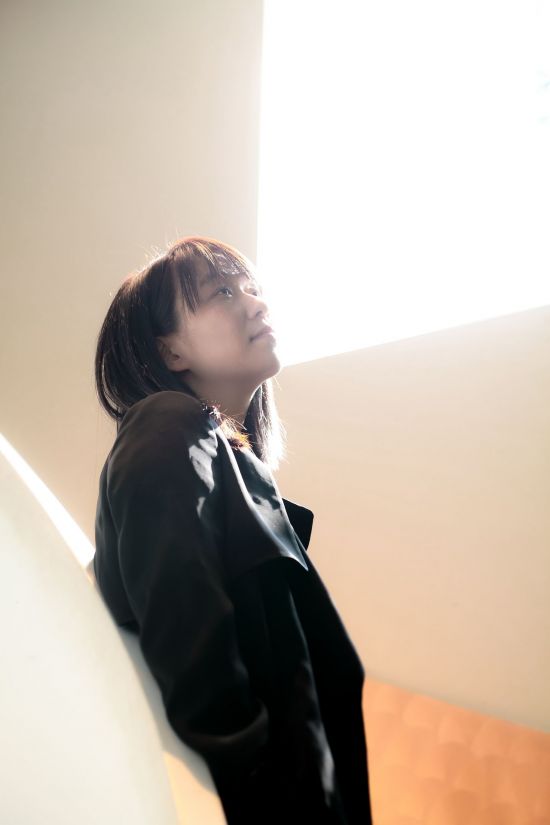
As these posts continued, Heo Eun-ah, leader of the Reform New Party, wrote on her Facebook on the 11th, "As news of Han Kang's Nobel Prize in Literature spread, some who claim to be 'conservative right-wing' are posting internet comments belittling the May 18 event," adding, "Unless this erroneous mindset fundamentally changes, conservatism in Korea will only bring about eternal isolation."
Heo expressed discomfort, saying, "It was also revealed this time that the Gyeonggi Provincial Office of Education classified 'The Boy Who Escaped' as a harmful book and sent official documents to schools at all levels," adding, "Belittling May 18, censorship, and regulation are truly tiresome." She then questioned, "What exactly do they hope to gain by disparaging May 18 and mocking Gwangju?"
Within the progressive camp, Han's inclusion on the 'cultural blacklist' during the conservative government has been emphasized in counterattacks. Kang Yoo-jung, a cultural critic and member of the Democratic Party of Korea, wrote on her SNS on the 10th, "Han Kang, who won the Nobel Prize in Literature, was classified as a cultural blacklist author in 2016."
Jo Guk, leader of the Jo Guk Innovation Party, also criticized on his SNS on the 10th, "Those who belittled May 18, those who labeled Kim Dae-jung as a 'communist,' and those who put Han Kang on the cultural and artistic blacklist?are they ashamed? Probably not. Those who have committed such outrageous acts are still roaming without reflection."
© The Asia Business Daily(www.asiae.co.kr). All rights reserved.


















