Hold a Household Debt Review Meeting
Last month, the increase in household loans in the financial sector narrowed, indicating that the government's household debt management policy is showing effectiveness. Financial authorities stated that they will thoroughly manage the situation until the downward trend is confirmed.
The Financial Services Commission announced this on the 11th during a 'Household Debt Review Meeting' chaired by Secretary-General Kwon Dae-young. The meeting was attended by related agencies such as the Ministry of Land, Infrastructure and Transport, the Bank of Korea, the Financial Supervisory Service, as well as the Korea Federation of Banks, second-tier financial sector associations, and the five major commercial banks (KB Kookmin, Shinhan, Hana, Woori, NH Nonghyup).
At the meeting, recent household loan trends and management plans for household loans in the financial sector for the remaining period of this year were shared and reviewed. They also discussed the outlook for household debt following the Bank of Korea's base rate cut announced earlier that morning.
The financial authorities evaluated that the effect of the second phase of the stress DSR (Debt Service Ratio) implemented since last month is appearing, and with strengthened voluntary household debt management efforts in the banking sector, the increase in household loans in the financial sector last month narrowed compared to the previous month. The net increase in household loans in August was 9.7 trillion won, but the increase last month was 5.2 trillion won.
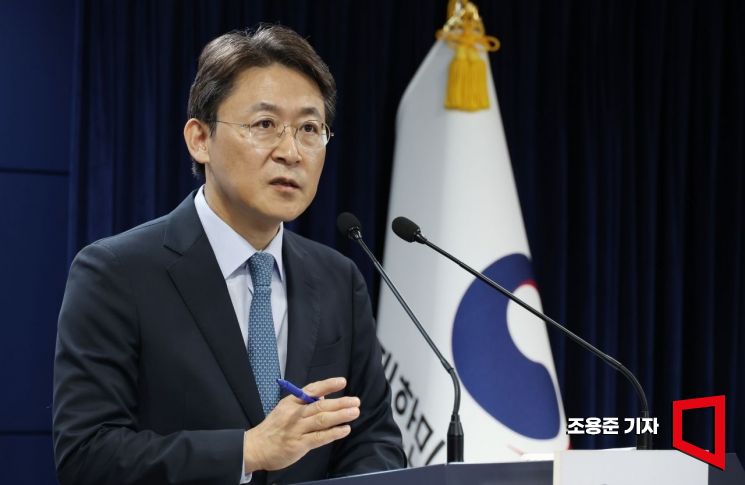 Last month, the increase in household loans in the financial sector narrowed, indicating that the government's household debt management policy is showing effectiveness. Financial authorities stated that they will manage thoroughly until the downward trend becomes certain.
 [Photo by Yongjun Cho jun21@]
However, they emphasized that the September figures reflect seasonal factors such as the Chuseok holiday and the impact of loan demand that was pulled forward before the tightening of regulations, so it is not yet a stage to be complacent. In particular, considering the continued expectations of interest rate cuts and housing price increases, as well as the substantial scale of policy loans and jeonse loans that have been expanded so far, there is a possibility that the household loan growth trend could expand at any time. Accordingly, the participants agreed to maintain vigilance and thoroughly manage the situation until the downward stabilization trend is confirmed.
Kwon Dae-young, Secretary-General of the Financial Services Commission, said, “Since the financial sector has agreed to comply with the self-established household loan management targets set at the beginning of the year, I hope that they will make every effort to manage household debt over the remaining three months through meticulous credit screening standards tailored to the circumstances of each individual bank.” He added, “In the 2025 management plan, a DSR management plan will also be established, so it is necessary to consider ways to utilize the internal management purpose DSR.”
He also emphasized, “As the management of mortgage loans in the banking sector is strengthened, there may be a balloon effect toward unsecured loans or other industries, so we are closely monitoring trends in other loans and the second-tier financial sector. We will carefully manage so that investment sentiment from large IPOs does not expand the household loan growth trend, and it is necessary to thoroughly monitor household debt trends in the insurance sector, mutual finance, Saemaeul Geumgo, and other second-tier financial sectors and take necessary measures.”
Finally, he stated, “The government maintains a consistent and firm stance on household debt management and will implement additional measures promptly and decisively according to the specific patterns and trends of household debt increases.”
© The Asia Business Daily(www.asiae.co.kr). All rights reserved.

















