First Asian Woman to Win the Nobel Prize in Literature
"There is nothing to discard in Han Kang's novels. It's not just because a hedgehog thinks its own baby is cute; each one is a masterpiece."
Han Seung-won, a novelist and the father of Han Kang, the first Asian woman to win the Nobel Prize in Literature, highly praised his daughter's work with these words. On the 11th, he revealed on CBS Radio's 'Kim Hyun-jung's News Show' that he had no expectations of the Nobel Prize win, saying, "I completely forgot about it. I did hope she would win while we are still alive."
He continued, "Kang received a call at 7:50 p.m. last night. She was informed only 15 minutes before the announcement," adding, "She herself seemed to not fully realize it. Last night, it felt as if the world had been completely turned upside down."
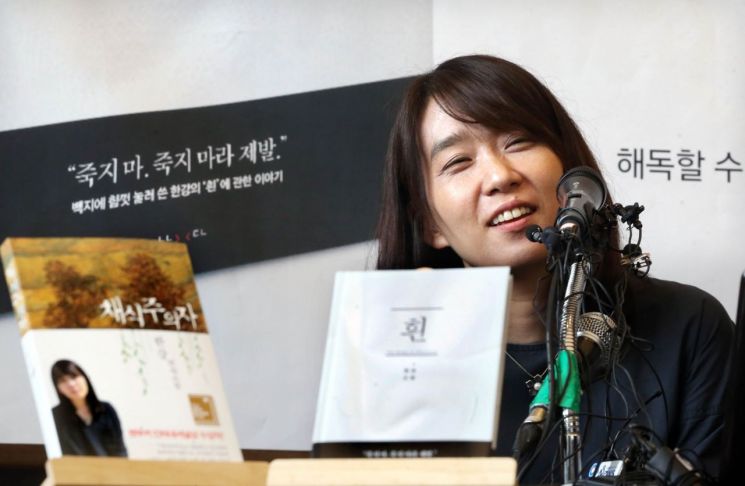
The Swedish Academy announced on the 10th (local time) during a live broadcast that this year's Nobel Prize in Literature was awarded to "Korean writer Han Kang." The Academy described Han Kang's literary world as "a powerful poetic prose confronting historical trauma and revealing the fragility of human life," explaining the reason for her selection.
Born in November 1970, Han Kang grew up in a literary family. Her father, Han Seung-won, is a novelist famous for works such as 'Daughter of Fire' and 'Port,' and has received awards including the Kim Dong-ri Literary Award, the Yi Sang Literary Award, and the Suncheon Literary Award. Han Kang's older brother, Han Dong-lim, was also a novelist.
Han Seung-won said, "My daughter has surpassed me," and praised, "I wrote popular novels to make a living, but none of Kang's novels are disposable."
Critic Kim Jun-il described Han Kang's win as a surprise. On the same radio show, he said, "The betting sites for the Nobel Prize in Literature show how unexpected Han Kang's win was," adding, "The higher the odds, the more likely the winner, but Han Kang's name was not even listed." Kim said, "Although Han Kang had previously won prestigious awards such as the Man Booker International Prize, the Asian Literary Award, and the Medici Prize, the prevailing sentiment was 'not yet.' It seems the Academy recognized Han Kang's literary excellence."
He also emphasized the need for translation support for outstanding Korean works. Kim said, "The literary world is paying attention to good translations. Han Kang's novels have been published in 26 languages with support from the Literature Translation Institute of Korea, which allowed readers worldwide to properly evaluate her work," adding, "Previously, there was talk that poets like Ko Un or writers like Hwang Sok-yong would win the Nobel Prize in Literature, but with a relatively young writer winning this time, it should be an opportunity to translate many works by noteworthy authors in the future."
© The Asia Business Daily(www.asiae.co.kr). All rights reserved.
!["The Woman Who Threw Herself into the Water Clutching a Stolen Dior Bag"...A Grotesque Success Story That Shakes the Korean Psyche [Slate]](https://cwcontent.asiae.co.kr/asiaresize/183/2026021902243444107_1771435474.jpg)
















