Rising Middle East Conflict Could Push International Oil Prices to $100
Concerns Over Inflation Reigniting After Dropping to 1.6%
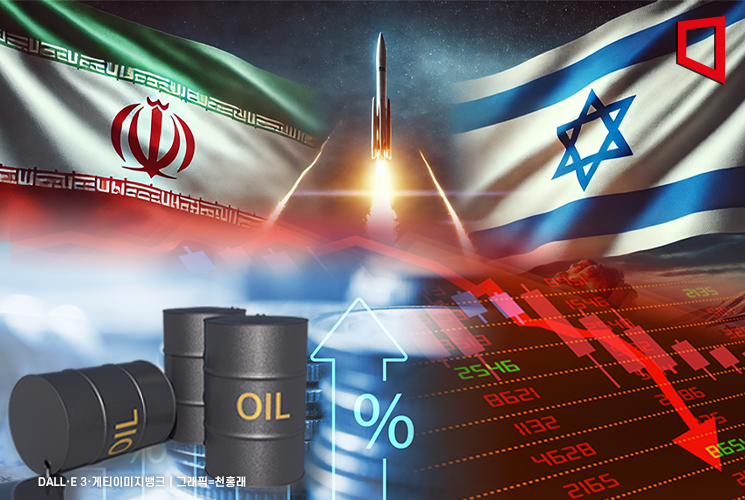
As the Middle East conflict intensifies, there are forecasts that international oil prices could approach $100 per barrel in the near future. Rising oil prices also raise concerns about a resurgence of inflation.
On the 9th (local time) at the New York Mercantile Exchange, November delivery West Texas Intermediate (WTI) crude oil closed at $73.24 per barrel, down $0.33 (0.45%) from the previous trading day. International oil prices surged 9% last week alone on concerns over the escalating Middle East conflict surrounding Israel. This was the highest weekly increase since January.
The international oil price jumped significantly as Israel expanded the battlefield from Palestinian Hamas to Lebanon's Hezbollah, and the possibility of escalation with Iran grew. However, with Hezbollah hinting at a ceasefire, some of the gains were given back this week.
The worst-case scenario concerning oil prices in the market is Israel conducting airstrikes on Iran's oil facilities. If Iran's oil exports are blocked and Iran retaliates, international oil prices are likely to soar. Iran is the third-largest oil producer among the Organization of the Petroleum Exporting Countries (OPEC), reportedly producing about 4 million barrels of crude oil per day.
O Jaeyoung, an analyst at KB Securities, predicted, "Iran's crude oil production accounts for about 5% of the global supply, and if the war with Israel expands, international oil prices will rise above $100 per barrel." However, he also forecasted, "If there is no full-scale war between Iran and Israel or no damage to Iran's oil facilities, the rise in international oil prices due to this situation will be short-lived."
US-based CNBC cited Saul Carbonic, an analyst at MST Macquarie Research, saying, "The spread of the Middle East conflict could eventually affect oil supply," and "If there are further attacks or intensified sanctions, international oil prices could soar back to $100 per barrel."
Rising Oil Prices and Inflation Could Negatively Impact Our Economy
Excessive increases in international oil prices are also negative for our economy. In particular, they are likely to stimulate domestic consumer prices, which are currently stabilizing.
Last month, the consumer price inflation rate was 1.6%, marking the lowest level in 3 years and 7 months. The market had expected around 2.0%, but the actual figure fell short of this. It is also well below the Bank of Korea's inflation target of 2.0%. The stabilization of prices was largely influenced by the decline in international oil prices, with WTI dropping to the mid-$60 range last summer. Petroleum products, along with agricultural and livestock products, hold a top-tier share in consumer prices and directly affect domestic inflation.
Domestic consumer price inflation surged to 6.3% in July 2022, negatively impacting the economy, with international oil prices exceeding $100 being the biggest cause of inflation at that time. A Bank of Korea official explained, "Oil prices remained stable until September, but have risen this month due to the Middle East situation," adding, "Depending on how the Middle East situation unfolds, inflation could also be affected."
The International Finance Center assessed, "While there is a market view that the recent risk of crude oil supply disruption is the highest since the 1970s and that international oil prices could rise an additional $10 to $15 per barrel, there is also a view that if Israel conducts restrained retaliatory attacks, concerns over a slowdown in global oil demand could cause prices to fall sharply again."
© The Asia Business Daily(www.asiae.co.kr). All rights reserved.
![Clutching a Stolen Dior Bag, Saying "I Hate Being Poor but Real"... The Grotesque Con of a "Human Knockoff" [Slate]](https://cwcontent.asiae.co.kr/asiaresize/183/2026021902243444107_1771435474.jpg)
















