Yoo Myung-hee, Former Chief Trade Negotiator
Participates in Korea Society Conference
"China Export Controls Must Consider Corporate Damage"
As countries around the world, including the United States, raise trade barriers and geopolitical tensions escalate, there is a call for South Korea, which has a high dependence on trade, to promote economic development by further strengthening economic cooperation with the United States. To minimize the costs caused by the U.S. export controls on advanced technology to China, it is suggested to limit technology regulations to cases where there is a real threat to national security. Additionally, an analysis indicates that if South Korea and the U.S. enhance cooperation not only in semiconductors, automobiles, and secondary batteries but also in the shipbuilding sector, the synergy between the two sides will expand.
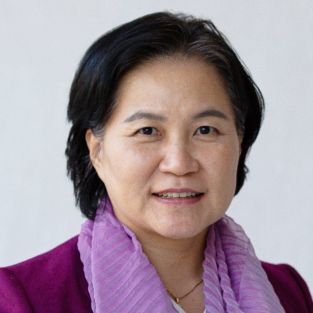
Yoo Myung-hee, former head of the Trade Negotiations Division at the Ministry of Trade, Industry and Energy, recently participated as a panelist at a conference hosted by the Korea Society in New York, stating, "Last year, South Korea ranked first among countries investing in the U.S. market in terms of investment scale." The conference, held on the 4th (local time), was conducted under the theme "Next steps for US-Korea Relations."
Former Director Yoo said, "About 50% of South Korea's outbound investment last year was concentrated in the U.S., particularly in strategic industries such as semiconductors, electric vehicles, automobiles, and batteries," adding, "Over the past decade, South Korean companies' investment in the U.S. has increased by 370%, creating more jobs in the U.S. than companies from any other country." He further explained, "South Korea's trade volume as a percentage of its gross domestic product (GDP) is 97%, which is much higher compared to the U.S. at 27%. South Korea is deeply integrated into the global economy, but this structure makes it highly vulnerable to global supply chain disruptions."
Regarding the U.S. export controls on advanced technology to China, he argued that the costs related to corporate damages and other factors must be considered. Former Director Yoo stated, "About 40% of the semiconductors produced by Korean companies are manufactured in China, and 55% of the semiconductors South Korea exports go to China," adding, "Annual investments of up to $50 billion are required solely for semiconductors, which are closely linked to various industries." He emphasized, "South Korea is cooperating well with the U.S. on export controls and technology regulations toward China, but it is necessary to carefully weigh the costs and benefits in approaching these issues," and explained, "We need to consider the possibility that trade barriers may rise and companies may lose their footing due to these regulations." He also stressed, "The U.S. measures could unintentionally cause harm to Korean companies, so both sides must cooperate to prevent this and limit regulations to cases where there is a risk to national security."
Amid rising global geopolitical tensions, he also called for expanded cooperation between South Korea and the U.S. in the shipbuilding sector, including warship construction. The U.S. shipbuilding industry has declined to the point where it lacks the capacity to build large vessels domestically, making cooperation with its ally South Korea in the shipbuilding field urgent. China, competing with the U.S. for hegemony, holds a 63% share of the global ship market this year based on order volume, which is three times that of South Korea's 23%. Former Director Yoo said, "The U.S. needs a reliable partner capable of building ships from a national security perspective," and added, "Beyond semiconductors and automobiles, the two countries can develop a deep relationship in the shipbuilding sector as well."
Former Director Yoo emphasized the growing need for securing critical resources, including minerals, due to the strengthening of trade barriers worldwide, and stressed the necessity of joint responses by major countries. South Korea has been focusing on resource acquisition as the chair country of the Critical Minerals Security Partnership (MSP), launched in 2022. He said, "Critical minerals are essential for electric vehicle and semiconductor production, but these minerals are controlled by a few countries," adding, "The MSP is working to strengthen the global mineral supply chain."
Regarding concerns that U.S. trade barriers could increase further if former President Donald Trump, the Republican presidential candidate, wins, he pointed out, "Raising trade barriers entails corresponding costs, so such measures should be carefully considered before implementation." Former President Trump has announced plans to impose a universal tariff of 10-20% on all imports worldwide and a 60% tariff on Chinese goods.
Former Director Yoo is South Korea's top trade expert, having spent over 30 years in public service mainly in the trade sector. As the country's first female head of the Trade Negotiations Division, she participated as a working-level official in the initial negotiations of the Korea-U.S. Free Trade Agreement (FTA) and, about ten years later, led the renegotiations of the FTA against the Trump administration as the chief representative.
© The Asia Business Daily(www.asiae.co.kr). All rights reserved.

















