Goldman Sachs, a leading Wall Street investment bank, has lowered the probability of a U.S. recession to 15% while raising its year-end forecast for the S&P 500 index to 6000. Thanks to better-than-expected corporate earnings and strong demand for artificial intelligence (AI), there is a rosy outlook that the S&P 500 index will surpass 6300 next year.
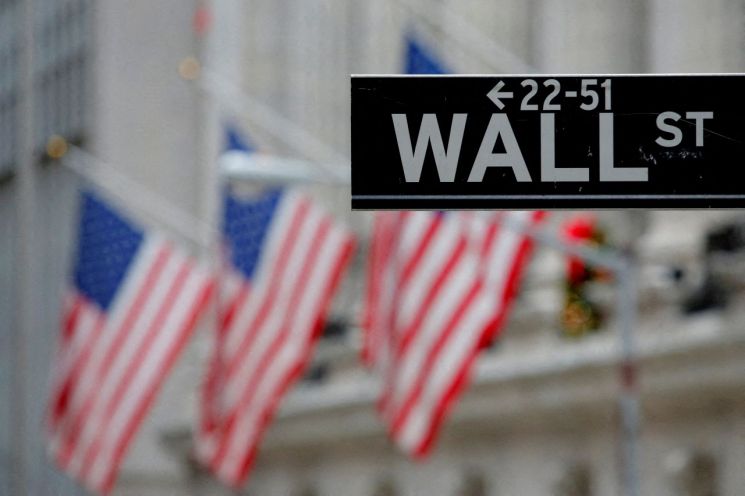
On the 7th (local time), Goldman Sachs raised its year-end forecast for the S&P 500 index from 5600 to 6000. This reflects the confirmation of a margin expansion trend due to strong corporate earnings in the third-quarter earnings season starting this week, as well as continued strong AI demand. They see more than a 5% upside potential compared to the closing price that day (5695.94). Goldman Sachs also raised its S&P 500 forecast for next year from 6000 to 6300.
David Kostin, Goldman Sachs’ U.S. equity strategist, explained, "The real driver of the new optimism is the outlook for margin expansion," adding, "The macro environment is also positive for margin expansion." He predicted that the profit margins of S&P 500 companies, which recorded 11.5% this year, will gradually expand to 12.3% next year and 12.6% the year after. In this regard, Goldman Sachs also raised its forecast for next year’s S&P 500 earnings per share (EPS) to $268, an 11% increase from the previous year. The U.S. GDP growth rate for next year is expected to be 2.3%.
Goldman Sachs particularly emphasized the growing influence of AI and the recovery in the semiconductor sector. They noted that current semiconductor shipments, excluding memory chips, are below past levels, and if this shortfall is resolved, industry margins could expand further, contributing 20% to S&P 500 EPS growth in 2025. On an individual stock basis, large tech companies such as Apple, Microsoft (MS), Alphabet Google, and Nvidia are expected to continue their strong performance fueled by robust AI demand.
The macroeconomic environment was also viewed positively. Goldman Sachs lowered the probability of a U.S. recession. The analysis team led by Chief Economist Jan Hatzius revised down the likelihood of the U.S. economy entering a recession within the next 12 months from 20% to 15%, based on the previously released September employment report and other data. They also assessed that the Federal Reserve’s prospects for an additional big rate cut (a 0.5 percentage point cut) have weakened. Chief Economist Hatzius said, "(The strong) September employment report has changed the narrative on the labor market again," adding, "The pressure for rising unemployment may have ended."
© The Asia Business Daily(www.asiae.co.kr). All rights reserved.

















