Imanik's 'Ilchuldo' and Jeon Gwangyeong's 'Jiphap' too
"Please show as much interest as the first step taken"
The first case of paying inheritance tax with artworks in Korea has emerged. According to the Ministry of Culture, Sports and Tourism on the 7th, four artworks paid in kind will be brought into the storage of the National Museum of Modern and Contemporary Art on the 8th.
This is the first occurrence since the introduction of the payment-in-kind system last year. The payment-in-kind system allows inheritance tax to be paid with cultural heritage or artworks if the amount of inheritance tax exceeds 20 million won. When a taxpayer who wishes to pay inheritance tax in kind applies to the local tax office, the tax office notifies the Ministry of Culture, Sports and Tourism. The ministry then forms a review committee to evaluate the historical, academic, and artistic value. If deemed necessary, the tax office approves the taxpayer’s payment in kind.
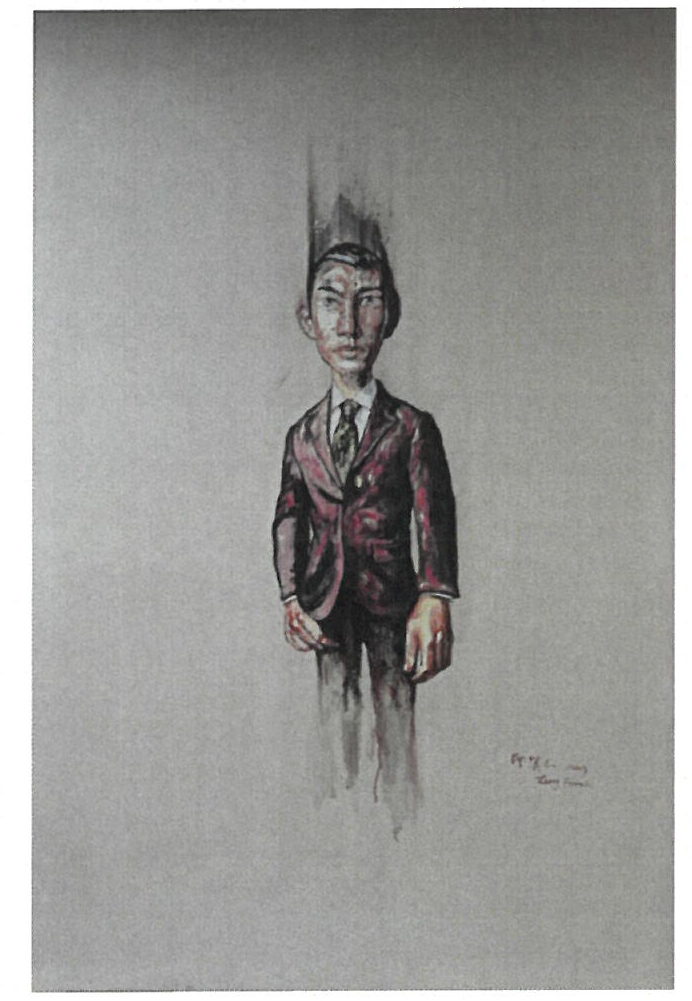
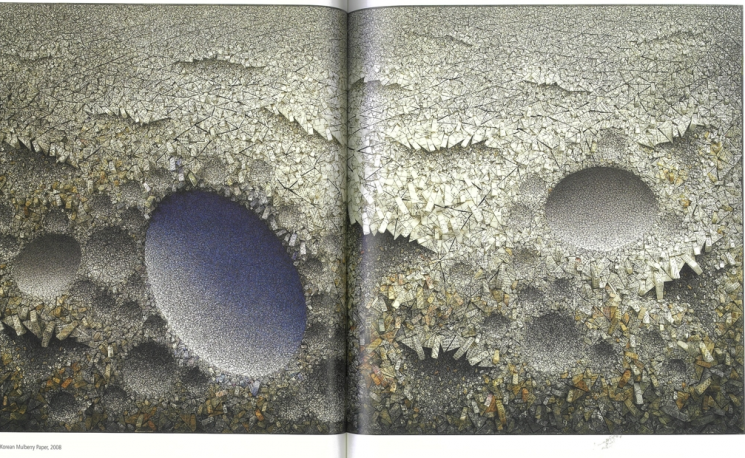
The artworks paid in kind this time are four out of ten pieces applied for at the Seocho Tax Office in Seoul in January. After receiving the application details from the Seocho Tax Office, the Ministry of Culture, Sports and Tourism formed a review committee of seven members, including officials from the National Museum of Modern and Contemporary Art and private experts, and recognized the necessity of the four artworks for payment in kind. These include two portraits titled 'Portrait' by Chinese artist Zheng Fanzhi (曾梵志), 'Sunrise' (1991) by Western-style painter Lee Man-ik (1938?2012), who was the art director of the 1988 Seoul Olympics, and 'Aggregation 08-JU072 Blue' (2008) by Jeon Gwang-young.
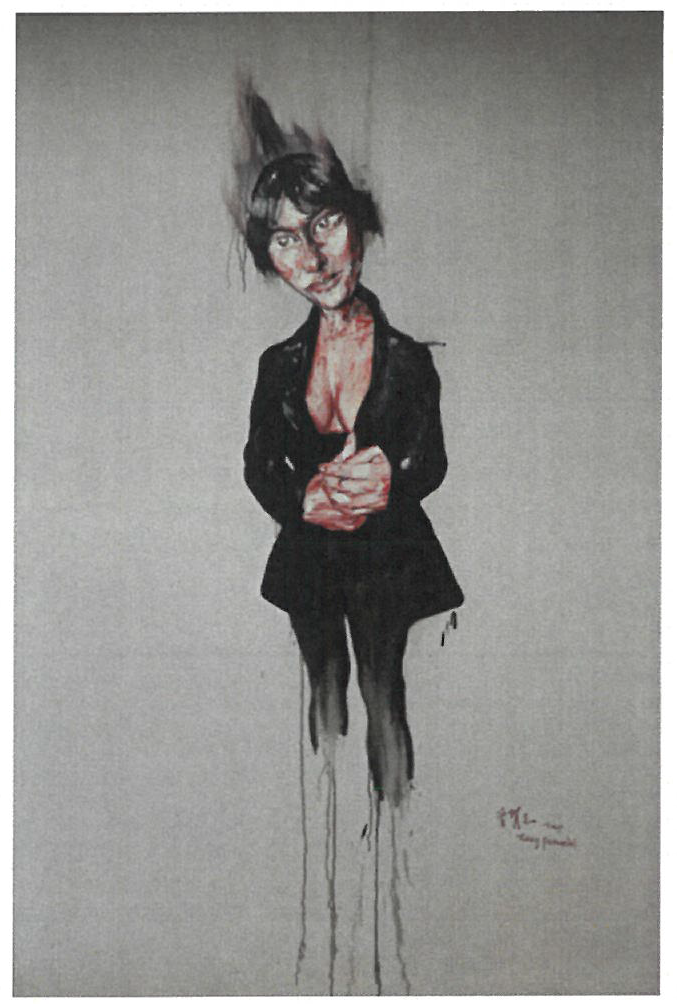
This is the first time Zheng Fanzhi’s works are stored at the National Museum of Modern and Contemporary Art. Zheng Fanzhi is one of the Four Heavenly Kings of Chinese contemporary art. He gained worldwide fame with his 'Mask' series, which depicts the chaos of Chinese society through masked figures. He is also the record holder for the highest price in Asian contemporary art. In 2013, his oil painting 'The Last Supper' was sold for 23.3 million dollars (approximately 25 billion won at the time) at Sotheby’s auction in the United States. The two works paid in kind this time were listed at the K Auction in April with estimated prices of 1.15 billion won and 1.5 billion won respectively, but the consignments were canceled before the auction.
An official from the Ministry of Culture, Sports and Tourism explained, "These works fully embody the tendencies of actively producing art on themes of modern society and human alienation. After reviewing their academic and artistic value, usability, and preservation status, we judged that payment in kind is appropriate."
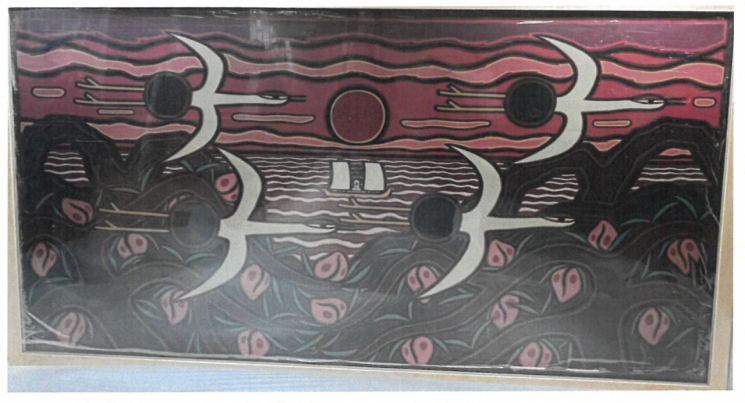
'Sunrise' is an oil painting that graphically expresses the dramatic moment of the sun rising over the distant sea. It is evaluated as clearly showing Lee Man-ik’s unique characteristics in subject, form, composition, and color. The ministry official added, "Using motifs such as peaches in the foreground and flying birds, it conveys a hopeful image."
'Aggregation 08-JU072 Blue' is a work made by wrapping small triangular pieces of Styrofoam with hanji (traditional Korean paper), tying them with thread, and layering them like puzzle pieces. Although hanji is used as the material, it contains the universality of the human inner self beyond East and West.
The Ministry of Culture, Sports and Tourism hopes that the payment-in-kind system will be revitalized following this first case of paying inheritance tax with artworks. Kang Dae-geum, Director of Regional Cultural Policy, said, "It is encouraging to receive artworks paid in kind that have been long awaited. As this is the first step, we expect much interest."
The art community welcomes the first payment-in-kind case but emphasizes the need for improvements. They point out that payment in kind should involve good artworks, not just for tax payment purposes. One official said, "Considering the relative lack of overseas works at the National Museum of Modern and Contemporary Art, it is necessary to activate payment in kind of overseas artworks," but also warned, "Ambiguous works could only incur management costs."
France is cited as a model example. In 1968, based on the general tax law, France first implemented a payment-in-kind system for cultural heritage and others. Thanks to this, they received Picasso’s works in kind and operate the Picasso Museum. A Ministry of Culture, Sports and Tourism official said, "Like France, we plan to preserve and manage important cultural heritage and artworks as national assets," adding, "We will exhibit the secured works to the public to expand opportunities for cultural enjoyment."
© The Asia Business Daily(www.asiae.co.kr). All rights reserved.



















