The number of malaria patients in the Gyeonggi region decreased by 21.6% compared to last year.
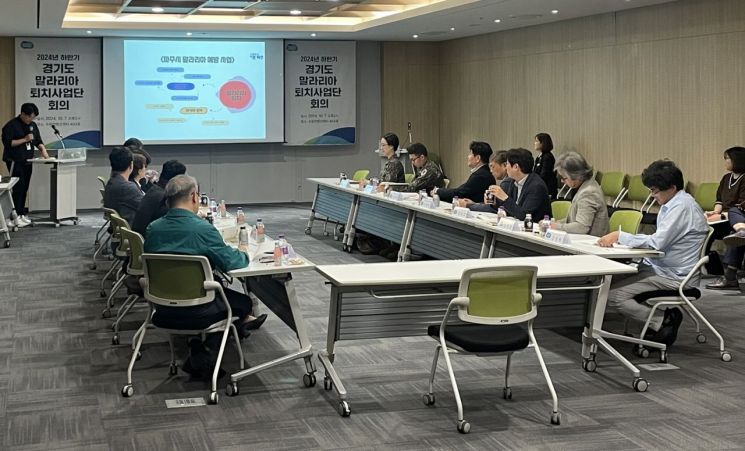
On the 7th, Gyeonggi Province held a meeting of the 2024 second half Gyeonggi Malaria Eradication Task Force at the Suwon Convention Center to discuss this year’s project status and long-term strategies for malaria eradication in Korea.
As of September 21 this year, the number of malaria cases in the province was recorded at 301, a 21.6% decrease compared to the same period last year (384 cases). This accounts for about 52.6% of the 572 patients nationwide. Among the 301 cases, 246 cases, or 81.7%, occurred in the northern Gyeonggi area. By region, there were 115 cases in Paju, 43 in Goyang, and 38 in Gimpo.
Starting this year, Gyeonggi Province expanded malaria risk areas from 11 cities and counties last year to 19 cities and counties, focusing on malaria prevention and management projects such as cluster case management. Various initiatives were implemented, including strengthening malaria response capacity training for city and county officials, early detection projects for asymptomatic infections, and enhanced prevention publicity, which helped reduce the number of patients.
At the meeting, Gyeonggi Province discussed various strategies to eradicate malaria in Korea by 2030, including prevention, early detection, patient management, and vector mosquito control, and agreed to actively respond through cooperation among the public, private, and academic sectors.
In particular, the province decided to focus resources such as personnel and budget on areas with high patient incidence to block secondary transmission through vector mosquitoes by active diagnosis and treatment, and to strengthen management by establishing malaria eradication plans tailored to regional characteristics.
Additionally, to raise public awareness of malaria, the province plans to diversify prevention education and publicity, and to focus management on areas with high patient incidence to detect asymptomatic carriers and mild patients early and prevent local transmission.
Yu Young-cheol, Director of the Gyeonggi Provincial Health and Wellness Bureau, emphasized, "We will strive to reduce patient incidence by intensively investing resources in areas with high patient occurrence to eradicate malaria by 2030."
© The Asia Business Daily(www.asiae.co.kr). All rights reserved.

















