As geopolitical tensions in the Middle East escalate, risk asset preference sentiment has weakened, causing the won-dollar exchange rate to return to the 1,330 won level. While the value of the dollar, a safe-haven asset, has increased, the Korean won is facing depreciation pressure along with the Japanese yen.
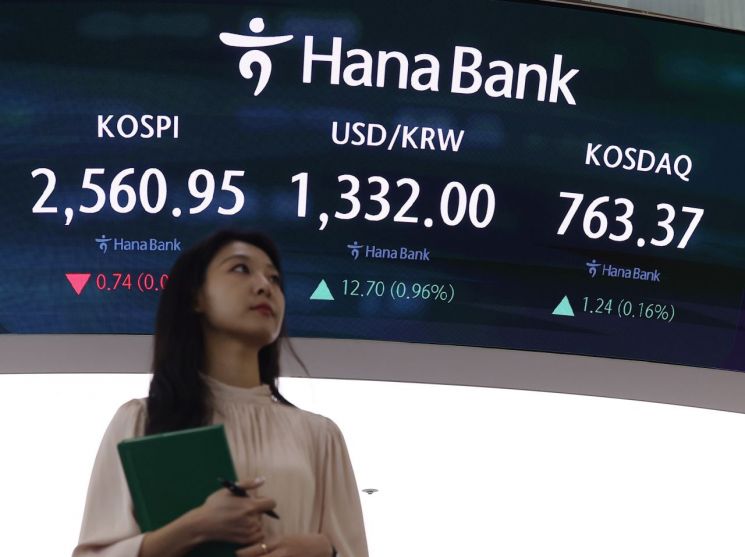
On the 4th, in the Seoul foreign exchange market, the won-dollar exchange rate was trading at the 1,332 won level as of 9:20 a.m. The won-dollar exchange rate opened at 1,332.5 won, up 13.2 won compared to the previous trading day’s closing price (3:30 p.m.). The closing price at 2 a.m. on the 3rd was 1,323.0 won, up 9.5 won from the previous trading day.
Earlier, U.S. President Joe Biden stated that he is discussing retaliatory measures with Israel, which suffered a large-scale missile attack from Iran, including striking Iran’s oil facilities, causing international oil prices to surge. The heightened geopolitical tensions in the Middle East are interpreted as increasing preference for the dollar as a safe-haven asset.
The yen’s weakness is also fueling the won’s depreciation. On the 2nd, after meeting with Kazuo Ueda, Governor of the Bank of Japan (BOJ), Japan’s new Prime Minister Shigeru Ishiba limited the possibility of a rate hike by stating, “I do not think the current environment calls for additional rate increases,” which put downward pressure on the yen.
Kim Hojung, a researcher at Yuanta Securities, explained, “It is difficult to expect the won-dollar exchange rate to fall below the 1,300 won level like last week,” adding, “Currently, the won-dollar exchange rate is greatly influenced by external factors.”
© The Asia Business Daily(www.asiae.co.kr). All rights reserved.
!["The Woman Who Threw Herself into the Water Clutching a Stolen Dior Bag"...A Grotesque Success Story That Shakes the Korean Psyche [Slate]](https://cwcontent.asiae.co.kr/asiaresize/183/2026021902243444107_1771435474.jpg)
















