Chinese Coast Guard Fleet Enters Arctic Ocean for the First Time
Since 2008 Russian Yamal Gas Development
Navigation Period Extended from 5 to 10 Months Due to Warming
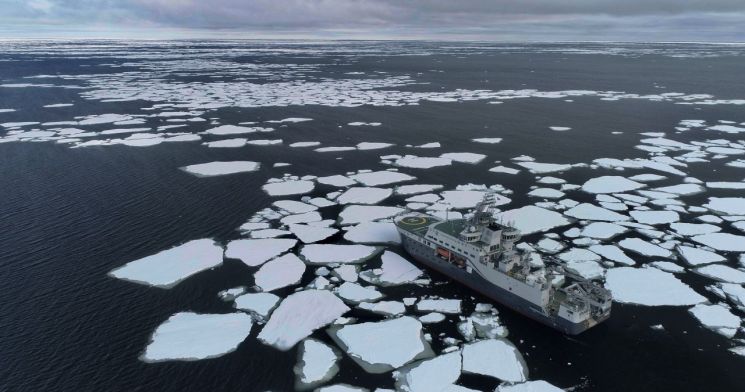
As the coast guards of China and Russia reportedly conducted joint patrols in the Arctic Ocean, the opening of the Arctic route, known as the 'Ice Silk Road,' which the two countries have been jointly developing since the 2010s, is expected to accelerate. Due to global warming, the navigable period for ships on the Arctic route has increased from about two months to up to ten months, and it is anticipated that year-round navigation will be possible from the 2030s. China and Russia plan to increase the cargo volume using the Arctic route more than fourfold by 2035, intensifying future competition with the existing Indian Ocean route.
Chinese Maritime Patrol Fleet and Russian Coast Guard Conduct Joint Arctic Ocean Patrol
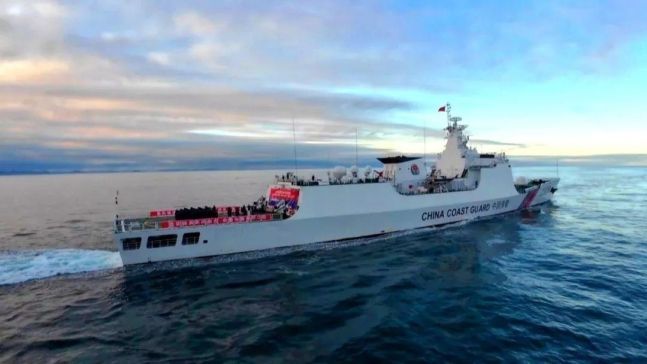 The Chinese maritime patrol vessel making its first entry into the Arctic Ocean on the 2nd (local time). [Image source=Yonhap News]
China's state-run CCTV reported on the 2nd of this month (local time) that a fleet of coast guard vessels entered the Arctic Ocean for the first time and conducted joint patrols with Russian coast guard ships. This move is interpreted as an effort to showcase the achievements of the Ice Silk Road, part of the Belt and Road Initiative, timed with China's National Day holiday (October 1-7) and the 75th anniversary of diplomatic relations with Russia on the 2nd.
Recently, China and Russia have been increasing joint activities such as patrols and training near the Arctic Ocean by their coast guards. From September 16 to 20, the two countries' coast guards conducted joint exercises in Peter the Great Bay, part of Russia's territorial waters in Primorsky Krai, and from the 21st, they carried out joint patrols in the international waters of the North Pacific.
The two countries are also cooperating on the development of routes around the Arctic Ocean. In May, Chinese Premier Li Qiang and Russian Prime Minister Mikhail Mishustin agreed on cooperation for developing Arctic maritime transport routes. Since Russia began developing liquefied natural gas (LNG) in the Yamal Peninsula region adjacent to the Arctic Ocean in 2008, China has also actively entered the Arctic route development aiming to expand gas imports from Russia.
China started dispatching research icebreakers to the Arctic Ocean in 2012 and published the 'Arctic White Paper' in 2018, which included the Ice Silk Road project. Since then, cargo volume using the Arctic route has steadily increased from about 1.4 million tons in the early 2000s to 67.5 million tons last year. The two countries expect the cargo volume to increase more than fourfold by 2035 compared to current levels.
Arctic Route Navigable for 10 Months... Expected Competition with Indian Ocean Route
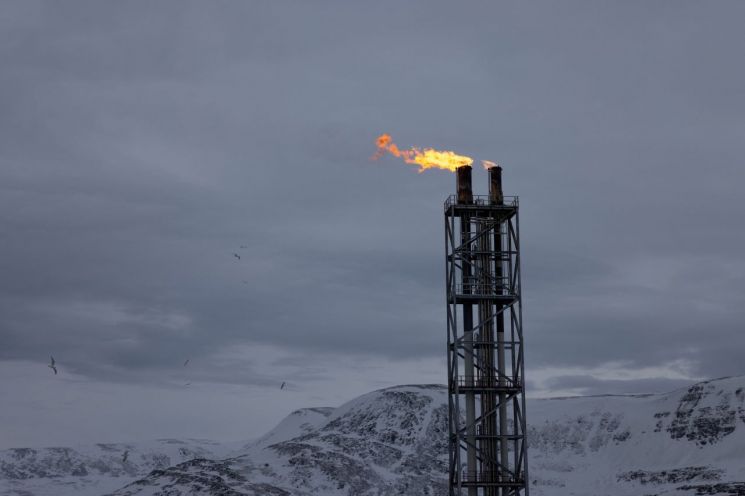
The reason China and Russia expect a significant increase in cargo volume on the Arctic route from the 2030s is the rapid progress of global warming. As glaciers blocking the Arctic route continue to melt, the navigable period in the Arctic Ocean is steadily increasing.
According to Neftgaz, a subsidiary of Russia's state-owned gas company Gazprom, the Arctic route area, which was navigable for two months in 1932, was navigable for up to ten months last year. Due to global warming, the average temperature in the Arctic has soared, causing massive glaciers that blocked the route to melt, and winter ice formation on the route now starts much later than before, significantly extending the navigable period.
The Arctic route's greatest advantage over the existing Indian Ocean route, which connects East Asia and Europe, is its shorter distance. The Indian Ocean route spans about 22,000 km, while the Arctic route is only about 15,000 km, approximately 40% shorter. If the Arctic route's ice fully melts and year-round navigation becomes possible, transportation time is expected to be reduced by more than 40 days.
Following the outbreak of hostilities between Israel and Hamas, instability in the Indian Ocean region has intensified, with the Yemeni Houthi forces attacking commercial ships in the Red Sea area, which is also expected to create opportunities for the expansion of the Arctic route. The Hong Kong South China Morning Post (SCMP) reported, "Most of the Arctic route passes through Russian territorial waters, and if China and Russia, both possessing massive naval power, jointly patrol, safer navigation can be guaranteed."
© The Asia Business Daily(www.asiae.co.kr). All rights reserved.
![Clutching a Stolen Dior Bag, Saying "I Hate Being Poor but Real"... The Grotesque Con of a "Human Knockoff" [Slate]](https://cwcontent.asiae.co.kr/asiaresize/183/2026021902243444107_1771435474.jpg)


















