A research result has been announced that considers robots and humans as a single system to achieve mutually 'optimized interaction.' This technology is also expected to be commercialized in the future as an online automatic optimization function for wearable robots.
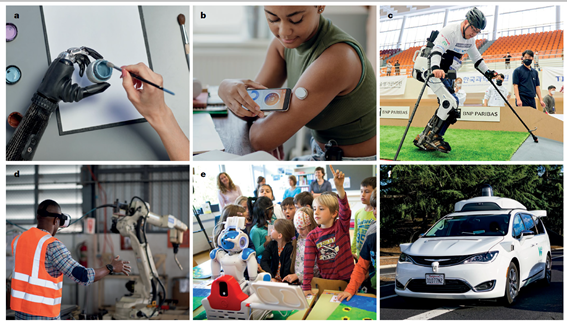
KAIST announced on the 4th that an international joint research team, including Professor Gong Kyung-chul from the Department of Mechanical Engineering, published research results on 'Human-in-the-loop optimization (HILO),' a method that reflects human factors in the robot's control algorithm during the process of optimizing robot performance, in the journal Nature.
The research was conducted with participation from Professor Gong, Professor Steven H. Collins from Stanford University, and Professor Patrick Slade from Harvard University.
In the study, the researchers focused on the fact that as robots penetrate our daily lives more deeply, they must be continuously developed to suit individual users.
They also emphasized that the HILO method is a key element in this process, playing a role in making robots more familiar in our daily lives.
Robots have already become easily encountered entities in human daily life, and complex interactions between humans and robots have become frequent.
For example, in factories, collaborative robots and humans lift and carry objects together, and in semi-autonomous vehicles, drivers operate the vehicle alongside control algorithms. There are many other cases where humans and robots cooperate harmoniously.
In particular, wearable robots are considered a representative type where robots and humans jointly produce a single movement.
However, due to the complex interactions between robots and humans, maximizing robot performance is not easy.
This means that robots face limitations in understanding the different behavioral characteristics of individual human agents and responding according to situational dynamic characteristics.
In such cases, ensuring the precision and safety of robots becomes much more challenging than when robots operate separately from humans. This is why 'barista robots,' commonly seen in daily life, maintain distance from humans behind glass walls.
The joint research team proposed the HILO method to solve these problems. Instead of considering robots and humans separately, it optimizes them as a single integrated system.
Through this process, they also suggested an innovative direction and possibility for 'personalized automatic optimization' while controlling systems where robots and humans interact.
Professor Gong said, "Wearable robots are a field where human factors are relatively strong because each individual has a different appropriate walking pattern, and even the way to overcome the same obstacle varies. As robots penetrate our daily lives more deeply, a continuous tuning process to suit individual users is necessary, and the HILO method is expected to support this process."
© The Asia Business Daily(www.asiae.co.kr). All rights reserved.
![Clutching a Stolen Dior Bag, Saying "I Hate Being Poor but Real"... The Grotesque Con of a "Human Knockoff" [Slate]](https://cwcontent.asiae.co.kr/asiaresize/183/2026021902243444107_1771435474.jpg)
















