KMA Demands "If Medical Education Collapse Is Inevitable Next Year,
Guarantee Reduction in Admissions from 2026"
Health and Welfare Minister Cho Kyu-hong expressed regret and apologized for the first time to the residents. While medical associations view this as a positive change, they have raised the reduction of medical school admissions as a condition for dialogue to resolve the medical crisis, drawing attention to whether the government and doctors, who have been at a stalemate for over seven months, can sit at the negotiation table.
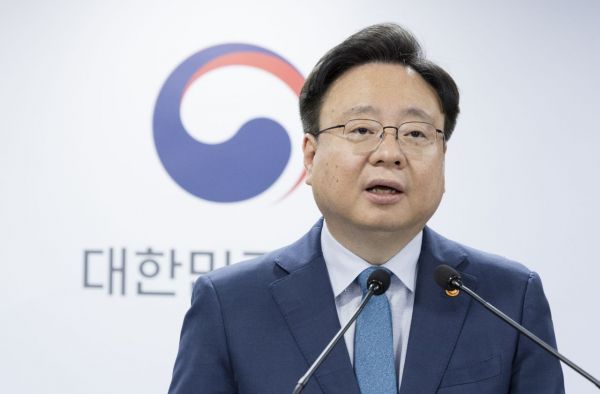 Health and Welfare Minister Cho Kyuhong is briefing on the progress of medical reform at the Government Seoul Office in Jongno-gu, Seoul on the 30th.
 [Photo by Ministry of Health and Welfare]
At a briefing on the progress of medical reform held at the Government Seoul Office on the 30th of last month, Minister Cho said, "To the public, especially patients and their families, I sincerely apologize as the person responsible for health and medical policy for the many inconveniences caused in accessing medical services. I also feel very regretful and sorry when I think of the residents who have temporarily put aside their dreams of dedicating themselves to essential medical care and are now contemplating their future paths during the process of pushing forward medical reform."
This is the first time Minister Cho has publicly apologized to residents since the collective resignation crisis of residents began in February. Residents and medical associations have been demanding an apology from the government for pushing through unreasonable policies.
Minister Cho stated, "The government takes seriously the long-standing demands from residents and medical school professors for improvements in resident training environments, fair compensation for essential medical services, and the establishment of a safety net for medical accidents, and is doing its best to support these policies promptly."
He added, "Although the sense of trust has not yet fully recovered, unlike past governments that relied on temporary measures, we are steadily and swiftly implementing various medical reform tasks one by one. If the medical community participates and offers their valuable opinions, it could be an opportunity for our healthcare system to make a significant leap forward."
Minister Cho also emphasized, "Please believe in the government's sincerity regarding medical reform. Now is the time to end the conflicts between the government and the medical community." At the briefing, the government announced plans to establish a 'Medical Workforce Supply and Demand Estimation Committee' to discuss the appropriate scale of medical personnel such as doctors and nurses, with the committee expected to launch within the year.
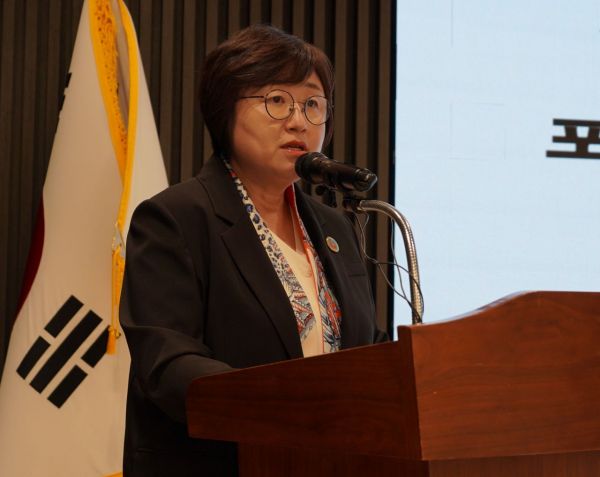 Choi Anna, spokesperson for the Korean Medical Association, is holding a press briefing on medical issues at the Korean Medical Association in Yongsan-gu, Seoul on the 30th.
 [Photo by Korean Medical Association]
In response to the government's remarks, the Korea Medical Association (KMA) stated, "We view the government's first expression of regret toward residents, after demonizing doctors for the past seven months, as a positive change."
Anna Choi, spokesperson for the KMA, said, "However, since this is an expression of regret toward residents rather than an apology for the medical crisis caused by the government, doubts about the government's sincerity remain. Nonetheless, the KMA agrees that restoring trust between the government and the medical community is crucial."
The KMA also presented the reduction of medical school admissions for the 2026 academic year as a condition for dialogue between the government and the medical community.
Spokesperson Choi explained, "Although the early admission process for the 2025 academic year is underway, adjustments can still be made before admissions are finalized. There is absolutely no way to educate the increased 1,500 students, so we believe legal and procedural changes to reduce the number to an educable level are possible." She added, "If the collapse of medical education in 2025 is now unavoidable, please guarantee that reductions can be made starting from 2026."
The KMA has consistently maintained that the increase in medical school admissions for the 2025 and 2026 academic years should be postponed, and that from the 2027 academic year onward, discussions should be based on transparent and scientific estimates. They have also argued that "the cancellation of medical school admissions increases is the minimum condition for residents to return."
The government holds the position that discussions regarding the increase in medical school admissions for the 2025 academic year, for which early admissions and other procedures have already begun, are impossible, but that the 2026 academic year's medical school quota can be reconsidered. This has drawn attention to the future direction of dialogue between the government and the medical community.
© The Asia Business Daily(www.asiae.co.kr). All rights reserved.
![Clutching a Stolen Dior Bag, Saying "I Hate Being Poor but Real"... The Grotesque Con of a "Human Knockoff" [Slate]](https://cwcontent.asiae.co.kr/asiaresize/183/2026021902243444107_1771435474.jpg)

















