Amid Citizens' Walking Craze, Seoul Districts Dobong-gu and Jongno-gu Create Earthen Paths One After Another
Cool autumn breezes have arrived. The heatwave has also subsided around the autumnal equinox. More people are seeking walking paths these days, perfect for a stroll.
As barefoot walking gains popularity, each autonomous district in Seoul is enthusiastically creating loess paths.
Districts such as Dobong-gu and Jongno-gu are leading the way in establishing loess paths that residents desire.
In particular, as the creation of loess paths becomes a boom in each district, loess paths equipped with cooling fog systems have also been established, attracting attention.
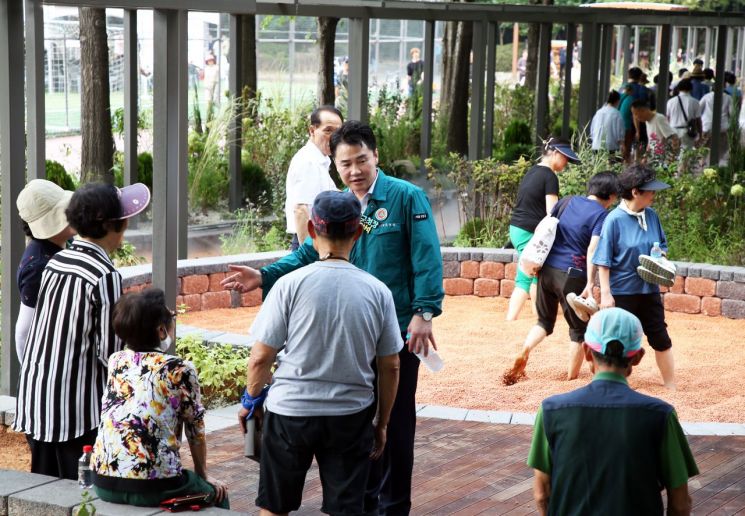 Oh Eon-seok, Dobong-gu Mayor, is having a conversation with residents at the opening ceremony of the Hwangtotgil Trail in Choansan Neighborhood Park. Cooling fog is operating on the Hwangtotgil Trail in Choansan Neighborhood Park.
Dobong-gu Creates Seoul’s First Loess Path Equipped with Cooling Fog
Dobong-gu (Mayor Oh Eon-seok) has constructed a 134-meter round-trip loess path at 677 Changdong, Choaansan Neighborhood Park. The newly created loess path features Seoul’s first floor-sprayed cooling fog system designed to maintain the texture of the loess.
The district held an opening ceremony for the Choaansan Neighborhood Park loess path on September 9. About 300 people attended the ceremony, including Mayor Oh Eon-seok of Dobong-gu, city and district council members, the president and members of the Barefoot Walking National Movement Headquarters, celebrating the opening.
The loess path, 2 meters wide and 134 meters round-trip, includes a loess foot bath and a loess ball bath. Additionally, 20 canopy structures and floor-sprayed cooling fog units were installed to block foreign substances such as soil, fallen leaves, and rainwater, and to preserve the texture of the loess. Facilities for user convenience such as foot washing stations, sitting wall blocks, and shoe racks were also installed.
Prior to construction, the district underwent a thorough preparation process to ensure a high-quality loess path. On February 27 of this year, it signed a business agreement with the Barefoot Walking National Movement Headquarters and gathered opinions from about 2,000 residents and experts in related fields from the early stages of the project.
In particular, a resident demand survey was conducted on three options for loess selection and mixing ratios. Residents preferred a ratio of 6:2:2 for loess, sand, and additives respectively.
Along with the loess path construction, the district also maintained nearby forest trails, including a 6.8 km area around 194-6 Changdong. They removed stones causing inconvenience and performed leveling work such as soil repair.
Mayor Oh Eon-seok of Dobong-gu said, “With the creation of the loess path at Choaansan Neighborhood Park and the maintenance of the forest trail around 194-6 Changdong, we have taken a step closer to completing the 21 km Dobong Dullegil trail, which encompasses Jungnangcheon, Choaansan, and Dooly Ssangmun Park’s barrier-free forest paths. We will continue to do our best to create related infrastructure so that residents can enjoy the pleasure of nature within the city.”
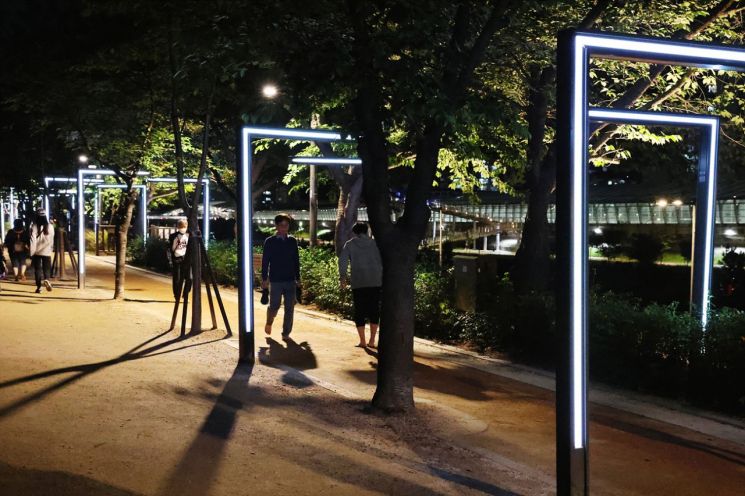
Meanwhile, the Jungnangcheon embankment path in Dobong-gu (from Nowon Bridge to Changdo Elementary School) is gaining great popularity as a walking spot. The number of visitors to the embankment path, which completed environmental maintenance work in April this year, increased by 436% compared to the previous year as of July.
A district official explained, “After creating the loess and deck paths, the number of people visiting Jungnangcheon has greatly increased. Also, continuously improving the path based on residents’ opinions has contributed to the increase in visitors.”
In April this year, the district created a barefoot walking path about 1.7 km long from Nowon Bridge to Changdo Elementary School. The entire section is a sand path, with about 668 meters from Dobong Seowon Apartment Building 104 to 116 made into a loess path.
Since then, the district has continuously gathered opinions from experts and residents to create a more perfect loess path. In addition to dry sections, wet sections were created, and the mixing ratio of loess and sand was adjusted and re-laid in response to feedback that “the loess is slippery and feet sink deeply.” Sprinklers were also installed to maintain the texture of the loess.
New convenience facilities were also installed. Loess blocks were placed along the passage to prevent loess from sticking to shoes, and a gravel barrier was installed to prevent injuries caused by large stones on the sand path.
To maintain a pleasant environment on the loess path, one public worker, five temporary workers, and eight senior citizen job holders were assigned. Twelve members of a resident council were also appointed to provide proper guidance on loess path use.
The Jungnangcheon deck path was also newly renovated. To provide a special experience where nature and art harmonize in the city, the district installed fiber optic landscape lighting. Since the 30th of last month, it has been lighting up the night sky daily from 15 minutes after sunset until 11 p.m.
The lighting, designed with a starlight (constellation) theme, offers visitors a fantastic experience as about 6,000 stars seem to twinkle underfoot with every step they take.
Mayor Oh Eon-seok of Dobong-gu said, “We will transform Jungnangcheon into not just a simple walking path but a cultural space that can be safely and enjoyably used even at night.”
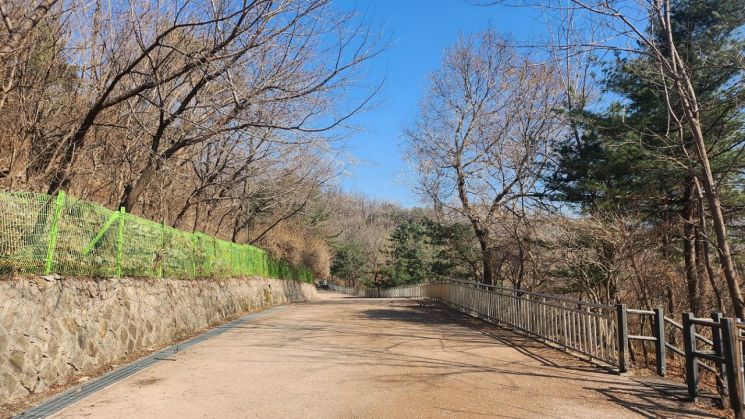
Jongno-gu Creates Eco-Friendly Barefoot Walking Path Around Inwangsan Sunrise Hill
Loess Foot Bath, Foot Washing Station, Shoe Rack Installed and Trees Planted for Convenience; Additional Construction Planned for Next Year
A ‘barefoot walking path’ where people can walk barefoot and heal in the heart of Seoul’s city center is being created.
Jongno-gu (Mayor Jeong Mun-heon) is promoting the ‘Inwangsan Barefoot Walking Path’ project, aiming for completion in November.
The project involves removing concrete pavement from side roads around Inwangsan Sunrise Hill (179-1 Okindong) that suffered from illegal parking, and creating a 134-meter barefoot path to support residents’ physical and mental health.
Additionally, auxiliary facilities such as a loess foot bath, foot washing station, and shoe rack will be installed to provide convenience and create a pleasant walking environment.
Various trees will also be planted to offer a beautiful natural landscape rarely seen in the city.
Before construction, Jongno-gu analyzed the status of parks in the area to select the location. As a result, ‘Inwangsan Park’ was chosen as the site because it allows quick progress due to ease of vehicle access for construction and maintenance, and is expected to have the greatest project effect by linking with the Jongno Dullegil trail.
Starting with Inwangsan Park, Jongno-gu plans to successively create barefoot walking paths in Samcheong Park, Sungin Park, and Waryong Park, striving to improve residents’ health and quality of life.
Mayor Jeong Mun-heon said, “We aim to support the spread of a nature-friendly walking culture by creating dirt paths where people can walk barefoot, and to invigorate residents’ daily lives. We will expand the creation of barefoot paths where people can enjoy forest, contact, and healing in the city, enhancing leisure satisfaction.”
© The Asia Business Daily(www.asiae.co.kr). All rights reserved.
![From Bar Hostess to Organ Seller to High Society... The Grotesque Con of a "Human Counterfeit" [Slate]](https://cwcontent.asiae.co.kr/asiaresize/183/2026021902243444107_1771435474.jpg)


















