A bill has been introduced in the U.S. Congress demanding that the U.S. government take responsive measures, such as investigations under the so-called 'Section 301 of the Trade Act,' if American digital companies suffer damages due to amendments to South Korea's Fair Trade Act. Ahead of the U.S. presidential election this November, concerns have been raised that South Korea's legislative efforts to curb unfair practices by major platform operators and promote competition could lead to discrimination against U.S. companies. In this context, Congress is applying strong pressure by leveraging Section 301, which allows for retaliatory tariffs.
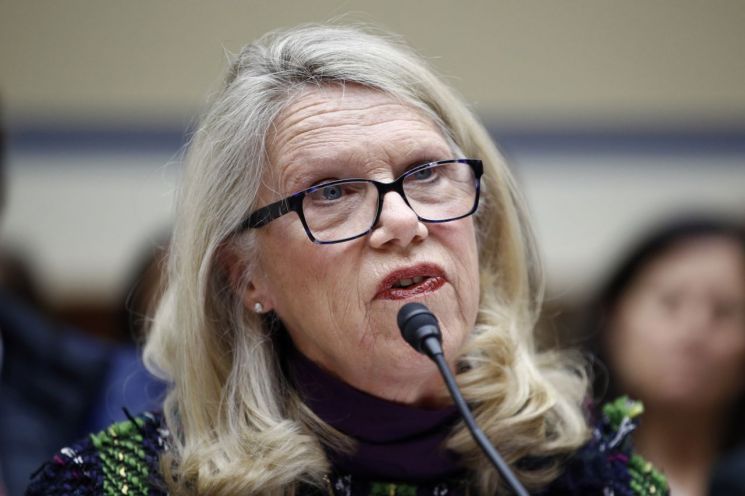
According to the U.S. Federal Legislative Information System on the 29th (local time), Republican Representative Carol Miller of West Virginia submitted the 'U.S.-Korea Digital Trade Enforcement Act' to the House of Representatives on the 27th, containing these provisions.
The bill points out that the U.S. and South Korea are strategically important economic and security partners, with nearly 30,000 U.S. troops stationed in South Korea to counter North Korea and China. It also notes that the U.S. recorded a trade deficit of $51.1 billion with South Korea last year, stating, "This is partly due to South Korea's discriminatory economic policies. South Korea is considering discriminatory digital regulations that benefit Chinese tech companies while imposing excessive burdens on American companies."
The discriminatory digital regulations mentioned in the bill refer to South Korea's Platform Competition Promotion Act. Earlier, on the 9th, the Korea Fair Trade Commission and the Financial Services Commission announced the 'Legislative Direction for Promoting Fair Competition on Platforms,' stating their intention to amend the Fair Trade Act to prevent unfair practices by major platform operators and to respond swiftly to illegal activities through a presumption-based approach. According to the regulatory criteria proposed by the Fair Trade Commission, not only domestic platform giants such as Naver and Kakao but also U.S. companies like Google and Apple are included. Chinese companies, which the U.S. is wary of, were not mentioned.
Accordingly, the bill instructs the U.S. Trade Representative (USTR) to "report to Congress within 30 days on the impact on American platform companies and U.S. trade, as well as any violations of trade agreements, if South Korea imposes discriminatory regulations by pre-designating or post-presuming American online and digital platform companies." Furthermore, based on this report, the U.S. Secretary of Commerce is to take measures to protect U.S. trade, including ▲ filing disputes with the World Trade Organization (WTO), ▲ investigations under Section 301 of the Trade Act, ▲ dispute resolution under the U.S.-Korea Free Trade Agreement (FTA), and ▲ agreements with South Korea to mitigate damages.
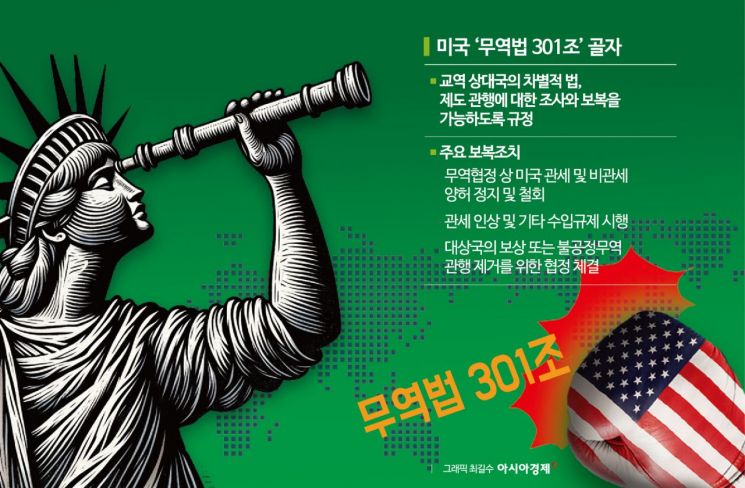
Section 301 of the Trade Act stipulates that if unfair trade practices by a trading partner disrupt U.S. industries, the President has the authority to impose retaliatory tariffs and other measures. This provision served as the basis for the tariff war with China during the Donald Trump administration. Recently, the Joe Biden administration also implemented significant tariff increases on Chinese electric vehicles based on Section 301.
Representative Miller stated on her website, "The Platform Competition Promotion Act is disguised as an antitrust measure but will ultimately target American companies," adding, "The Korean bill includes several problematic provisions such as mandatory disclosure of algorithms, prohibitions on offering multiple products in the digital ecosystem, and granting the Korean government (temporary) suspension authority when investigating unfair trade practices even before any wrongdoing is found." She continued, "I introduced this bill to protect American digital trade overseas and to ensure that the Korean government does not cross the boundaries of the FTA."
Earlier, the Computer & Communications Industry Association (CCIA), whose members include Google, Amazon, and Apple, issued a statement under the name of its president, saying, "The amendment retains existing pre-regulatory elements that disproportionately negatively impact American companies," and urged to "halt all pre- and post-regulatory proposals that target American companies and enhance China's influence on the critical U.S.-Korea economic and security relationship."
© The Asia Business Daily(www.asiae.co.kr). All rights reserved.


















