75% of Self-Employed Earn Less Than 1 Million Won Monthly
Closure Rate Soars... "Management Difficulties Reach Limit" Analysis
It has been estimated that there are as many as 230,000 so-called 'bosses who earn less than their employees' nationwide.
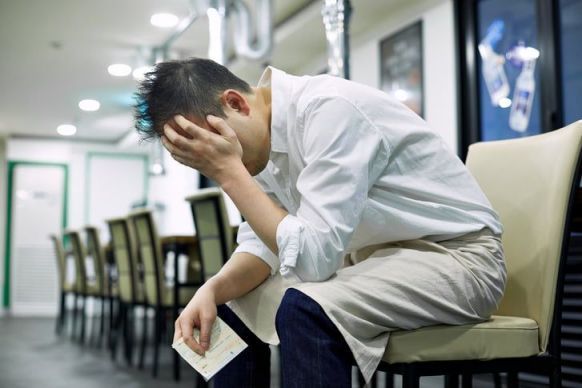
According to data received by Heo Seong-mu, a member of the National Assembly's Industry, Trade, and Small and Medium Venture Business Committee from the Democratic Party of Korea, from the National Health Insurance Corporation on the 29th, among 971,000 workplaces subject to year-end tax settlement in 2022, the number of workplaces that imposed health insurance premiums (health insurance fees) based on the highest-paid employee's salary was 212,000 nationwide, and the number of self-employed individuals was confirmed to be 227,000.
Article 38 of the Enforcement Decree of the National Health Insurance Act stipulates that if the employer's (self-employed person's) salary is lower than that of the employee, the health insurance premium should be calculated based on the employee receiving the highest salary. In other words, even if the boss earns less than the employee, they pay the same level of health insurance premiums. However, if the business income amount is 0 won or less, the average monthly salary, not the highest monthly salary of the employee, is applied when calculating the health insurance premium.
The total annual health insurance premiums of self-employed individuals to whom the highest-paid employee's salary standard was applied amounted to 222.294 billion won, nearly twice the amount of 124.3 billion won based on the income they actually reported. Self-employed individuals subject to the highest-paid employee's salary standard paid ▲298,000 won more in 2018 ▲319,000 won more in 2019 ▲366,000 won more in 2020 ▲393,000 won more in 2021, and ▲431,000 won more in 2022 compared to the health insurance premiums based on their reported income.
Rep. Heo emphasized, "Despite health insurance premiums being the social insurance with the greatest burden on all citizens, the government is failing to fulfill its obligation to ascertain income and is shifting responsibility onto small business owners struggling due to COVID-19 and the economic downturn," adding, "I will thoroughly point this out during the audit of the Ministry of SMEs and Startups."
Meanwhile, according to data submitted by Rep. Park Seong-hoon of the People Power Party from the National Tax Service, three out of four individual business owners reported monthly comprehensive income tax of less than 1 million won. This is less than half of the monthly wage of 2.06 million won based on this year's minimum wage. Among them, those who reported '0 won income' amounted to 944,250 cases, accounting for 8.2%.
This is interpreted as reflecting the structural difficulties faced by a significant number of individual business owners in Korea who choose entrepreneurship after being pushed out of wage employment, as well as pressure from large platform companies through excessive fees and delivery charges.
As the economic recession and high inflation continue, the closure rate of individual businesses is also rapidly increasing. According to data on the 'Status of Individual Business Owners in the Last 10 Years' received by Rep. Ahn Do-gul of the Democratic Party of Korea from the National Tax Service, while about 1,147,000 individual businesses opened last year, 910,000 (79.4%) closed. This means that for every 10 stores that opened, 8 closed. The closure rate is the highest in 10 years since 2013 (86.9%).
© The Asia Business Daily(www.asiae.co.kr). All rights reserved.

















