Uniqlo Stretches Again... Aggressively Expanding Stores
Sales Rise Amid SPA Trend and Increased Affinity for Japan
Japan's leading manufacturing and direct-to-consumer apparel (SPA) brand Uniqlo, which once saw its sales halved due to the COVID-19 pandemic and the 'No Japan' movement, is recently recovering its sales through active store expansion.
FRL Korea, the domestic operator of Uniqlo, reopened the Uniqlo Dongdaemun store (area 1558㎡) on the 27th at Dundun, a complex shopping mall in Jung-gu, Seoul (formerly Lotte Fitin). It is the first reopening in four years since the store closed when Lotte Fitin shut down during the height of COVID-19 in 2020.
Japan's Uniqlo headquarters, Fast Retailing, established the joint venture FRL Korea in 2004 with Lotte Shopping, holding 51% and 49% stakes respectively, and opened the first store in Korea the following year. Since then, Uniqlo sparked the SPA trend in the domestic fashion industry, increasing the number of stores to 186 by 2019. Sales in 2019 (fiscal year from September of the previous year to August of the current year) reached 1.3781 trillion KRW. However, due to the boycott movement, the number of stores continued to decline, dropping to 127 in 2022. Operating profit also shifted from a surplus of 199.4 billion KRW to a deficit (-88.4 billion KRW).
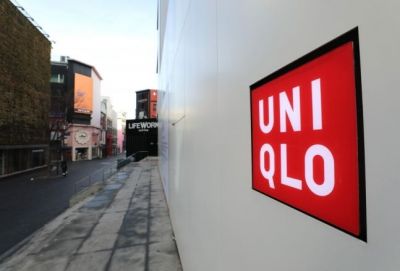
Recently, as the 'No Japan' movement has lost momentum, Uniqlo is showing signs of recovery in Korea. The high inflation has increased consumers seeking cost-effective (price-performance) clothing, and the weak yen phenomenon has led to more tourists visiting Japan, naturally raising familiarity with Japanese products.
As of the end of last year, the number of Uniqlo stores increased again to 132, and sales rose 30.9% year-on-year to 921.9 billion KRW. Operating profit also increased by 23.1% to 141.3 billion KRW. The fashion industry expects that if this trend continues, Uniqlo will recover its sales to the 1 trillion KRW level for the first time in five years this year.
Accordingly, Uniqlo appears to be aggressively expanding its store network to solidify its competitive edge. This month, it opened the largest domestic stores at Lotte World Mall in Seoul and Dongdaemun, and is preparing to open four new stores next month: Ilsan Deokyi in Gyeonggi, Lotte Mall Gwanggyo, Starfield Market Jukjeon, and Homeplus Sangbong in Seoul.
Additionally, Uniqlo is focusing on customer attraction strategies such as introducing the 'Re-Uniqlo Studio' at the Lotte World Mall store, which repairs torn or worn Uniqlo products and customizes old clothes into new ones. A Uniqlo representative explained, "As part of efforts for a virtuous cycle of clothing, this place provides solutions to help customers wear their clothes longer."
However, there are predictions that it will be difficult for Uniqlo's performance to fully recover to pre-COVID levels due to the rapid growth of native SPA brands. Fashion online platforms like Musinsa, which have been opening dedicated offline stores for SPA brands one after another, are considered major competitors of Uniqlo.
© The Asia Business Daily(www.asiae.co.kr). All rights reserved.
![User Who Sold Erroneously Deposited Bitcoins to Repay Debt and Fund Entertainment... What Did the Supreme Court Decide in 2021? [Legal Issue Check]](https://cwcontent.asiae.co.kr/asiaresize/183/2026020910431234020_1770601391.png)
















