A pastor who delivered a sermon defaming Lee Jae-myung, then the Democratic Party candidate, to worshippers ahead of the 2022 presidential election was sentenced to a fine.
The pastor argued that he only criticized policies and did not engage in electioneering aimed at the defeat of a specific candidate, and claimed that the provision of the Public Official Election Act prohibiting pastors from campaigning to their congregants was unconstitutional, but this was not accepted.
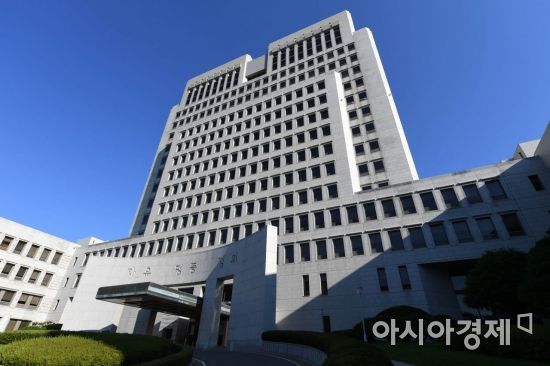
According to the legal community on the 29th, the Supreme Court's Third Division (Presiding Justice Eom Sang-pil) upheld the lower court's ruling sentencing Park Young-woo, senior pastor of Gwangju Antioch Church, to a fine of 1.5 million won on appeal for violating the Public Official Election Act.
The court stated the reason for dismissing Pastor Park's appeal was that "there was no error affecting the judgment such as failure to conduct necessary hearings for the lower court's decision, violation of the rules of logic and experience exceeding the limits of free evaluation of evidence, misunderstanding of the law regarding the establishment of the offense of violating the Public Official Election Act, insufficient investigation, or omission of judgment."
Pastor Park was prosecuted on charges of using his position as a church pastor to campaign to about 20 to 30 worshippers attending services in the church's small chapel between 5:00 a.m. and 5:32 a.m., and again between 2:00 p.m. and 2:42 p.m. on January 6, 2022, roughly two months before the presidential election scheduled for March 9, 2022, to prevent Lee Jae-myung from winning.
Article 85, Paragraph 3 of the Public Official Election Act (Prohibition of Election Interference by Public Officials, etc.) states that "No one shall use their official duties within educational, religious, or professional organizations or groups to campaign for or against any candidate to the members of such organizations, nor use special positions in transactions such as affiliation or subcontracting to campaign for or against candidates to corporate organizations, enterprises, or their members." This prohibits pastors of religious organizations like churches from using their position to campaign to their congregants.
Additionally, Article 255, Paragraph 1, Item 9 of the same law stipulates that "Anyone who violates or causes violation of Article 85, Paragraphs 3 or 4" shall be punished by imprisonment for up to three years or a fine of up to 6 million won.
During the sermon to worshippers attending the early morning service, Pastor Park said, "Lee Jae-myung clearly intends to implement communism. He wants socialism. (Omitted) Listen carefully, he does not recognize private property rights. We have personal property, right? He does not acknowledge private ownership. Definitely. He said he would withdraw U.S. troops. The U.S. troops are the ones obstructing unification. And originally, the person with socialist roots is you all. If such a person becomes president, he will just hand everything over as is."
He also said, "Simply put, he has four prior convictions, and his sister-in-law says this person should not be allowed in, huh? He killed his own brother, huh? He was hospitalized in a mental hospital and killed him, huh? Such a vicious person. Look at the OOO incident. The key person in the investigation committed suicide while investigating, huh? Lies. You killed him. I will do everything. Huh? What suicide are you talking about for such vicious people? Huh? Would you trust Lee Jae-myung's election pledges? You fools? They are all fake. Communism is deception. Their tactic is, huh? Do you believe election pledges and vote for Lee Jae-myung?"
At the end of the sermon, Pastor Park said, "You can see now. The economy has collapsed. This great country. We have seen it all happen over five years. So what do you say? I hope you save this country. The country is ruined now because of the Joo-sa-pa (pro-North Korea faction). Please wake up. If we lose this election, we are all dead. Huh? That is why I appeal to you. Huh? (Omitted) I appeal to the people of Honam. Wake up. Please turn back here. We must protect our free Republic of Korea."
In the afternoon service on the same day, Pastor Park said, "This is not about politics now. That person is in great trouble. So the 2030 youth are leaving. Lord. Someone must change O. Personally. That person has corruption too. Of course. I don't look at those things. We must protect our homes first. Then, then. We will handle it ourselves. I have nothing to do with it. First, the regime must change. Otherwise, we die. Stop communization. But pastors in Jeolla Province, please wake up. Wake up and come back. If the Democratic Party wins, we are finished. We will go to jail, we will all die."
In court, Pastor Park's defense argued, "The defendant only criticized policies during the sermon and did not engage in electioneering aimed at the defeat of a specific candidate, so the defendant's actions do not constitute electioneering prohibited under the Public Official Election Act, and the defendant had no intent to campaign."
They also claimed, "Even if the defendant's actions constitute electioneering, the Public Official Election Act, which restricts electioneering by recognizing a special status for pastors, is unconstitutional, so the defendant is not guilty." Pastor Park's defense actually requested the court to refer the constitutionality of Articles 85, Paragraph 3 and 255, Paragraph 1, Item 9 of the Public Official Election Act, under which he was charged, for constitutional review.
In the request for constitutional review, Pastor Park's defense argued, "These provisions violate the principle of proportionality by infringing on freedom of religion, freedom of expression, and freedom of electioneering, and Article 85, Paragraph 3 of the Public Official Election Act lacks clarity regarding the content of official acts subject to criminal punishment, violating the principle of clarity in criminal law."
The court first acknowledged the 'premise of the trial' regarding these provisions, judging that if the provisions were unconstitutional, Pastor Park could not be punished, so these provisions directly affect the trial's outcome.
However, the court stated, "While freedom of religion must be fully guaranteed even in matters related to electioneering and politics, the Constitution also strongly requires that public elections be conducted freely and fairly to establish legitimate representative relations," and dismissed Pastor Park's request to refer the constitutional review to the Constitutional Court.
The court pointed out, "Given that a significant portion of the population belongs to organized established religious groups and that the distribution of religious populations is diverse, political opinion formation can be significantly influenced by the denomination to which one belongs. It is easily foreseeable from past experience that political parties or candidates will attempt to utilize the organizational power and influence of specific religious institutions or groups with which they have ties as a means of electioneering to secure their political claims, support bases, or to check competing candidates."
Regarding Pastor Park's claim of no intent to campaign, the court cited Supreme Court precedents.
Previously, in a 2016 plenary session ruling, the Supreme Court stated regarding electioneering and intent, "'Electioneering' refers to acts objectively recognized as intended to promote the election or defeat of a specific candidate in a particular election. Whether this applies should be judged objectively based on the external conduct of the actor, not the internal intent."
Applying this standard, the court found Pastor Park's actions constituted electioneering and sentenced him to a fine of 1.5 million won.
The court concluded, "The defendant made the statements about two months before the 20th presidential election, at a time when the presidential candidates for each party had already been decided and announced. The sermon mentioned specific parties and candidates by name, and the statements conveyed that the regime must be changed to save the country and that votes should not be cast for the Democratic Party candidate. Considering the specific content and circumstances of each statement, it is objectively recognizable that the defendant intended to promote the defeat of candidate Lee Jae-myung, and this intent would be apparent from the perspective of an ordinary person. Therefore, the defendant's statements during the worship service as a church pastor constitute 'electioneering' under the Public Official Election Act, and the defendant had intent regarding this."
Regarding sentencing, the court noted, "The defendant's actions risk undermining the fairness of the election, and especially since the defendant used his position and influence as a church pastor to commit the offense, the nature of the crime is serious, and the defendant's lack of remorse is an unfavorable factor."
However, the court added, "Considering that the defendant's actions did not decisively affect the election results and that the defendant has no prior similar offenses, these are favorable factors in sentencing."
Pastor Park appealed the first trial verdict citing 'misinterpretation of law and factual errors,' and the prosecution appealed citing excessive sentencing, but the second trial court found no problem with the first trial's judgment.
Pastor Park appealed again, but the Supreme Court also found no issue with the second trial's judgment.
Meanwhile, Mr. A filed a constitutional complaint directly with the Constitutional Court after the request for constitutional review of the electioneering prohibition provisions was dismissed during the trial.
However, in January, the Constitutional Court dismissed the complaint (upholding constitutionality), stating, "Considering the characteristics of religious organizations and the significant influence held by clergy, prohibiting electioneering in principle and punishing violations ensures the fairness of elections, allows religious organizations to perform their inherent functions, and prevents the adverse effects of improper entanglement between politics and religion, thereby achieving a greater public interest."
© The Asia Business Daily(www.asiae.co.kr). All rights reserved.
![Clutching a Stolen Dior Bag, Saying "I Hate Being Poor but Real"... The Grotesque Con of a "Human Knockoff" [Slate]](https://cwcontent.asiae.co.kr/asiaresize/183/2026021902243444107_1771435474.jpg)
















