100 Billion Won Support for Production, Backing for Planning and Development
Chairman Hansangjun: "Not Neglecting Independent and Art Films"
The Korean Film Council aims to overcome the crisis in the film industry by fostering mid-sized commercial films.
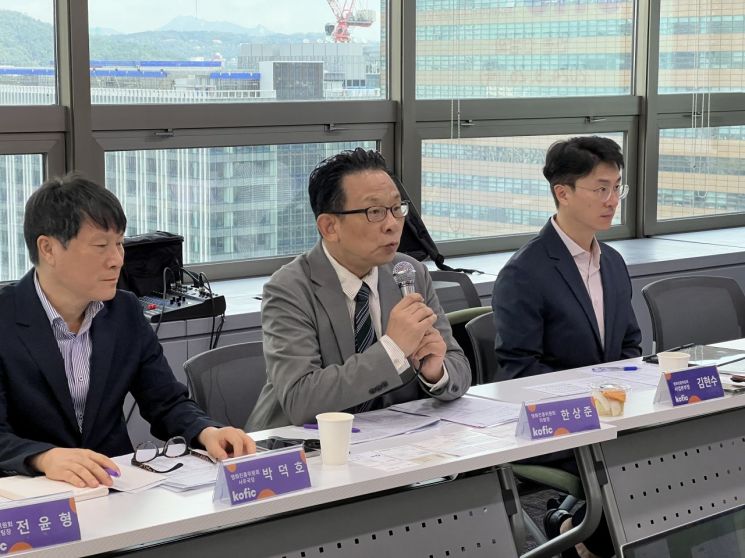
Han Sang-jun, the newly appointed chairman of the Korean Film Council, held his first press conference on the 26th at the HJ Business Center in Jongno-gu, Seoul, stating, "Investment is concentrated on large-scale commercial films, intensifying the polarization of box office success," and added, "We will expand the scope of production support not only to independent films but also to mid-sized commercial films." According to the Korean Film Council, mid-sized commercial films are defined as works with a net production cost between 1 billion and 8 billion KRW.
Concrete plans have already been established. Next year, support will be provided for the production and distribution of up to ten mid-sized films. This aims to secure momentum for subsequent productions while fostering the growth of filmmakers.
Earlier, the Ministry of Culture, Sports and Tourism allocated a film industry support budget of 82.9 billion KRW for next year, an increase of 9.2 billion KRW (12.5%) compared to this year. Of this, 10 billion KRW will be used for the mid-sized commercial film production support project. Additionally, 2.6 billion KRW will be invested separately to support content planning and development.
Some critics argue that this support neglects independent and art films, as the budget for independent and art film production support next year has been cut from 11.4 billion KRW to 6.7 billion KRW.
Chairman Han acknowledged, "It is true that the focus has shifted towards commercial films," but explained, "Compared to before COVID-19, the amount of support for independent film production has not significantly decreased." He emphasized, "Historically, independent films have flourished when commercial films attracted large audiences. Commercial and independent films are interconnected. I believe neither side can succeed alone."
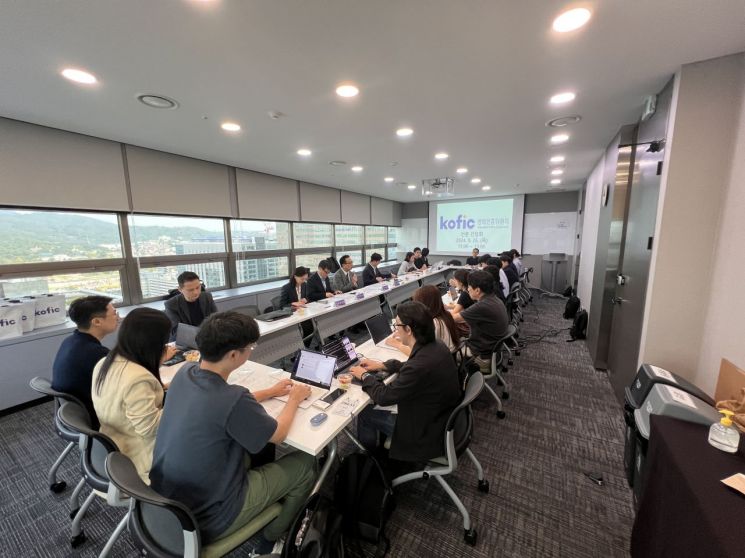
He also presented new goals, including diversifying funding sources amid the depletion crisis of the Film Development Fund, supporting domestic film personnel's entry into the global stage, supporting new directors, and completing the second phase of the Busan filming studio by 2030.
Regarding issues such as the stagnant screen monopoly, adjustment of ticket unit price (average ticket price), and the introduction of holdback (a grace period before films screened in theaters are distributed on other platforms such as online), he remained reserved. "The interests of production companies, cinemas, and investment-distribution companies are very different," he said, "We will consider policy solutions to address these challenges."
© The Asia Business Daily(www.asiae.co.kr). All rights reserved.


















