Province, from October to February next year... Full-scale prevention of disaster-type livestock infectious diseases
Strengthening quarantine management for migratory birds, preventing virus inflow into farms, customized quarantine by livestock species
Focused quarantine in areas with farm outbreaks and wild boar detection, high-risk regions
Proactive foot-and-mouth disease prevention with movement restrictions on cattle and pig manure outside designated zones starting next month
Gyeonggi Province announced on the 27th that it will designate the period from October this year to February next year as the "Special Quarantine Period for Avian Influenza (AI), African Swine Fever (ASF), and Foot-and-Mouth Disease (FMD)" and will take strong measures to respond to disaster-level livestock infectious diseases.
The province's assessment is that the winter season has a high possibility of outbreaks of highly pathogenic avian influenza caused by infected migratory birds and livestock infectious diseases caused by wild boars approaching farms for feeding activities during the winter. Accordingly, the province plans to maintain (strengthen) a 24-hour emergency system and establish quarantine measures for each disease to thoroughly manage the situation until spring next year.
First, to block avian influenza from migratory birds entering farms, special management measures will be implemented, including operating and monitoring livestock vehicle control zones near migratory bird habitats (18 sections, 55 points), intensive disinfection of roads and poultry farms around migratory bird habitats, and expanding the operation of livestock vehicle washing and disinfection facilities from 27 to 37 locations to prevent the spread.
Additionally, to strengthen barrier quarantine management, 18 quarantine rules will be enforced from October 1 through administrative orders and public announcements. These include prohibiting livestock vehicles and workers from entering migratory bird habitats, banning the distribution of live poultry in traditional markets, restricting the movement of poultry manure vehicles between cities and provinces, prohibiting the shared use of livestock tools and equipment between poultry farms, and banning the entry of vehicles such as egg transport vehicles that are not allowed inside poultry farms.
In particular, control posts will be installed at 33 vulnerable layer farms to strengthen vehicle and visitor access management. Inspection and quarantine management will be enhanced for the densely populated layer farming complex in Pocheon and 13 cities and counties designated as AI intensive quarantine management zones (Goyang, Gimpo, Anseong, Yeoju, Yeoncheon, Osan, Yongin, Uiwang, Uijeongbu, Icheon, Pyeongtaek, Pocheon, Hwaseong). In addition, compensation for business suspension will be promoted for duck farms with high risk of outbreaks due to rearing restrictions.
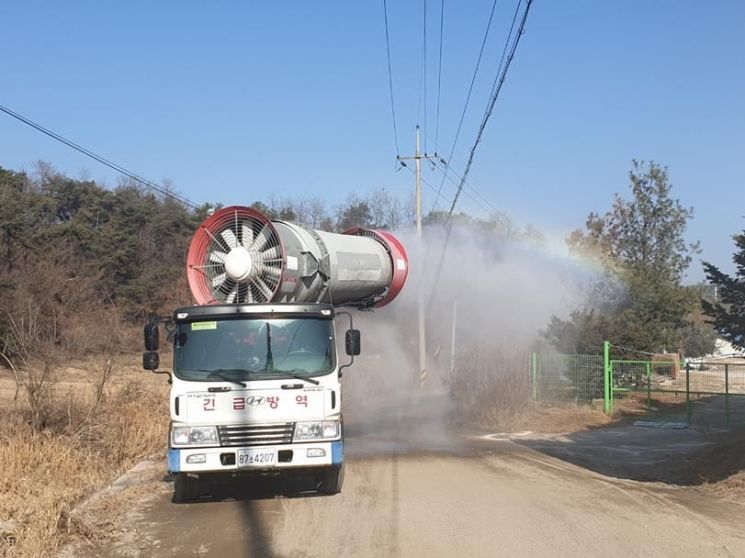
To prevent African Swine Fever, disinfection will be intensified using wide-area pest control machines and sterilization vehicles around farms, major roads, and the Imjin River basin area to block disease introduction by wild boars. Guidance will be provided through banners and text messages to discourage hiking in outbreak areas. Especially during the special quarantine period, special management and inspections will be conducted focusing on farms in areas of concern such as those with farm outbreaks and wild boar detections, including compliance checks with quarantine rules and clinical surveillance.
For foot-and-mouth disease prevention, thorough vaccination is the most important measure. A nationwide vaccination campaign targeting cattle, goats, and other cloven-hoofed animals will be conducted from October 1 to 14. Four weeks after the mass vaccination, antibody positivity rate monitoring tests will be conducted. Farms with low antibody positivity rates or negligent vaccination management will face penalties such as fines, additional vaccinations, and guidance inspections. Furthermore, from October, the movement of cattle and pig manure outside designated areas will be restricted to block virus transmission between farms, which is the greatest risk factor for FMD spread.
Lee Kang-young, Director of the Livestock Animal Welfare Bureau of Gyeonggi Province, stated, "The risk of domestic introduction of disaster-level livestock infectious disease viruses remains not only from infected migratory birds and wild boars but also from overseas outbreak areas and border regions." He urged, "We ask for responsible voluntary quarantine by farms and related industries and active cooperation from residents so that strong quarantine activities can be carried out to prevent virus introduction into farms and spread between farms."
© The Asia Business Daily(www.asiae.co.kr). All rights reserved.

















