Reconstruction Procedures Allowed Without Safety Inspection
Safety Inspection Renamed to Reconstruction Diagnosis
Reconstruction Advanced by 3 Years
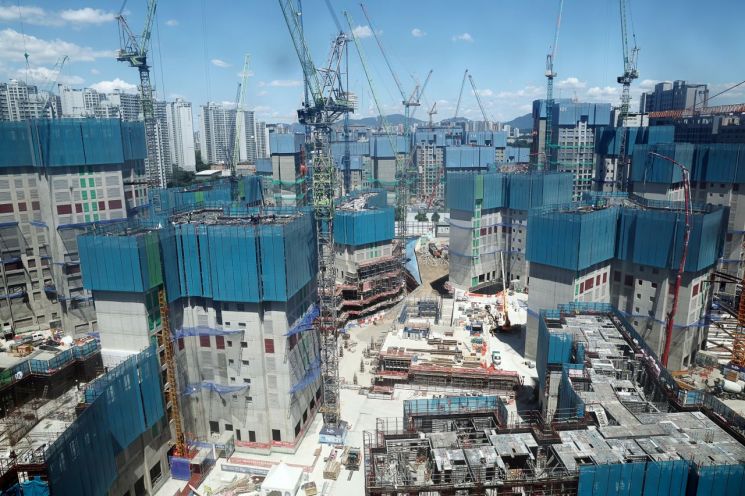
Starting from the first half of next year, apartments that have been built for over 30 years will be allowed to enter reconstruction before undergoing a safety inspection. This is expected to shorten the reconstruction period by three years.
The National Assembly's Land, Infrastructure and Transport Committee held a plenary session on the 26th and passed the amendment to the "Urban and Residential Environment Maintenance Act" (Urban Maintenance Act) with these provisions, forwarding it to the Legislation and Judiciary Committee. The government had decided to introduce a "reconstruction fast track" as part of the '1·10' measures, and the bill was passed through bipartisan agreement in just over eight months.
According to the amendment, the name of the safety inspection will be changed to "reconstruction diagnosis." The deadline for conducting the reconstruction diagnosis will also be relaxed to before the approval of the project implementation plan. It will be possible to proceed with reconstruction procedures without passing the reconstruction diagnosis.
Previously, reconstruction proceeded in the order of passing the safety inspection, then "establishing a maintenance plan and designating a maintenance zone → forming a reconstruction promotion committee → approving the establishment of the association → approving project implementation → approving management disposition → commencement of construction → completion."
The reconstruction promotion committee, which could be formed only after the designation of the maintenance zone, will now be allowed to be formed before the designation of the maintenance zone. The purpose is to reduce delays in the project by allowing the project to proceed through a legally recognized promotion committee at the early stages of the project.
Additionally, with the change from safety inspection to reconstruction diagnosis, the weight of the "structural stability" evaluation item, which was significantly lowered last year, is planned to be further relaxed. There is consideration to reduce the weight of structural safety aspects such as concrete frames and increase the weight of residential environment factors such as parking conditions and noise. This aims to prevent situations where reconstruction is blocked due to structural safety issues.
According to the amendment, even if a reconstruction diagnosis results in a negative judgment, the decision to initiate the maintenance plan will not be canceled. The existing clause stating that "the special mayor and special self-governing province governor may directly cancel the decision to initiate the maintenance plan or take necessary measures" has been deleted through the amendment.
The amendment also includes provisions allowing associations to receive consent forms and exercise voting rights at general meetings through online methods. The amendment will take effect six months after its promulgation.
Meanwhile, at the same plenary session of the Land, Infrastructure and Transport Committee, an amendment to the "Special Act on Private Rental Housing" was also passed, which revives short-term registered rentals and sets the mandatory rental period to six years. Currently, only long-term rentals with a mandatory period of 10 years remain.
The six-year short-term rental target is proposed as a measure to revitalize the supply of non-apartment housing such as villas and officetels.
The government will apply the one-household one-home special case for tax purposes when a single homeowner purchases a small non-apartment and registers it as a six-year short-term rental. Registration is possible from one household without limitation on the number of houses, but this requires an amendment to the Enforcement Decree of the Tax Law.
The amendment also includes provisions to cancel the registration of malicious landlords who habitually fail to return tenants' deposits, preventing them from enjoying benefits as rental business operators.
© The Asia Business Daily(www.asiae.co.kr). All rights reserved.
![Clutching a Stolen Dior Bag, Saying "I Hate Being Poor but Real"... The Grotesque Con of a "Human Knockoff" [Slate]](https://cwcontent.asiae.co.kr/asiaresize/183/2026021902243444107_1771435474.jpg)
















