One-time Cash Payment to Vulnerable Groups
Comprehensive Job Measures Also Announced
Shanghai Issues Coupons Worth 100 Billion Yuan
Chinese President Xi Jinping and the top leadership of China are expected to make every effort to boost domestic demand and revive the economy during the National Day, considered the biggest holiday.
According to the state-run Xinhua News Agency on the 26th, the Central Political Bureau of the Communist Party of China held a meeting chaired by General Secretary and President Xi to analyze and study the current economic situation. The September economic meeting is unusual. The Central Political Bureau meetings have generally addressed economic issues only in April, July, and December.
The Central Political Bureau stated at the meeting, "There has been no fundamental change in our country's (China's) economic fundamentals, but some new situations and problems have emerged in the current economic operation." It added, "We must objectively and calmly view the current economic situation, face difficulties squarely, strengthen confidence, and increase our sense of responsibility and urgency to carry out economic work well."
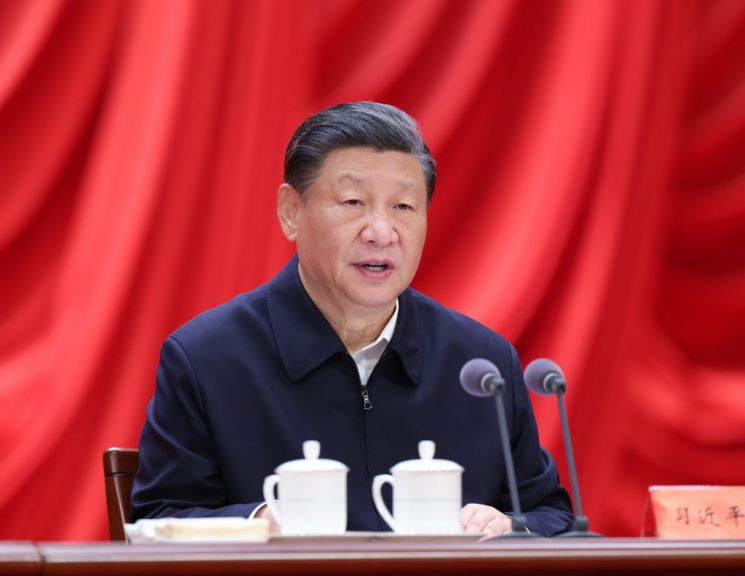
The Central Political Bureau particularly emphasized the need to ensure fiscal expenditure necessary to achieve this year's economic growth target of around 5%. It also called for promoting the establishment of a new real estate development model to resolve the real estate issues that have been holding back investment and consumption.
Especially ahead of the National Day holiday (October 1?7), China is focusing on revitalizing domestic demand. The Central Political Bureau stated that "the Private Economy Promotion Law should be promulgated to create a favorable environment for the development of the private economy," and emphasized that "consumption promotion and benefits for people's livelihoods should be combined to increase the income of middle- and low-income groups and improve the consumption structure."
In this regard, Bloomberg reported that China plans to provide subsidies and grants to people in need during the National Day. Although the Chinese government has not disclosed the beneficiaries or the scale of support, Bloomberg noted that China has allocated a budget of 154.7 billion yuan (about 39 trillion won) this year for low-income groups, including the extremely poor, orphans, and homeless people. This marks a departure from the Chinese government's previous stance of avoiding short-term subsidies, raising expectations that China will intervene further financially to boost consumption. Separately, there is also a growing possibility that local governments in China will compete to issue coupons to promote consumption.
According to Hong Kong's South China Morning Post (SCMP) and other Chinese-language media, the Shanghai municipal government announced a plan the previous day to issue coupons worth 500 million yuan (about 94.7 billion won) to increase usage of hotels, restaurants, and attendance at movies and sports events.
China has also introduced a comprehensive employment policy to address employment issues such as youth unemployment. The Central Committee of the Communist Party of China and the State Council released the "Opinions on Implementing an Employment-First Strategy and Promoting High-Quality Full Employment" the previous day, including employment issues in the five-year plan and raising the policy priority. They also decided to provide certain social insurance subsidies to people who have difficulty finding jobs or who have not been employed within two years after graduating from university if they take flexible employment forms.
Earlier, the three major financial chiefs?People's Bank of China Governor Pan Gongsheng, China Banking and Insurance Regulatory Commission Chairman Li Yunze, and China Securities Regulatory Commission Chairman Wu Qing?held an unprecedented joint press conference on the 24th to announce economic stimulus measures including market liquidity supply and policy interest rate cuts. The main points include lowering the reserve requirement ratio by 0.5 percentage points soon to provide 1 trillion yuan (about 190 trillion won) of long-term liquidity to the financial market and cutting the policy interest rate from the current 1.7% to 1.5%. Chairman Li also announced plans to inject funds into six major commercial banks. This is the first time since the 2008 global financial crisis that China has injected capital into state-owned banks.
© The Asia Business Daily(www.asiae.co.kr). All rights reserved.