26th 3rd Insurance Reform Meeting Held
Car Insurance Comparison and Recommendation Service 2.0 Established
Long-term Care Indemnity Compensation Scope and Limit Defined
The financial authorities' car insurance comparison and recommendation service, which was ambitiously launched in January this year but has been virtually inactive due to low user engagement, will be revamped so that the insurance premiums on the comparison and recommendation service and the insurance companies' own websites will be the same. A standard plan for long-term care indemnity insurance, which was suspended this year due to concerns over excessive medical treatment, will also be established.
On the 26th, the Financial Services Commission and the Financial Supervisory Service held the 3rd Insurance Reform Meeting at the Government Complex Seoul, with participation from insurance companies, the Insurance Association, academia, related organizations, and research institutes. Chaired by Kim So-young, Vice Chairman of the Financial Services Commission, the meeting discussed the revamp of the car insurance comparison and recommendation service, establishment of coverage and limits for long-term care indemnity insurance, expansion of joint underwriting for fire insurance in traditional markets, clarification of no-claims premium refunds for group insurance, and specification of insurance companies' healthcare business scope.
The financial authorities introduced the car insurance comparison and recommendation platform in January this year as part of innovative financial services. Since the car insurance market is dominated by large companies, the platform aimed to enhance consumer benefits by introducing various insurance products from small and medium-sized companies. However, it was consistently pointed out that improvement was needed as the number of actual insurance subscriptions resulting from users was low. Since the service launch until this month, 810,000 people have used the car insurance comparison and recommendation service, but actual subscriptions accounted for only about 11% (73,000 people).
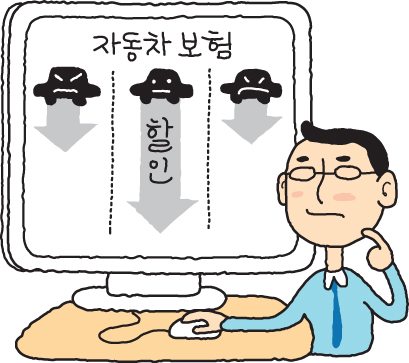
The low utilization of the service was because subscribing to car insurance directly on the insurance companies' own websites was cheaper than using the platform. The financial authorities will improve the system so that the car insurance rates applied on both platforms are identical. They will also expand information sharing with fintech companies operating the platform so that consumers can accurately calculate and compare premiums. Vehicle information, existing contract expiration dates, special discount verification information, and existing contract details will be provided to fintech companies by the Korea Insurance Development Institute and insurance companies. To ensure consumers do not face inconvenience when using the comparison and recommendation service, the user interface (UI) will be continuously enhanced to minimize duplicate input fields during the platform and insurance company subscription stages. The improved 'Car Insurance Comparison and Recommendation Service 2.0' incorporating these enhancements is targeted for release by the end of this year.
A standard plan regarding the coverage and limits of long-term care indemnity insurance will also be prepared. This insurance product covers costs related to long-term care services for those classified in long-term care grades 1 to 5 who use nursing homes or home care services. DB Insurance first introduced this product in July last year, but sales were suspended from April this year. Although product remodeling was the official reason, it is understood that the financial authorities recommended refraining from sales until a standard plan was established due to concerns about moral hazard caused by excessive medical treatment.
After consultation with health authorities, the financial authorities decided to exclude the benefit portion from coverage considering concerns about excessive use of long-term care benefits and the financial impact on long-term care insurance. For non-benefit items, a payment limit of 300,000 KRW per month will be set for two items: meal ingredient costs and premium room usage fees, with a 50% co-payment rate established, thereby creating a payment system for insurance benefits. In the future, when long-term care policies change or the long-term care indemnity insurance product is modified, existing policyholders will also be allowed to change their contracts. Contract maturity will be set to at least after age 80, and to guarantee consumer choice, the product will be operated as a standalone product (prohibiting bundling).
Joint underwriting for fire insurance in traditional markets will also be expanded. Traditional markets are highly vulnerable to fire due to aging stores and old electrical wiring, but there have been many cases where fire insurance underwriting was refused. Going forward, the scope of joint underwriting for fire insurance will be expanded to include traditional markets, alley-type shops, and shopping districts to eliminate coverage blind spots. It is expected that an additional 1,853 markets and 269,365 shops will be able to subscribe to fire insurance.
No-claims refunds for group travel insurance will also be permitted. Following the 2nd Insurance Reform Meeting, a non-action opinion letter will be issued to allow no-claims refunds, previously permitted as a type of special benefit for travel insurance, to be applied to group insurance as well. Currently, the limit on providing special benefits is applied based on insurance contracts, and since group insurance is considered a single contract, there are limitations on providing refunds. To improve this, no-claims refunds for group insurance will be calculated based on premiums rather than insurance contracts.
The scope of healthcare business will also be specified. Until now, the scope of healthcare services that insurance companies and their subsidiaries can engage in was somewhat unclear. Going forward, a negative regulation principle will be applied, whereby ancillary or related healthcare tasks will be basically permitted unless prohibited by other laws such as the Medical Service Act. Insurance companies and their subsidiaries will be allowed to perform hospital information provision services, among others.
A Financial Services Commission official stated, "The tasks discussed at this 3rd meeting will be swiftly pursued through related legal amendments and product preparations so that the public can quickly feel the results," adding, "The Insurance Reform Meeting will be held monthly until the end of the year to meticulously advance 60 plus alpha tasks."
© The Asia Business Daily(www.asiae.co.kr). All rights reserved.
















