South Korean Children and Adolescents Myopia Rate 73%
High Myopia Rate in East Asia "Influenced by Early Education"
A study has found that one in three children and adolescents worldwide is becoming myopic to the extent of poor eyesight. In particular, the myopia rate among children in South Korea was nearly five times higher than that of children in the United States or the United Kingdom.
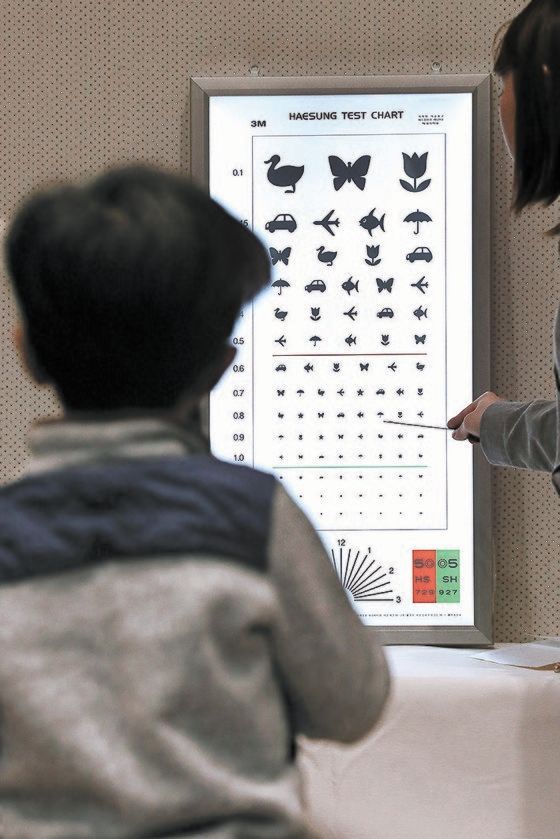
On the 24th (local time), the British BBC reported that a research team from Sun Yat-sen University in China published a study in the British Journal of Ophthalmology stating that the myopia rate among children and adolescents aged 5 to 19 worldwide reached 36%. This figure is three times higher than in 1990.
The research team analyzed results from a study involving over 5 million children and teenagers from 50 countries across six continents to derive these findings. The team explained, "The increase in myopia among children has become more pronounced since the COVID-19 pandemic," adding, "Lockdown policies adopted to prevent the spread of COVID-19 led to children spending more time indoors, which increased the time spent looking at screens, negatively affecting their eyesight."
Notably, the study highlighted a high myopia rate among children in East Asian countries, drawing attention. An overwhelming 85% of Japanese children and 73% of Korean children were myopic, while the myopia rates among children in China and Russia also exceeded 40%. In contrast, the myopia rates among children in Paraguay and Uganda were only about 1%. The myopia rates among children in the United Kingdom, Ireland, and the United States were around 15%.
The research team pointed out, "Although genetic factors are also noted, simply living in East Asia can increase the likelihood of myopia." They explained, "In places like Singapore and Hong Kong, education starts from the age of two, which puts strain on children's eye muscles and often leads to myopia." They added that the myopia rate among African children, who typically start education between ages 6 and 8, is about seven times lower than that of Asian children.
Furthermore, the research team stated that by 2050, the proportion of children and adolescents with myopia could increase to about half of all children worldwide. They predicted that the myopia rate among children in Asia would reach 69%, and the rate among children in developing countries would also reach 40%. They warned, "Myopia will become a global health issue."
© The Asia Business Daily(www.asiae.co.kr). All rights reserved.

![Clutching a Stolen Dior Bag, Saying "I Hate Being Poor but Real"... The Grotesque Con of a "Human Knockoff" [Slate]](https://cwcontent.asiae.co.kr/asiaresize/183/2026021902243444107_1771435474.jpg)














