On the 25th, the People's Bank of China, the central bank, cut the Medium-term Lending Facility (MLF) rate by 0.3 percentage points and supplied 57 trillion won in funds to commercial banks. This came just one day after announcing a reserve requirement ratio (RRR) cut and liquidity injection worth 1 trillion yuan (approximately 190 trillion won).
On the same day, the People's Bank of China stated, "To maintain reasonable and sufficient liquidity in the banking system, we will initiate an MLF operation worth 300 billion yuan (approximately 57 trillion won)," and announced a 0.3 percentage point cut in the one-year MLF rate from 2.3% to 2.0% compared to the previous month.
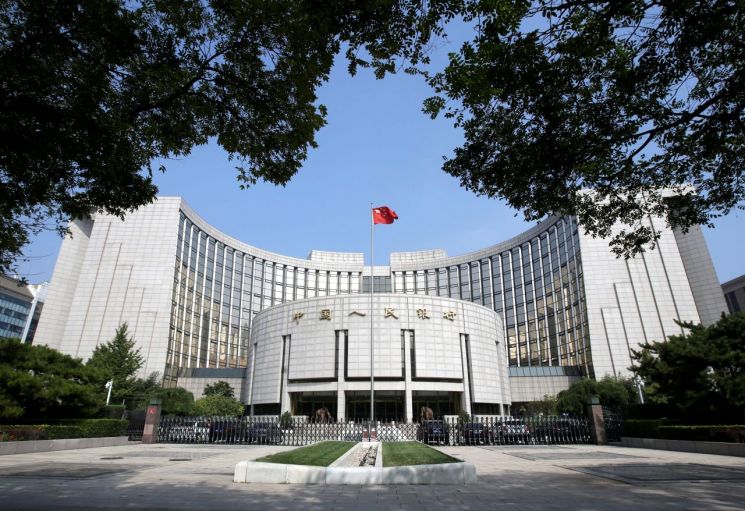
The People's Bank of China reported that the highest bid rate was 2.3% and the lowest bid rate was 1.9%. MLF loans are a policy tool used by the People's Bank of China to lend funds to commercial banks to regulate liquidity.
The total MLF balance reached 6.878 trillion yuan (approximately 1,304 trillion won).
This MLF supply is the first actual measure following a joint press conference held the previous day by Pan Gongsheng, Governor of the People's Bank of China, and heads of three financial authorities. Governor Pan stated the day before, "We will soon lower the reserve requirement ratio by 0.5 percentage points to provide long-term liquidity of 1 trillion yuan to the financial market," and announced that the policy rate for the 7-day reverse repurchase agreement (reverse repo) will be cut by 0.2 percentage points from the current 1.7% to 1.5%. Additionally, existing mortgage loan rates are expected to be reduced by about 0.5 percentage points.
Market experts said this move reflects that the reverse repo rate cut plays a role in leading market interest rate reductions. The MLF rate cut helps reduce funding costs for commercial banks, and through internal bank pricing, the loan prime rate (LPR), which is the de facto benchmark rate, and deposit rates are also expected to decline. This is explained as a way to continuously enhance market confidence and support stable economic growth.
© The Asia Business Daily(www.asiae.co.kr). All rights reserved.

















