"Bid Interference and Business Obstruction Are Multiple Crimes, Not One"
Second Trial Overturns First Trial's Single Crime Recognition, Acknowledges Ideal Concurrence
A public official who won the bid for the use and profit rights of school stores or vending machines by borrowing the name of a 'priority permit applicant,' such as a single-parent family or a senior citizen aged 65 or older, was sentenced to imprisonment.
In this trial, the issue was the relationship between the crimes of bid interference under the Criminal Act, obstruction of business, and obstruction of official duties by deception. The Supreme Court ruled that although bid interference and the other two crimes appear to be separate offenses in form, they should be regarded as an imaginary concurrence of offenses where one act satisfies the elements of multiple crimes, rather than a special relationship of a composite offense where one crime includes all elements of another.
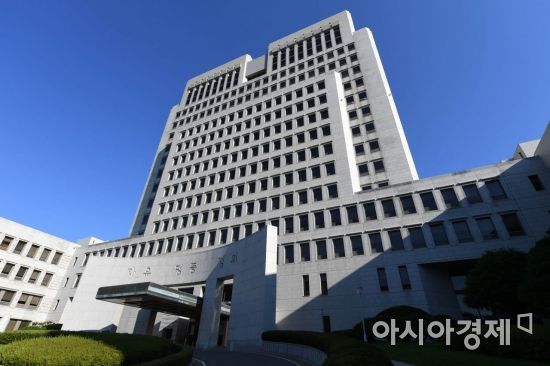
According to the legal community on the 23rd, the Supreme Court's Third Division (Presiding Justice Eom Sang-pil) upheld the original sentence of two years imprisonment for Mr. A, who was indicted for obstruction of business and obstruction of official duties by deception.
The court stated the reason for dismissing Mr. A's appeal was that "there was no error in the original judgment that violated the principles of logic and experience, exceeded the limits of free evaluation of evidence, or misapplied the law regarding the establishment of obstruction of business and obstruction of official duties by deception, the relationship between these crimes and bid interference, or the subject of confiscation under the Act on the Regulation of Concealment of Criminal Proceeds, which affected the judgment."
Mr. A, a public official in Daejeon City, was tried on charges of bidding under the names of single-parent families, senior citizens aged 65 or older, and others who had priority qualification to win bids for the use and profit rights of school stores and vending machines in schools in the Daejeon area from 2016 to 2022, thereby obstructing the work of the respective schools or institutions and obstructing official duties by deception. The prosecution applied obstruction of business charges for bids at private schools and obstruction of official duties by deception for bids at public schools or national institutions.
Mr. A received personal information such as resident registration numbers, account numbers, digital certificates, and supporting documents like single-parent family certificates and basic livelihood security certificates from the 'priority bid recipients,' then placed bids and, upon winning, paid them a commission or employed them at the store he operated, paying them a salary as compensation.
Using this method, from February 2016 to June 2022, he had eight private school principals enter into contracts granting permission to use or profit from stores or vending machines a total of 17 times. During the same period, he had 12 public or national school principals or the head of Institution B grant permission for the use or profit of stores or vending machines 29 times. Over six years, he unfairly won bids or extended contract periods 46 times.
The relationship between the crimes was an issue in the trial.
The first-instance court recognized guilt for bid interference instead of obstruction of business and obstruction of official duties by deception as applied by the prosecution, sentencing him to one year and six months imprisonment.
The court viewed the relationship between obstruction of business, bid interference, and obstruction of official duties by deception and bid interference as a special relationship within legal concurrence, where "one act appears to meet the elements of multiple crimes externally but constitutes only one crime in substance," specifically a special relationship where one element includes all elements of another plus additional elements.
The court reasoned, "Since the bidding conducted by the bid executor to achieve or promote their original work is considered work protected by obstruction of business, the acts constituting the crimes involve 'deception or intimidation' similarly, and bid interference protects the fairness of auctions and bids to guarantee the freedom of the bid executor who chooses auctions or bids as a method of work, which is included in the general freedom of activity protected by obstruction of business, obstruction of business and bid interference can be considered a special relationship within legal concurrence," concluding that "if bid interference is established, obstruction of business is not separately established." The court cited a 2016 Seoul High Court precedent as the basis for this judgment. That case was finalized as the party withdrew the appeal, confirming the second-instance judgment.
The court also did not recognize confiscation of criminal proceeds obtained by Mr. A through unfair bidding.
The court stated, "The defendant acquired 'the right to operate stores, etc.' through bid interference," and "however, the business profits obtained by the defendant based on the above operating rights do not fall under confiscation subjects under the Criminal Act or the Act on the Regulation of Concealment of Criminal Proceeds."
First, the court judged that the operating rights acquired by Mr. A are not 'goods' and thus are not subject to confiscation under the Criminal Act, and therefore the business profits obtained based on these operating rights are not subject to confiscation premised on being subject to confiscation.
The court interpreted narrowly whether the profits obtained by Mr. A qualify as 'property derived from criminal proceeds' subject to confiscation under the Act on the Regulation of Concealment of Criminal Proceeds, referencing similar provisions in the Act on the Confiscation of Corrupt Property and the Act on Illegal Political Funds, concluding that the illegal profits were not transformed or increased to form property.
The court also cited as grounds that even if criminal proceeds were the basis, property benefits arising only from additional acts other than transfer or lending are not directly related to criminal proceeds.
However, the second-instance court's judgment was completely different.
Considering the first-instance judgment, the prosecution requested permission to amend the indictment in the second instance, maintaining obstruction of business and obstruction of official duties by deception as the principal charges while adding bid interference as an alternative charge.
The second-instance court accepted the prosecutor's appeal reasons of factual misrecognition and legal misinterpretation that the first-instance court erred in regarding the relationship between bid interference and the other two crimes as a special relationship within legal concurrence and in denying confiscation of criminal proceeds, overturned the first-instance judgment, sentenced Mr. A to two years imprisonment, and ordered confiscation of approximately 458 million KRW.
The Criminal Act stipulates that in cases of imaginary concurrence where one act corresponds to multiple crimes simultaneously, punishment is imposed according to the most severe crime.
First, the court stated, "Bid interference, obstruction of business, and obstruction of official duties by deception should be regarded as an imaginary concurrence of offenses, not a special relationship within legal concurrence."
The court pointed out, "Obstruction of business requires 'deception or intimidation' to obstruct a person's business, obstruction of official duties by deception requires 'deception' to obstruct a public official's performance of duties, whereas bid interference requires 'deception, intimidation, or other methods' to impair the fairness of bidding, broadly defining the elements so that bid interference can be established even when methods other than deception are used to impair bidding fairness," and criticized the first-instance court's error in considering the acts constituting bid interference and obstruction of business as identical.
It further concluded, "In a special relationship, acts satisfying the elements of a special law must naturally satisfy the elements of a general law, so it is clear that bid interference is not in a special relationship within legal concurrence with obstruction of business or obstruction of official duties by deception."
In other words, since bid interference can be established by methods other than deception or intimidation, it is not recognized that obstruction of business is always established whenever bid interference is established.
The court added that the three crimes protect different legal interests, making it difficult to view them as constituting only one crime in substance.
The court judged, "Obstruction of business protects 'business,' obstruction of official duties protects the broad legal interest of 'official duties performed by public officials,' whereas bid interference protects the specific legal interest of 'fairness of auctions or bids,' making it difficult to consider them as constituting only one crime in substance."
Meanwhile, the court also found the first-instance court's judgment regarding confiscation to be incorrect.
The court stated, "The defendant directly acquired the right to use and profit from stores, etc., through the crime, which corresponds to 'criminal proceeds' under the Act on the Regulation of Concealment of Criminal Proceeds, and the business profits generated by operating stores based on these rights are secondary property derived from criminal proceeds, subject to confiscation and seizure," adding, "It cannot be said that confiscation and seizure are impossible merely because the occurrence or scale of profits may vary depending on the defendant's method of operation, as the original court held."
The court calculated the minimum business profits as approximately 458 million KRW, deducting costs such as raw material purchases, labor costs, and rent from the approximately 7.636 billion KRW in profits Mr. A admitted to earning through store operations, and ordered confiscation accordingly, favoring Mr. A as much as possible.
Regarding sentencing, the court considered favorable factors such as Mr. A having no prior criminal record and that part of the profits obtained through store operations was paid to priority permit applicants like single-parent families.
On the other hand, unfavorable factors included Mr. A's 30 years of public service during which he should have had strict compliance awareness, his disregard for his duties and position in committing the crime, violation of the prohibition on concurrent positions for public officials, and his unrepentant attitude in continuing to operate the store and participate in new bids even while under investigation and disciplinary action.
The Supreme Court also found no problem with the second-instance court's judgment.
© The Asia Business Daily(www.asiae.co.kr). All rights reserved.
![User Who Sold Erroneously Deposited Bitcoins to Repay Debt and Fund Entertainment... What Did the Supreme Court Decide in 2021? [Legal Issue Check]](https://cwcontent.asiae.co.kr/asiaresize/183/2026020910431234020_1770601391.png)
















